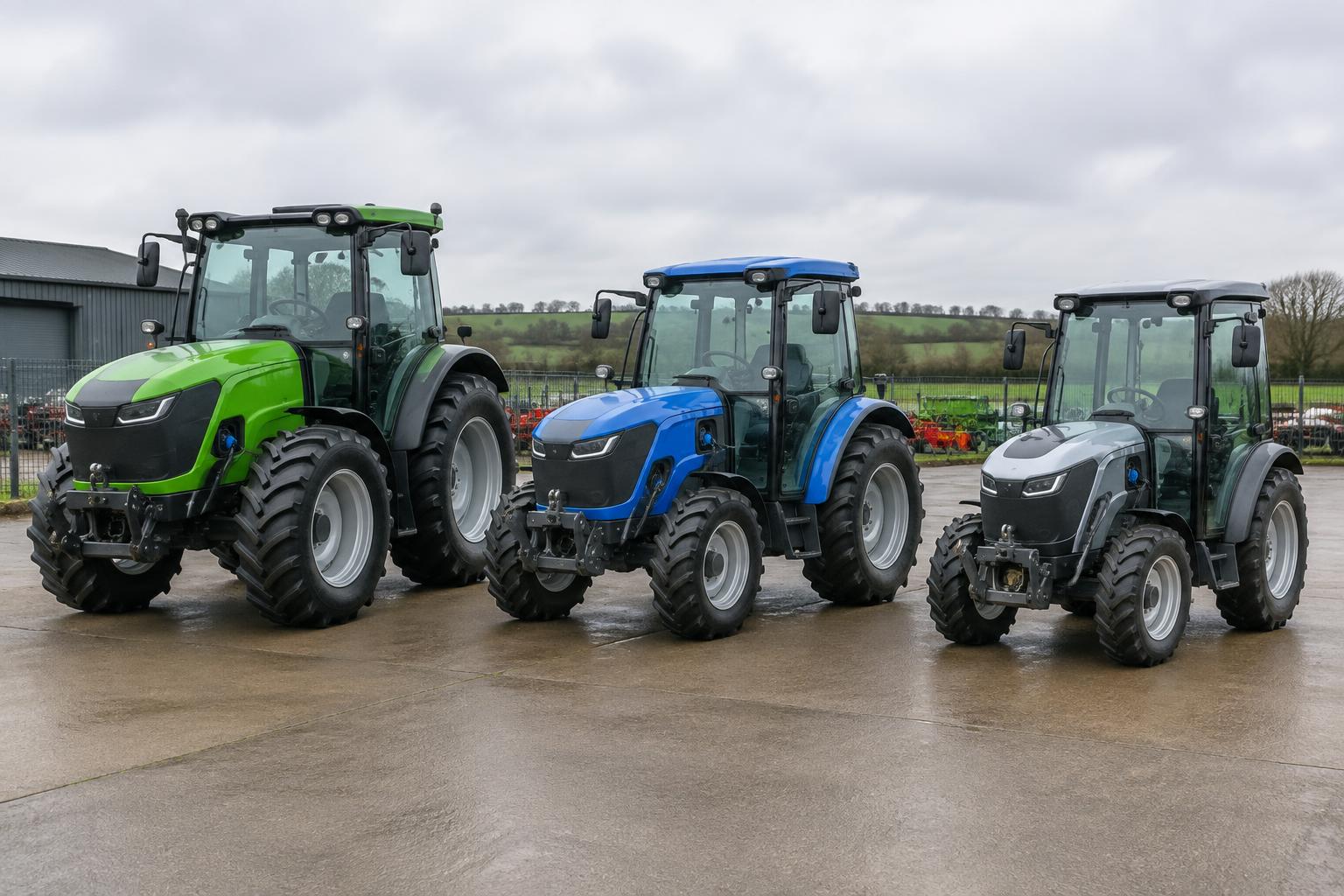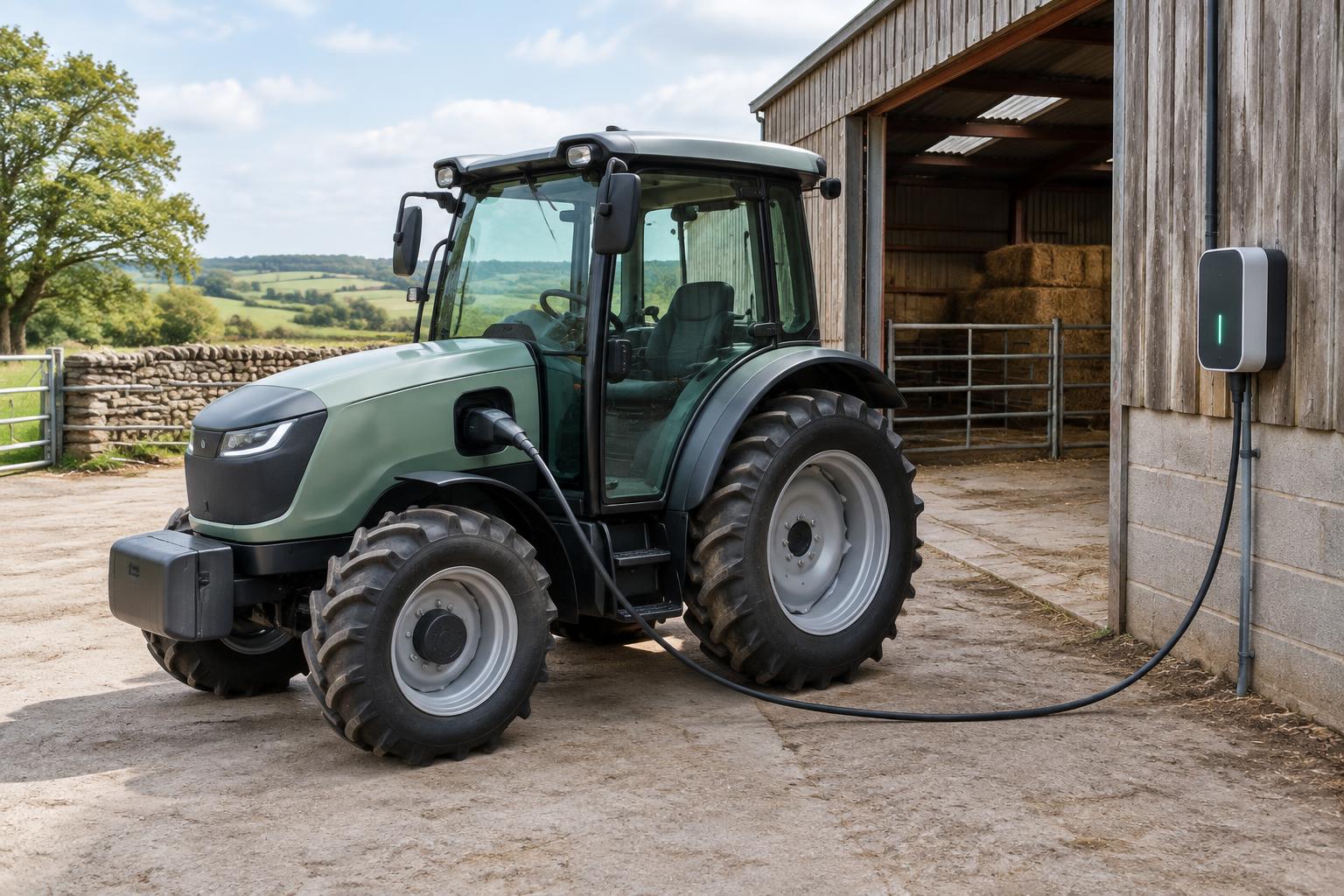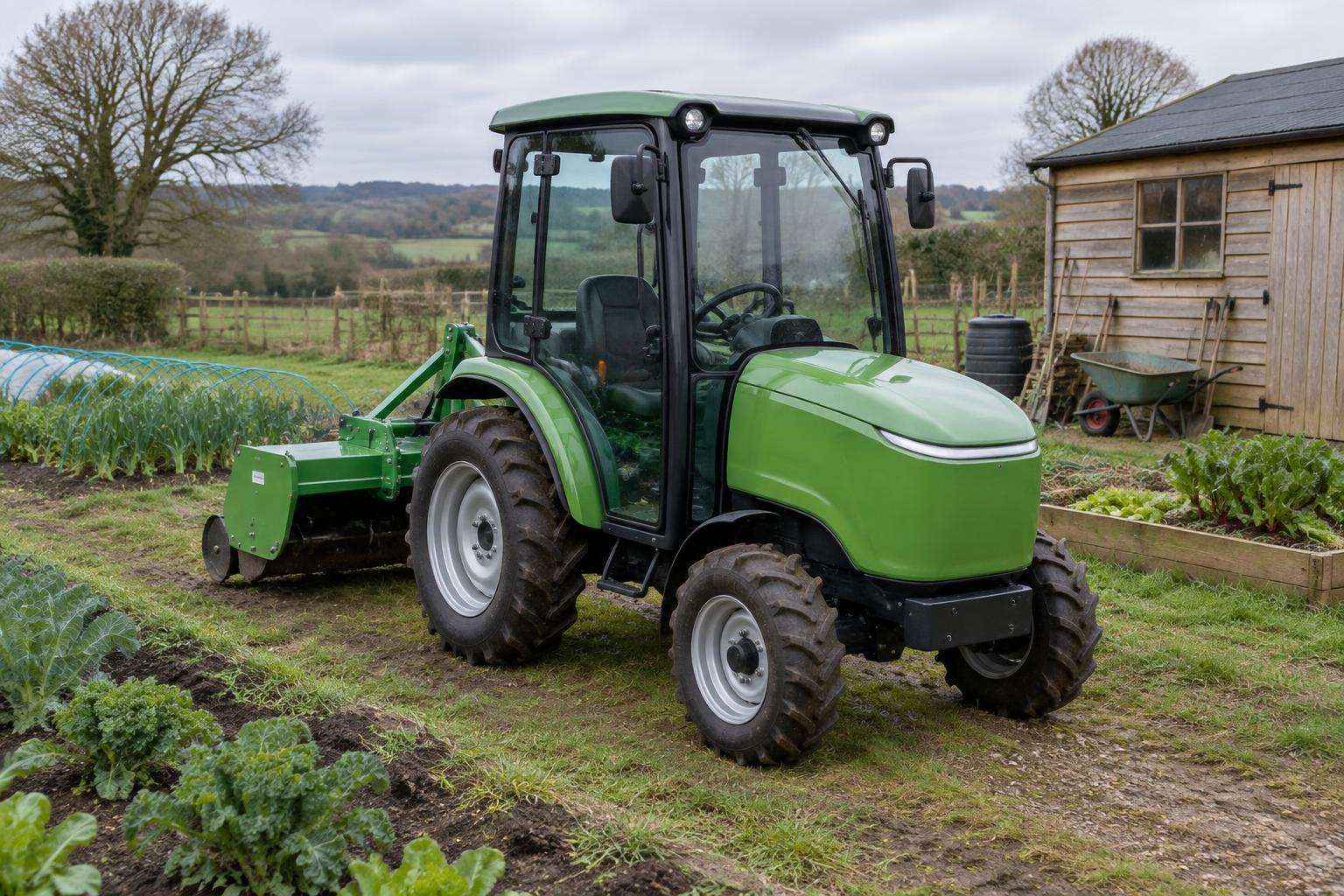
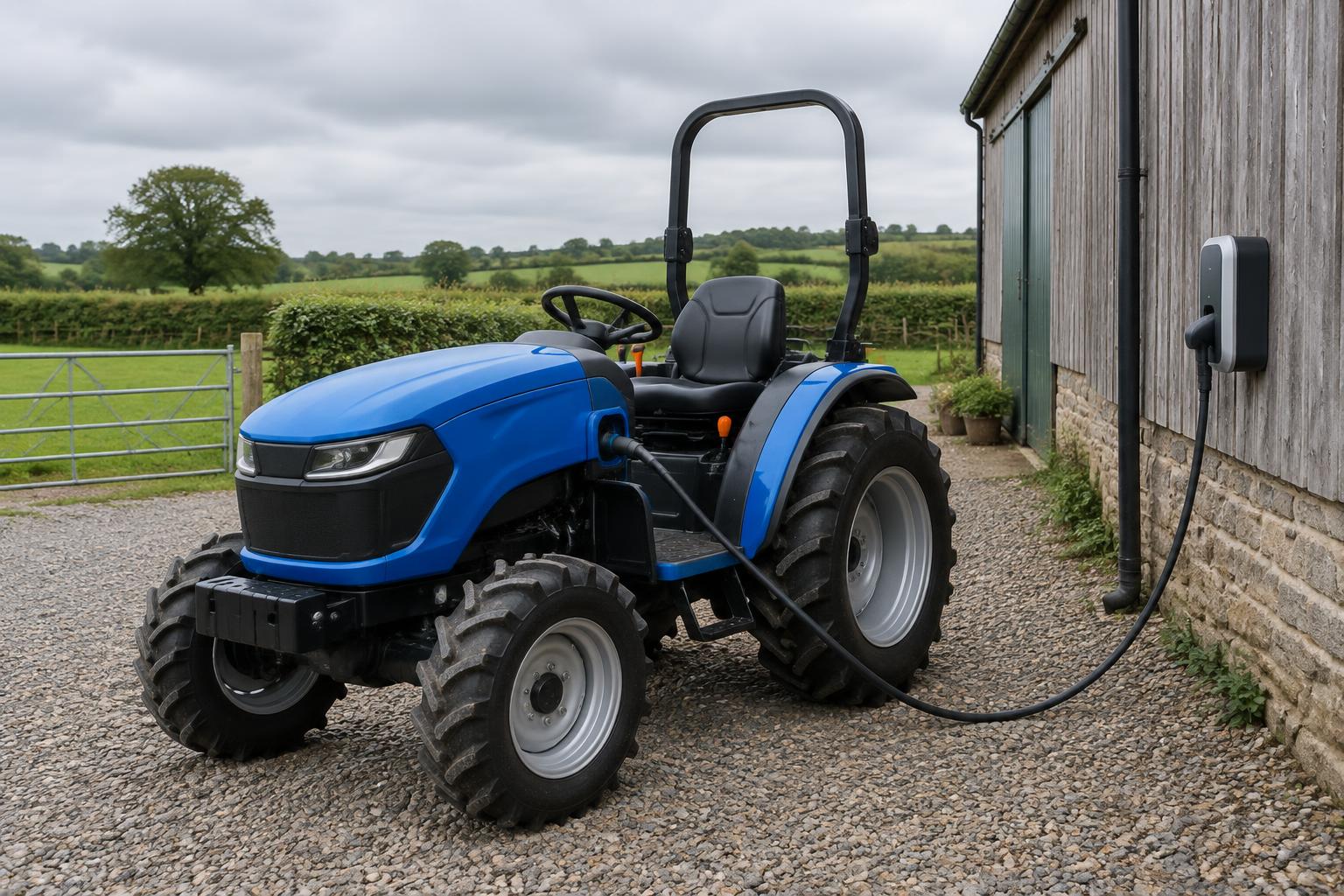
The compact end of the market is where most of the UK's electric tractor choice currently sits. If you are looking at a battery-electric machine for a smallholding, an equestrian yard, an estate or a horticultural business, a compact model is the most realistic place to start.
This guide sets out what counts as a compact electric tractor, which models are currently sold through UK dealers, what they cost, and who they genuinely suit. Prices are published figures from dealers and distributors, checked in October 2026, and they change — always confirm current pricing in writing before making a decision.
What counts as a compact electric tractor?
A compact tractor is generally a machine of roughly 15 to 50 horsepower that offers the features of a larger tractor — a rear three-point linkage, a PTO and hydraulic spool valves — in a smaller, more manoeuvrable package.
A compact electric tractor keeps those features but replaces the diesel engine with a traction battery and one or more electric motors. Most keep a conventional three-point linkage and hydraulics, and many drive the PTO electrically.
This size class matters because it is where battery-electric power works best today. Smaller machines need less energy, work more intermittently, and are usually close to a building where they can charge.
Which compact electric tractors can you buy in the UK?
The following models are listed by UK dealers or distributors at the time of writing. This is not a complete market survey and it is not a ranking.
Farmtrac 25G Electric
The Farmtrac 25G Electric is a 25 hp (18 kW) compact tractor with a 21.6 kWh lithium-ion battery, a three-point linkage rated at 450 kg at the hitch point, and rear hydraulics with an optional front-end loader.
Its UK distributor lists the manual gearbox version from £24,000 plus VAT and the hydrostatic version from £26,600 plus VAT, both including an on-board charger. A full charge is quoted at around eight hours, with up to seven hours of working time depending on the task.
Farmtrac tractors are imported into the UK by Reesink Agriculture, and the electric model is sold through regional distributors.
Knegt 45 hp and 55 hp electric tractors
Knegt, a Dutch manufacturer, offers compact electric tractors at 45 hp and 55 hp through UK dealers. One UK dealer lists the 45 hp model at £36,095 excluding VAT and the 55 hp model at £42,845 excluding VAT.
The manufacturer quotes a working time of up to nine hours with an additional battery pack, though real working time always depends on the task, the ground and the weather.
Fendt e100 Vario
At the larger end of the compact and utility class, the fully electric Fendt e100 Vario became available to order in the UK and Ireland following a European launch in 2024. It is aimed at utility, amenity, vegetable and livestock work and is supported through the Fendt UK dealer network.
For the full picture of what is on sale, including full-size machines, see electric tractors available in the UK.
How do compact electric tractor prices compare with diesel?
The purchase premium is significant. A new diesel compact tractor such as the Solis 26 is listed by UK dealers from around £8,250 plus VAT, while the electric models above start at roughly three times that figure.
That gap is the single biggest obstacle for most buyers. The case for electric rests on lower running and servicing costs over the machine's life, not on the purchase price. Whether the numbers work depends on how many hours the tractor does each year and what you actually pay for electricity and diesel.
Our guides to electric tractor running costs and total cost of ownership show how to work this out for your own situation.
Who do compact electric tractors suit?
Compact electric tractors suit holdings where the work is predictable, varied and close to a power supply. They are most at home with:
- Smallholdings — topping, mowing, trailer work, loader jobs and paddock maintenance, all within easy reach of overnight charging. See our guide to electric tractors for smallholdings.
- Equestrian yards and livery stables — where low noise and zero exhaust fumes around horses are genuine advantages.
- Estates and groundcare — mowing, towing and material movement on a predictable daily round.
- Horticulture, orchards and vineyards — narrow machines working short rows near the yard. See electric tractors for orchards and vineyards.
- Local authorities and leisure sites — where emissions rules and noise limits increasingly favour electric machines.
In each case the pattern is the same: the tractor returns to the same building, the daily energy demand is modest, and charging can happen while the machine would otherwise be idle.
Who should think twice?
A compact electric tractor is a poor fit if your work involves long days of continuous heavy draft work, if the machine will regularly work far from any power supply, or if the purchase budget simply cannot stretch to the premium over diesel.
Cold weather, wet ground and sustained PTO work all drain a battery faster than light yard duties. If your heaviest jobs come in short seasonal bursts — ploughing, for example — plan carefully around energy, not just hours.
What should you check before you buy?
- Confirm the current price and specification in writing with an authorised dealer, including what the charging equipment costs and whether it is included.
- Ask whether the dealer has technicians trained on the high-voltage system, and where the nearest one is based.
- Ask what the battery warranty covers and whether a minimum retained capacity is guaranteed.
- Check your electrical supply can support the charger — see how to charge an electric tractor and whether you need three-phase power.
- Arrange a demonstration doing your actual jobs, on your ground, before committing.