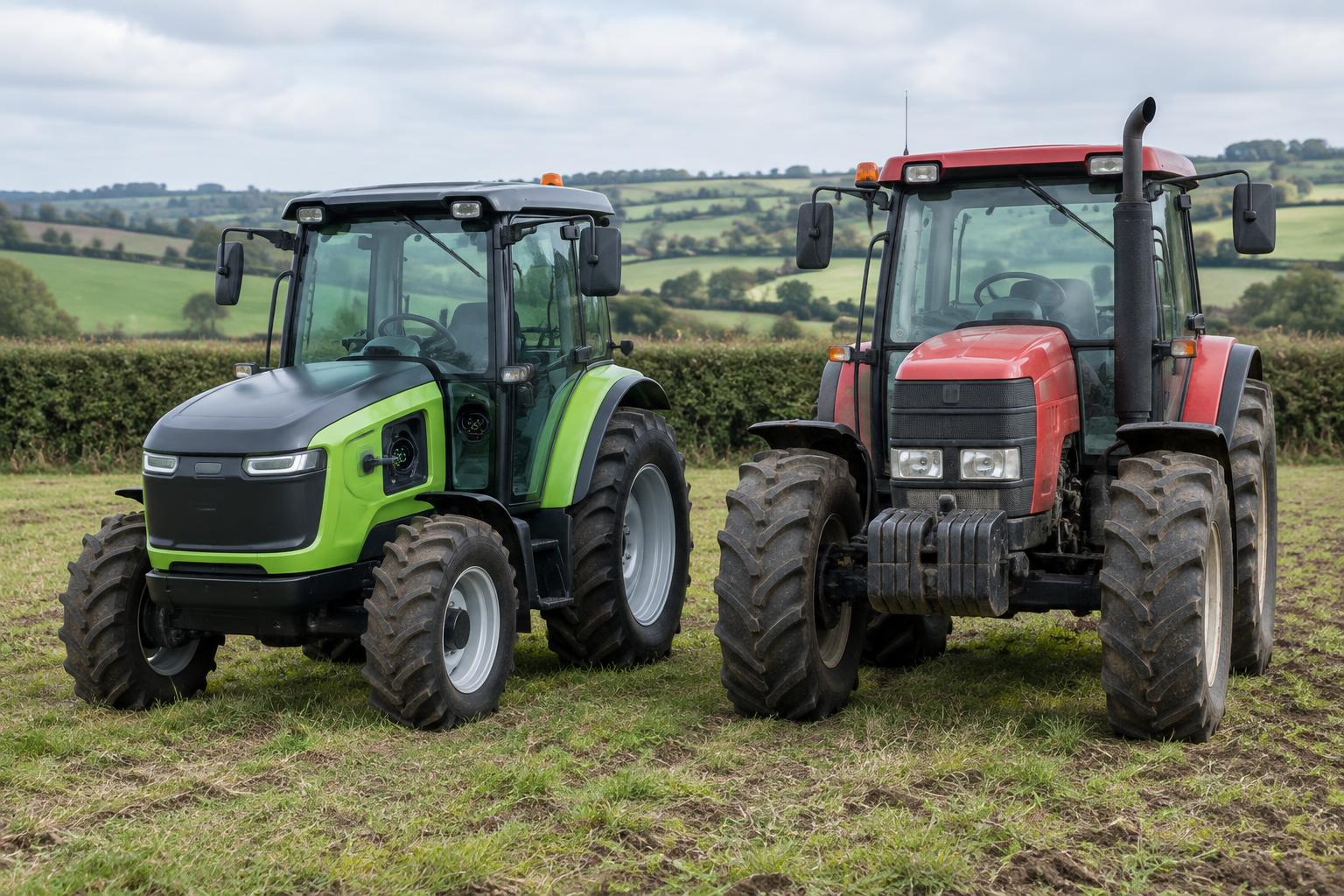
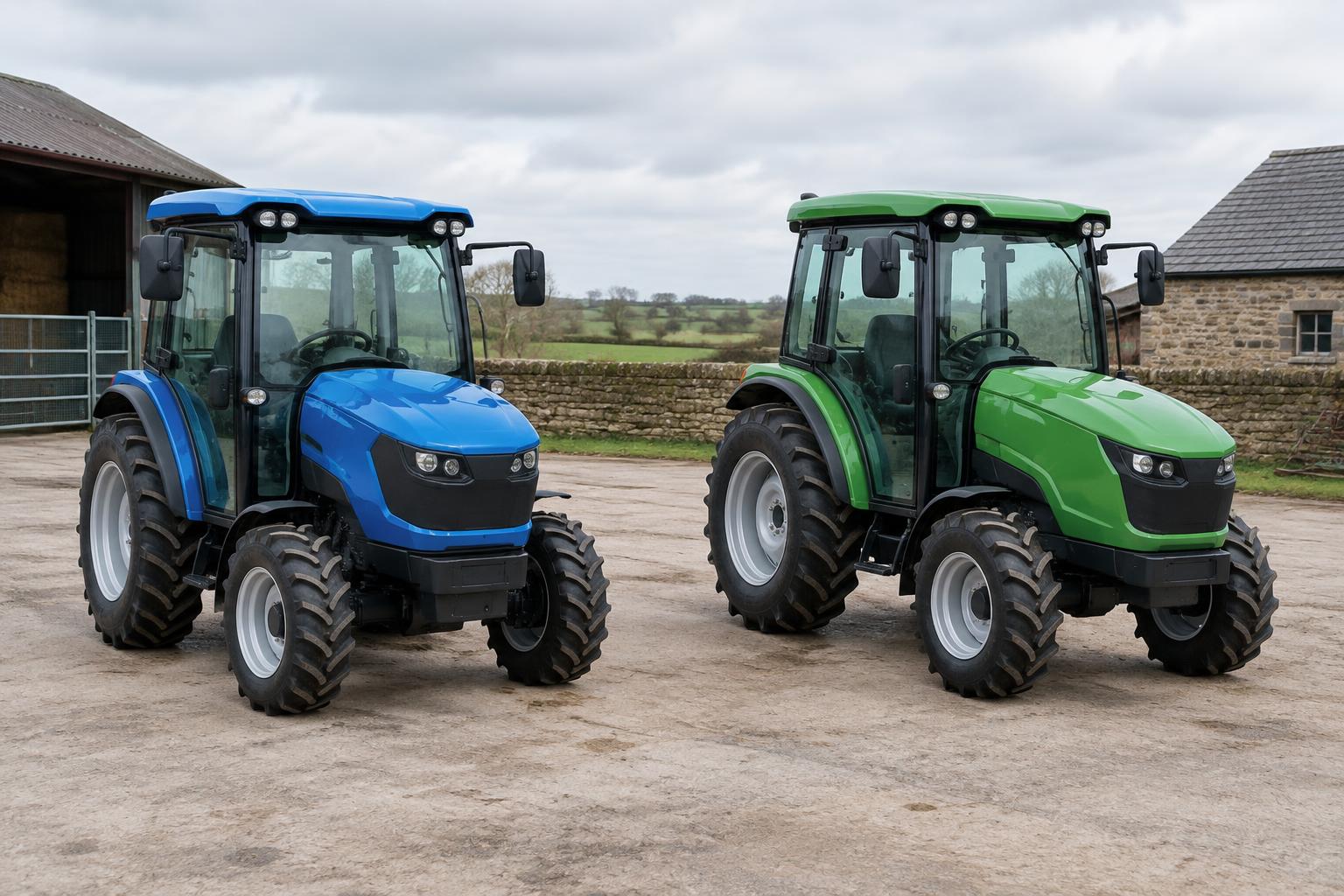
Electric tractors can be quieter, highly controllable and free from tailpipe exhaust during battery operation. They may also reduce some energy and maintenance costs. Their main disadvantages remain higher upfront cost, limited stored energy compared with diesel, charging requirements and uncertainty in a still-developing market.
Whether those trade-offs matter depends on the work.
Advantage: no tailpipe exhaust
A battery-electric tractor produces no exhaust gases at the point of operation.
That can be valuable in glasshouses, buildings, yards and other environments where local air quality matters.
It should not be described as zero impact. The electricity supply, battery manufacture and tractor production all have environmental effects.
Advantage: lower noise
Removing a diesel engine can significantly reduce powertrain noise.
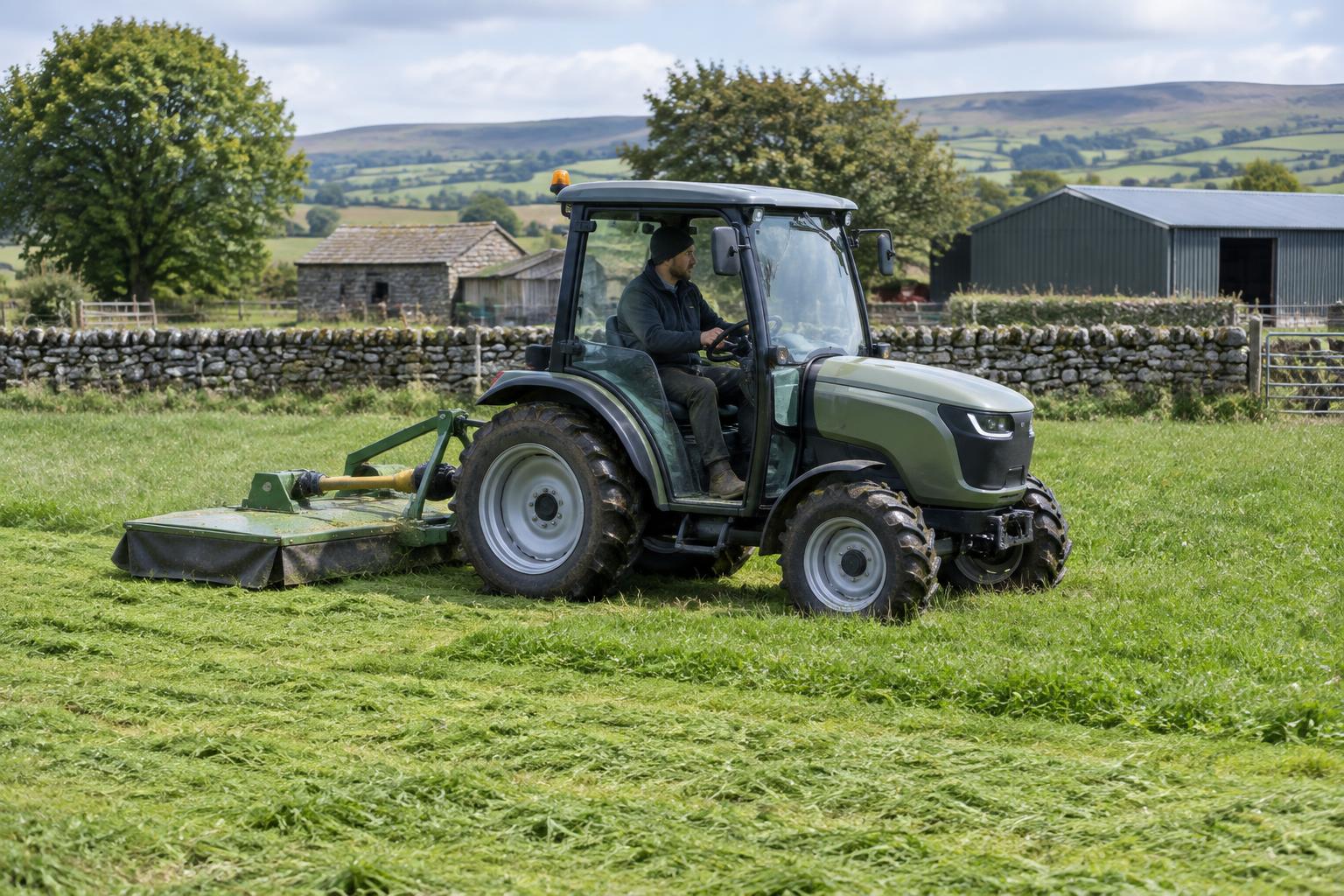
This can improve operator comfort and make electric tractors attractive for estates, parks, equestrian sites and work near homes or livestock.
Implements, hydraulics and tyres can still be noisy, so the total job may not be quiet.
Advantage: strong low-speed torque
Electric motors can deliver useful torque from low rotational speeds and respond quickly.
That suits many tractor tasks where precise movement and controllable pulling force are valuable.
It can also simplify some drivetrain functions, although actual performance depends on the complete machine.
Advantage: high drivetrain efficiency
Electric motors and power electronics can convert stored energy into movement efficiently compared with combustion engines.
That can reduce the amount of purchased energy needed for a task.
The benefit is greatest when the duty suits the machine and charging losses are kept in perspective.
Advantage: fewer engine service items
A pure battery-electric tractor has no diesel engine oil, fuel filters or exhaust after-treatment system.
That can reduce routine maintenance and consumables.
Hydraulics, tyres, brakes, bearings, cooling and implements still require maintenance. See electric tractor servicing.
Advantage: use of on-site electricity
Farms with solar or other generation may be able to supply some tractor energy from their own system.
This can improve energy independence and may reduce imported electricity costs.
The timing and economics need to be modelled properly. Read our solar charging guide.
Disadvantage: high purchase price
Battery packs remain expensive.
Electric agricultural machinery can therefore cost more upfront than comparable conventional equipment.
Charging infrastructure and electrical upgrades can add further capital expenditure.
Disadvantage: limited energy storage
Diesel is extremely energy-dense and quick to refuel.
Batteries are heavier for the amount of usable energy they store. That makes long, continuous, high-load operations more difficult.
The challenge is especially important during seasonal work when downtime has a high cost.
Disadvantage: charging time
Charging can be easy if the tractor parks overnight.
It is more problematic if the machine must operate continuously or far from suitable infrastructure.
Fast charging can help but requires compatible equipment and enough electrical capacity.
Disadvantage: battery ageing
Traction batteries gradually lose some usable capacity.
A well-managed battery may remain useful for a long period, but future replacement cost and residual value are legitimate concerns.
Buyers should understand warranty terms and battery diagnostics.
Disadvantage: developing support network
Diesel tractors benefit from a mature UK dealer and independent repair network.
Electric agricultural machinery is newer, so high-voltage technicians, parts and specialist diagnostic support may be less widely available.
Before buying, ask who will fix the tractor if it stops during peak season.
Disadvantage: fewer choices
The diesel tractor market offers a huge range of power outputs, sizes and specifications.
The electric market is still much smaller.
A buyer may simply find that no current electric machine matches a specific heavy-duty application.
Where the advantages are strongest
Electric tractors tend to look most attractive where:
- work is predictable;
- daily hours are moderate;
- charging is nearby;
- quietness has value;
- exhaust-free indoor work matters;
- on-site electricity is available;
- maintenance simplification is useful.
Where the disadvantages are strongest
The limitations matter more where:
- shifts are long and high-load;
- refuelling speed is critical;
- the machine works far from the yard;
- charging power is limited;
- resale certainty is important;
- specialist dealer support is distant.
Do the environmental benefits justify the cost?
That is a business decision, not a universal answer.
Some organisations may place additional value on reduced local emissions, lower noise or sustainability targets. A commercial farm may prioritise total cost and uptime.
Both are legitimate.
The balanced conclusion
Electric tractors are not a straight upgrade to diesel in every task.
They are a different tool.
Where the duty matches their strengths, the benefits can be substantial. Where it exposes their current limitations, a diesel or hybrid machine may remain the more practical choice.
The sensible next step is to compare the electric tractor with diesel using your own work pattern rather than buying into either side of the argument.