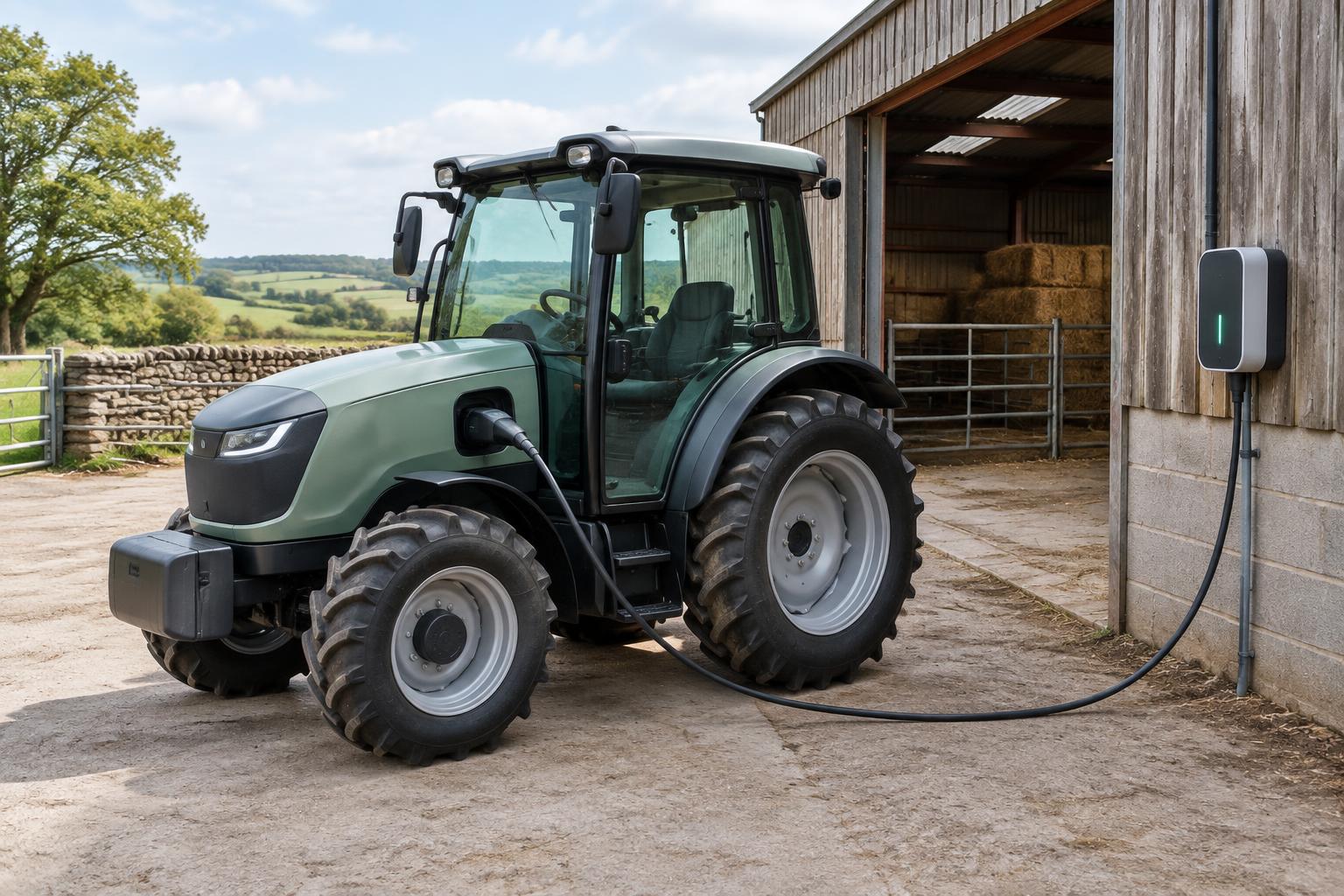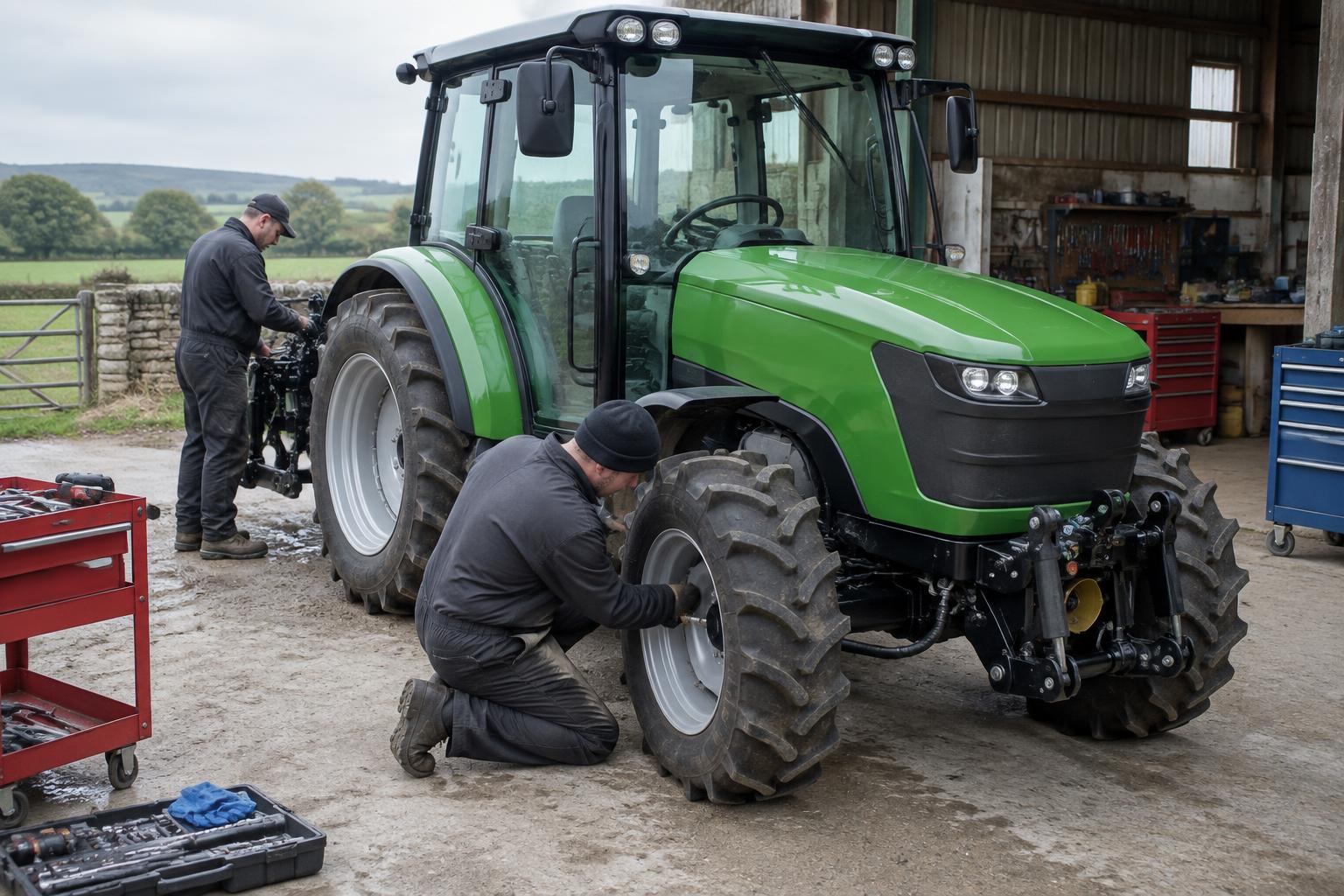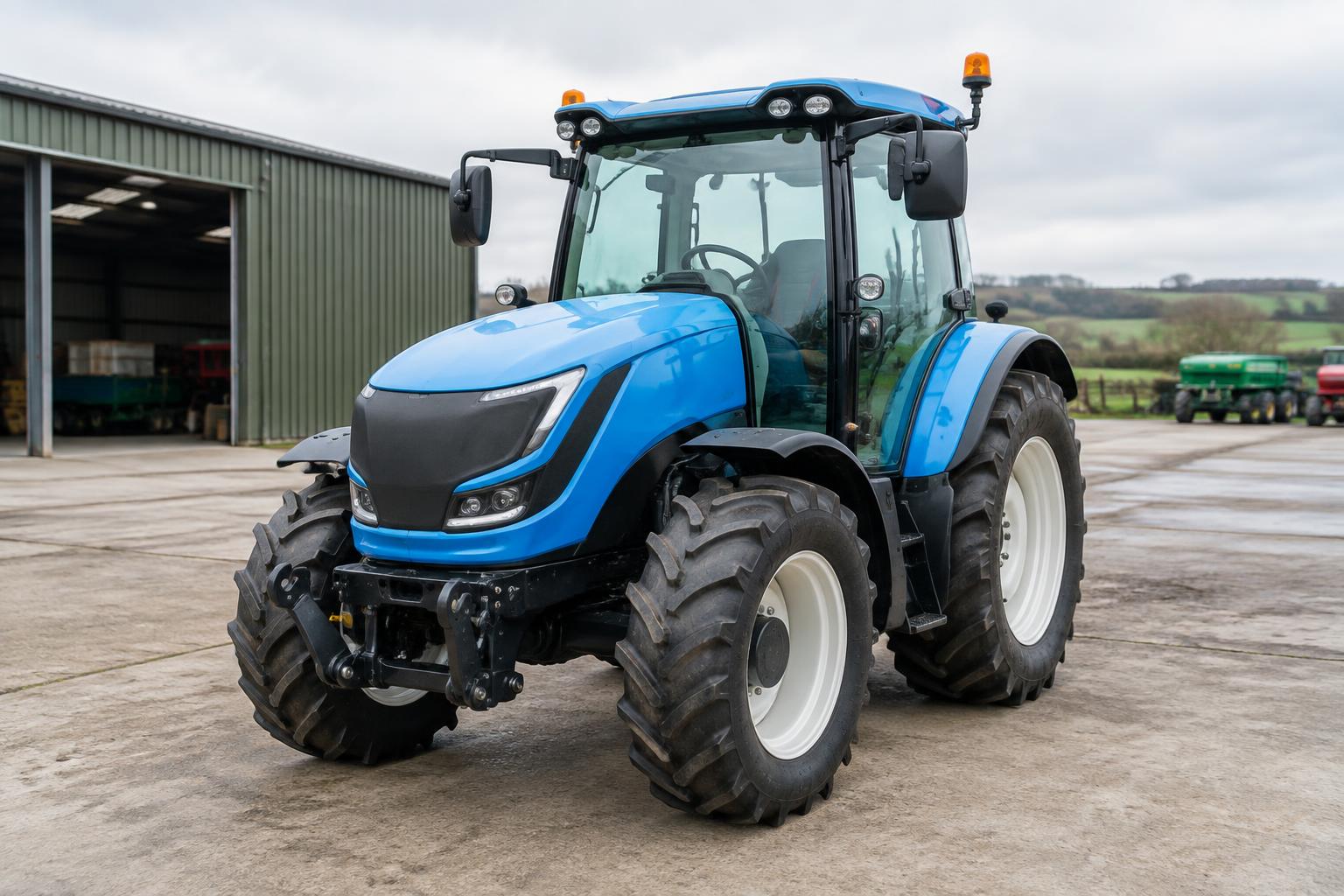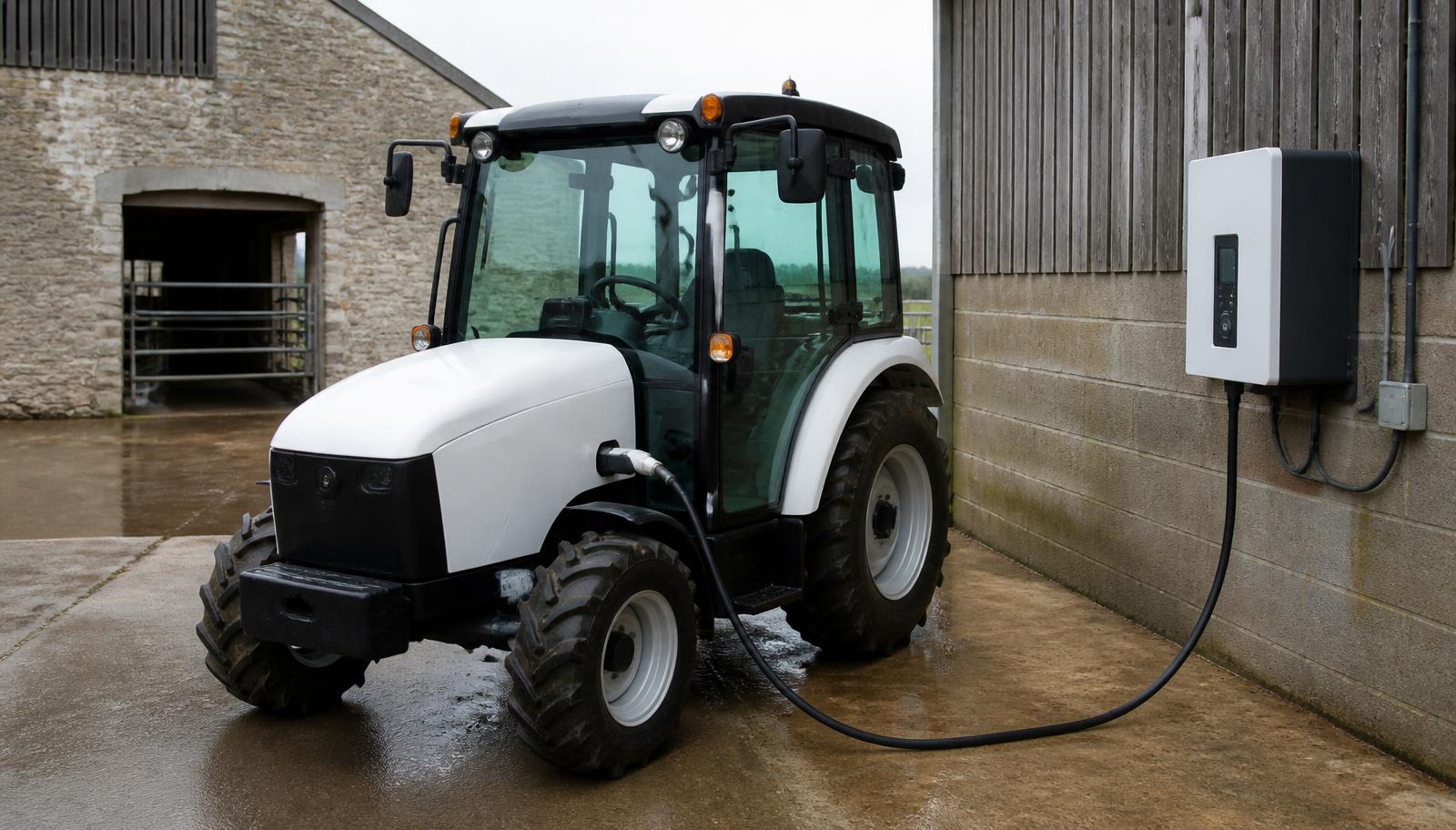
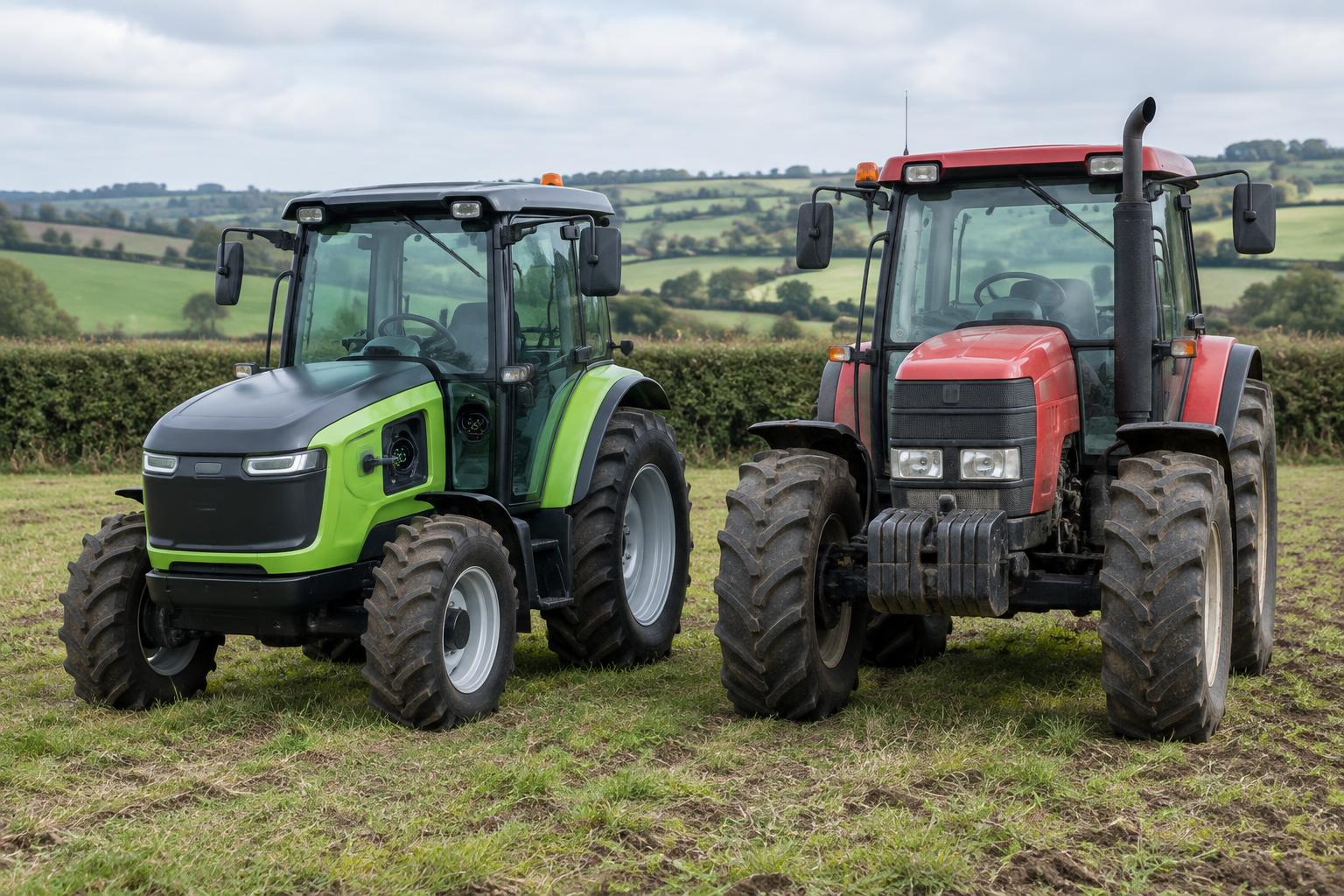
Electric tractors can offer quieter operation, no tailpipe exhaust during use and potentially lower energy and routine powertrain service costs. Diesel tractors still have major practical advantages in long-duration work, rapid refuelling, mature support networks and the huge range of machines already available.
The right comparison is therefore not “which technology is better?” It is “which technology completes this farm's work at the lowest acceptable cost and operational risk?”
Energy: electricity versus diesel
Diesel contains a large amount of energy in a compact, easily refuelled form. That is one reason it has suited agricultural machinery for so long.
Battery-electric tractors use a more efficient drivetrain, but batteries store much less usable energy per unit of mass than liquid fuel. Designers compensate through efficiency, battery size, charging opportunities and by targeting duties where a tractor does not need maximum output all day.
Electricity can be cheaper than diesel per unit of useful delivered energy, particularly where a farm has favourable tariffs or its own generation. But a credible calculation needs actual electricity prices, charging losses and tractor consumption.
See electric tractor running costs for the method rather than relying on a generic saving claim.
Which diesel price should you compare against?
Most UK agricultural machinery runs on rebated fuel, usually called red diesel or gas oil, not on road diesel. The duty difference is large, so comparing an electric tractor against forecourt diesel prices will overstate the saving considerably.
Agricultural, horticultural, forestry and fish farming use retained the entitlement to rebated fuel when the rules changed on 1 April 2022. Agricultural vehicles, as defined in HMRC Excise Notice 75, may also use rebated fuel for cutting verges and hedges bordering a road, for snow clearance, for gritting and for clearing up after flooding, including the road journey to and from that work.
Rebated fuel duty is not fixed. On 20 May 2026 the Treasury announced a reduction in the duty on red diesel from 10.18p per litre to 6.48p per litre, running from 15 June 2026 to 31 December 2026. Duty rates from 1 January 2027 will be confirmed at a future Budget.
The practical point is that the diesel figure in your comparison should come from your own fuel invoices, not from a pump price and not from a figure quoted in an article. Check the current duty position on GOV.UK before building a business case.
Runtime and refuelling
This is one of diesel's clearest advantages.
A diesel tractor can be refuelled quickly and return to work. A battery tractor must either carry enough energy for the duty, stop to recharge, use a battery-swapping system where available, or structure the working day around charging opportunities.
For short, predictable shifts, charging may not be inconvenient at all. A tractor that returns to the same yard every evening could charge while parked.
For long seasonal work far from a power supply, the challenge is harder. Research into agricultural electrification continues to examine larger batteries, fast charging, mobile energy supply and battery exchange precisely because working time matters so much in farming.
Purchase price
Battery packs remain expensive, so battery-electric machinery can carry a higher upfront cost than an equivalent conventional machine.
The purchase price is only one part of ownership. Charging infrastructure may need to be installed or an existing electrical supply upgraded. Insurance, finance, residual value and battery condition also matter.
This is why electric tractor costs in the UK should be considered on a whole-life basis.
Maintenance
A battery-electric powertrain removes several diesel-specific service items.
There is no engine oil to change and no diesel fuel system or diesel exhaust after-treatment system in a pure battery-electric drivetrain. The electric motor itself can have relatively few wearing parts.
But the tractor still contains many serviceable systems: tyres, brakes, steering, bearings, hydraulics, linkages, cooling, cab equipment, filters associated with non-engine systems, implements and high-voltage electrical components.
A better description is “different maintenance”, not “no maintenance”. Read electric tractor servicing and maintenance.
Noise
Electric powertrains are generally quieter than diesel engines.
That can improve operator comfort and reduce disturbance in settings such as estates, parks, stables, glasshouses and areas close to homes.
The tractor will not be silent. Hydraulic pumps, transmission parts, cooling fans, tyres and implements can still be loud. A flail mower remains a flail mower regardless of what powers the tractor.
Tailpipe emissions and wider environmental impact
A battery-electric tractor has no tailpipe exhaust when operating on battery power. This can improve the immediate working environment where diesel exhaust would otherwise accumulate or affect nearby people.
However, zero tailpipe emissions are not the same thing as zero lifecycle emissions. Manufacturing the tractor and battery has an environmental footprint, and the carbon impact of charging depends partly on how the electricity was generated.
Recent lifecycle research generally finds significant greenhouse-gas reduction potential for battery-electric agricultural machinery, particularly with lower-carbon electricity, while also identifying gaps around battery ageing, recycling and full lifecycle assessment.
Torque and control
Electric motors can produce strong torque from low speed and can be controlled precisely.
That characteristic fits many tractor requirements well. Low-speed manoeuvring, loader work and specialist operations can benefit from fine control.
A diesel machine can of course also be highly controllable through modern transmissions and engine management, so this should not be treated as an automatic performance win in every task.
Implements and PTO
Diesel tractors benefit from decades of standardisation and an enormous installed base of implements.
Electric tractors may retain familiar linkage, hydraulics and PTO arrangements, but buyers should verify compatibility and sustained power requirements.
The issue is not only whether an implement can connect. It is whether the tractor can run it at the required output for long enough.
Charging infrastructure
A diesel tank is familiar farm infrastructure. High-power electrical charging may not be.
A farm considering electric machinery should assess available electrical capacity, charger location, cable routing, parking arrangements, earthing and protection, other simultaneous electrical loads and the potential for future expansion.
Electrical design work should be carried out by appropriately competent professionals.
Which one is likely to suit you?
An electric tractor becomes more attractive when:
- duty cycles are predictable;
- charging is convenient;
- daily energy use is manageable;
- low noise or no local exhaust has real value;
- electricity is competitively priced;
- the farm can utilise on-site generation.
Diesel remains difficult to beat where:
- long uninterrupted high-load work is normal;
- refuelling speed is critical;
- the tractor spends long periods far from power;
- the required electric machine or support network does not yet exist.
Compare the job, not the technology
The useful way to decide is to build a duty profile from real tractor work.
Record annual hours, tasks, implement loads, fuel use, downtime, maintenance and where the machine parks. Then model what an electric alternative would require.
That approach turns a vague technology argument into an equipment decision.