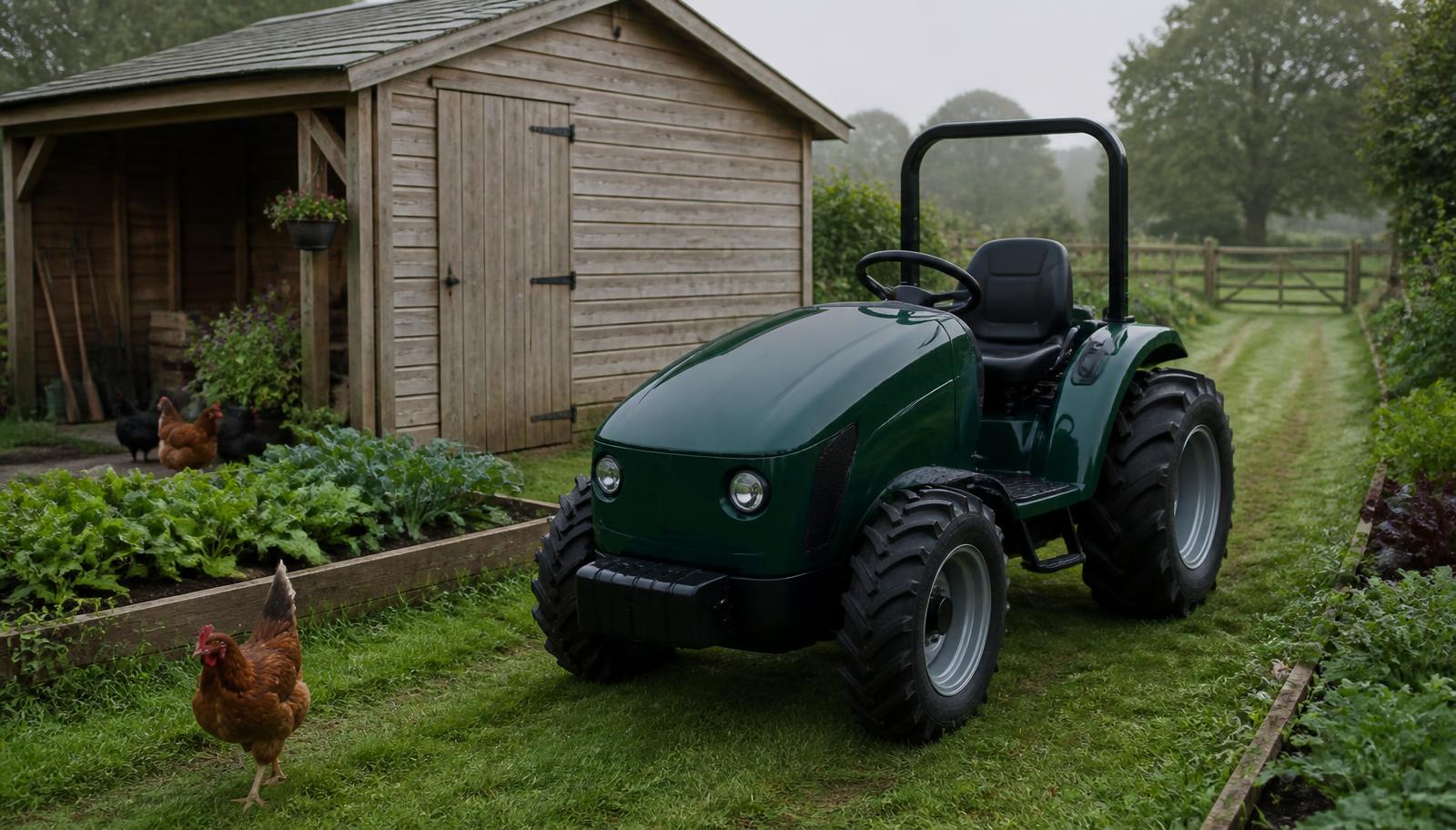
A smallholding can be a good environment for an electric tractor because many jobs are relatively short, varied and close to the yard. That gives the machine regular access to charging and reduces the need for a very large battery.
However, smallholding does not automatically mean light work. Ground conditions, implements and seasonal workload still matter.
Typical smallholding jobs
An electric tractor might be considered for:
- trailer movements;
- topping;
- mowing;
- paddock maintenance;
- manure handling;
- loader work;
- material movement;
- light cultivation;
- harrowing;
- rolling;
- snow or winter yard duties;
- maintenance around buildings.
The suitability of each job depends on power, hydraulics, PTO and implement compatibility.
Why compact electric tractors can fit
Smaller tractors generally require less energy than high-power field machines.
A compact machine may also spend more time working intermittently rather than pulling continuously at maximum load.
This creates natural opportunities for charging.
Charging at home or on the holding
A tractor that returns to the same shed each evening can often be charged while it would otherwise be idle.
The necessary charger depends on battery size and how quickly energy must be replaced.
Do not assume an ordinary socket is appropriate. Use the equipment and electrical installation specified for the tractor.
Read how to charge an electric tractor.
What implements do you already own?
For many smallholders, existing equipment represents a significant investment.
List your:
- topper or mower;
- trailer;
- harrows;
- roller;
- loader;
- spreader;
- cultivator;
- post-hole equipment;
- other PTO or hydraulic attachments.
Then check each against the electric tractor's linkage, lift capacity, PTO and hydraulic output.
Our PTO and implement guide explains what to compare.
Loader work
Electric drive can suit stop-start loader work because the motor can respond quickly and does not need to idle like a diesel engine.
The hydraulic system remains critical.
A compact tractor that lacks enough hydraulic flow or loader capacity will not become suitable simply because it has high motor torque.
Noise around animals and neighbours
Lower powertrain noise can be useful on smallholdings with horses, livestock or nearby homes.
The reduction may make early or late work less intrusive.
Attachments can still be loud, particularly mowers, chippers and other powered implements.
No tailpipe exhaust
Working in or around barns can be more pleasant without diesel exhaust from the tractor.
Normal ventilation and machinery safety still matter.
Battery-electric operation removes the exhaust source from the tractor, but dust and emissions from other equipment remain.
Electricity costs
Smallholding economics vary.
A site with solar panels and modest annual tractor hours may value being able to use more on-site electricity. Another may find the higher purchase price difficult to justify against a lightly used existing diesel tractor.
Low annual usage can weaken the financial case because energy savings have fewer hours over which to recover the upfront premium.
Used diesel may still be cheaper
A perfectly serviceable existing compact diesel tractor has already incurred much of its manufacturing impact and may be inexpensive to keep.
Replacing it early purely to become electric may not be the most economical or environmentally obvious choice.
Consider replacement timing, not just technology.
Battery capacity
Do not buy only on the largest battery available.
Estimate your longest normal day and the hardest likely task.
A smaller battery may be adequate if charging is convenient and workload is light. A larger battery can add cost and weight.
The correct size provides enough energy with a sensible reserve.
Storage
Follow battery storage guidance, particularly if the tractor sees less use in winter.
A sheltered, secure charging position can also protect connectors and equipment.
What to ask before buying
Ask the supplier:
- can it run every implement I own?
- what is continuous PTO power?
- what is hydraulic flow?
- what loader is approved?
- how long does my likely duty use the battery?
- what charger is included?
- what electrical installation is required?
- who services it locally?
- what is the battery warranty?
Is a smallholding the ideal use case?
Not always, but it can be one of the easier environments for electrification.
The combination of compact machinery, local work and regular access to the yard is favourable.
If the numbers work and the tractor genuinely covers your tasks, an electric machine can be a practical smallholding tool rather than a technology experiment.