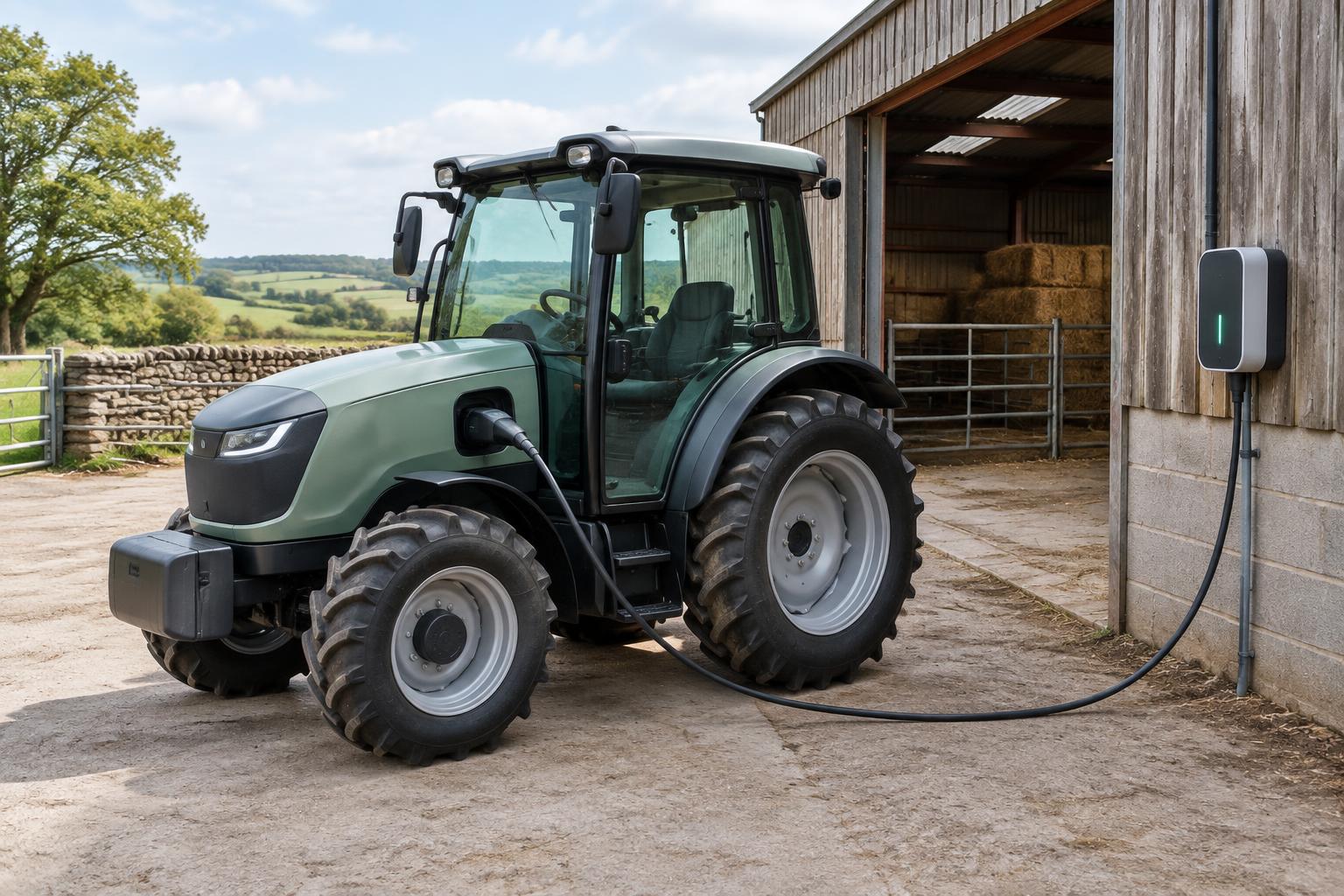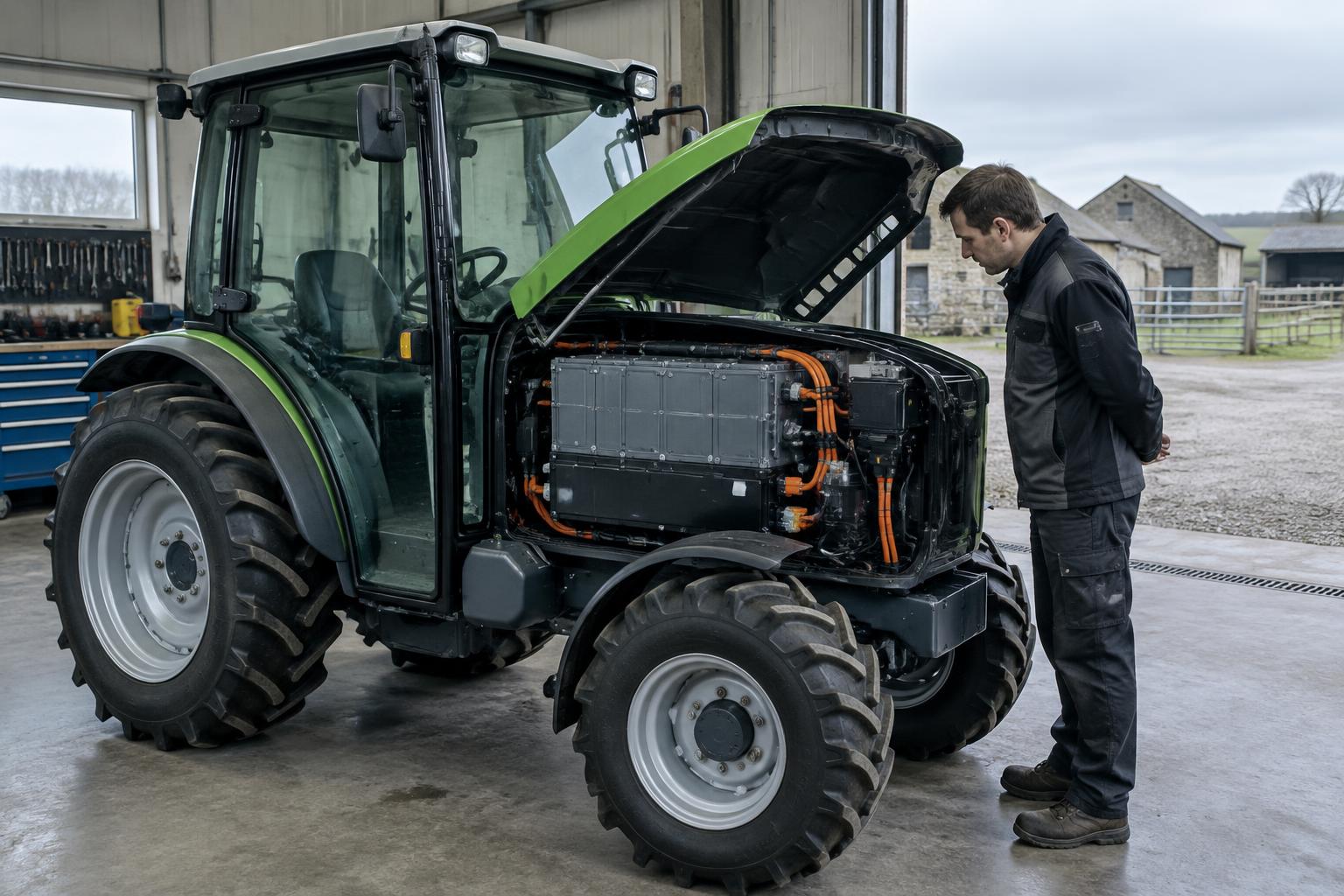
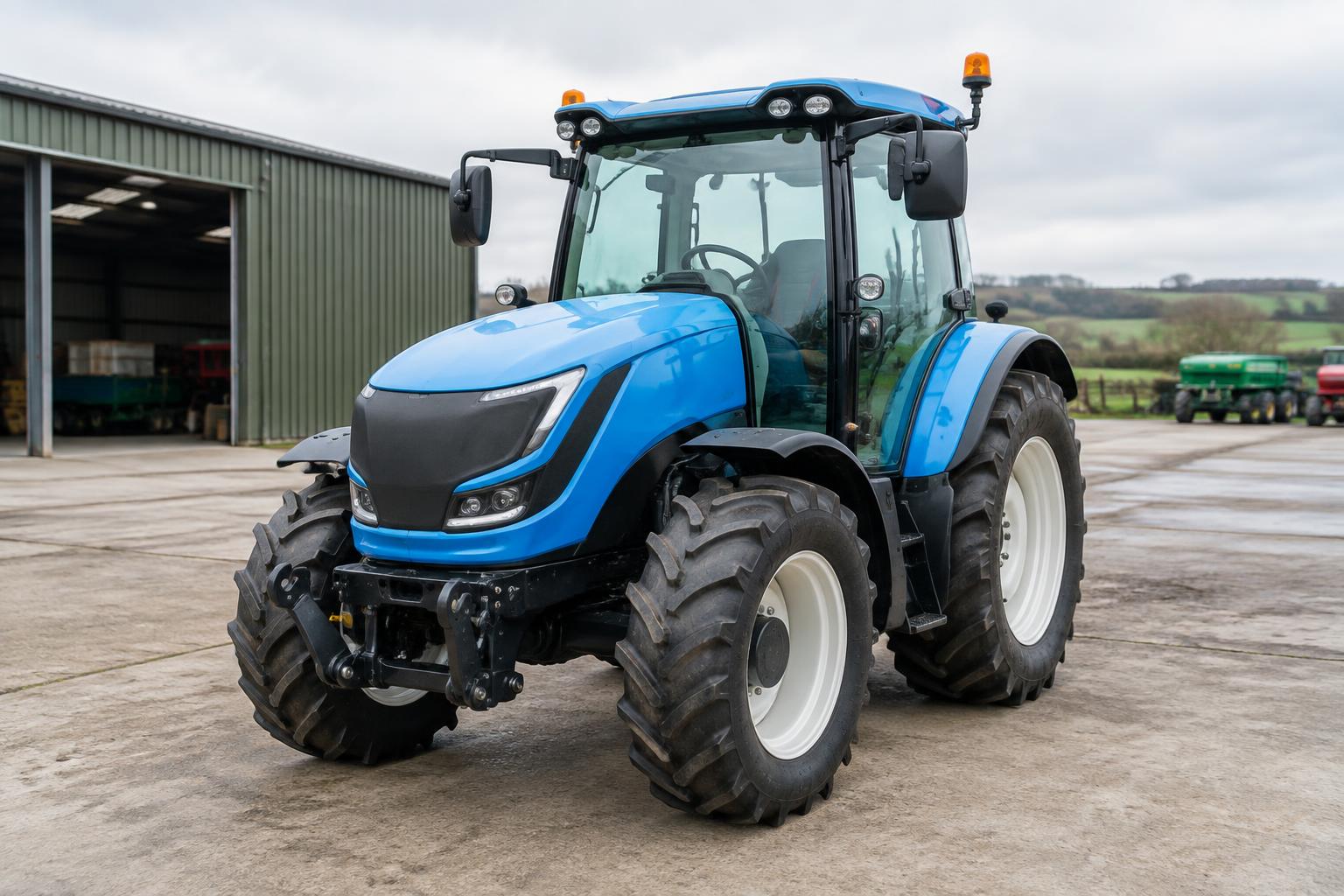
There is no single meaningful UK price for an electric tractor. The market spans compact specialist machines and increasingly capable agricultural equipment, while battery size, power, specification and production volume all affect cost.
Rather than quoting a figure that can quickly become outdated, a better approach is to understand the cost categories. That lets a buyer compare quotations properly and estimate total cost of ownership.
1. Purchase price
Battery-electric machinery can cost more upfront than a broadly comparable diesel machine. The battery is a significant part of that difference.
Price comparisons can also be difficult because standard equipment varies. One machine may include a cab, loader preparation or higher-capacity hydraulics that are optional on another.
Always compare like with like:
- rated or continuous power;
- usable battery capacity where published;
- cab and comfort specification;
- linkage and hydraulic capacity;
- PTO equipment;
- tyres;
- charger supplied;
- warranty;
- dealer preparation;
- delivery.
A headline purchase price without those details is not enough.
2. The charger
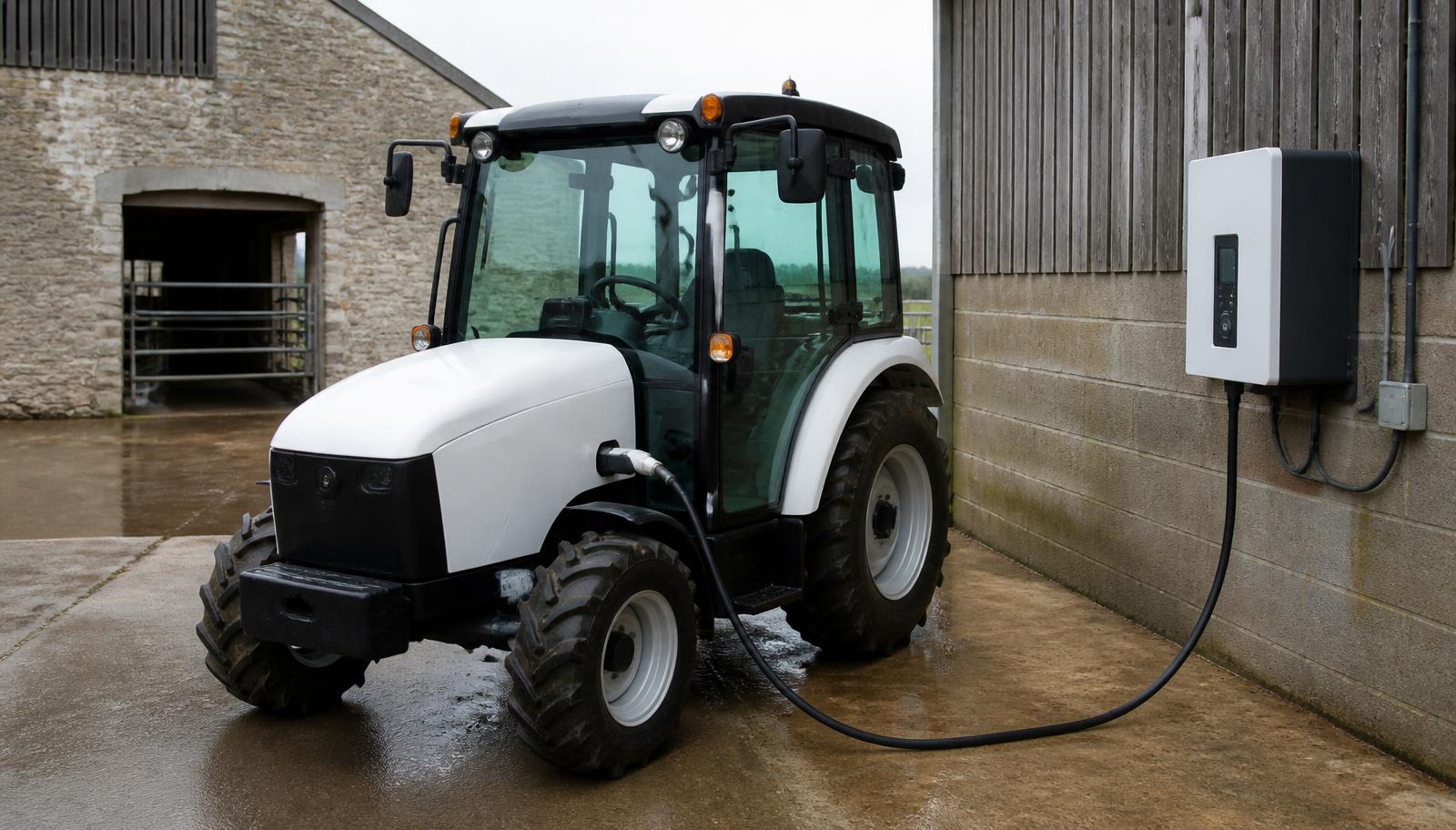
Some electric tractors can charge from relatively ordinary AC infrastructure, while others may benefit from higher-power charging.
The charger itself can add cost, but installation is often the bigger unknown. Cable route, distance from the electrical intake, groundworks, protection equipment and the available site supply can all affect the job.
If a farm already has suitable electrical infrastructure, the additional cost may be modest. If a supply upgrade is required, the project becomes more substantial.
Our electric tractor charging guide explains the planning questions.
3. Electricity
Electricity becomes the equivalent of fuel cost.
Do not calculate it using only the battery's quoted kWh capacity. Charging is not perfectly efficient, and actual energy use depends on the work.
A practical estimate is:
electricity cost = energy drawn from the meter × tariff
If a tractor consumes 40 kWh from the battery during a shift, the meter may need to supply somewhat more than 40 kWh because there are charging and system losses. Use real charger data where available once the machine is in operation.
Time-of-use tariffs can also matter. Overnight charging may be cheaper than charging during expensive periods, depending on the farm's contract.
4. On-site generation
Solar or other on-site generation can change the economics, but “free solar charging” is usually too simplistic.
The important figure is the value of the electricity that would otherwise have been exported or used elsewhere. A farm should consider generation timing, tractor charging time, storage and opportunity cost.
See can you charge an electric tractor with solar? for a fuller explanation.
5. Maintenance
A battery-electric tractor avoids some diesel-engine maintenance, potentially including engine oil, fuel filters and exhaust after-treatment servicing.
That does not eliminate maintenance expenditure. Hydraulics, tyres, brakes, steering, cooling systems, bearings and implements continue to need servicing. High-voltage systems also require competent diagnostic and repair procedures.
The best budgeting method is to obtain the manufacturer's maintenance schedule and compare it with the schedule for the diesel machine being replaced.
6. Battery ageing
A traction battery gradually loses some usable capacity as it ages. The rate depends on chemistry, temperature, charge patterns, usage and management.
The battery may remain useful for many years, but a buyer should understand:
- battery warranty length and conditions;
- capacity warranty if provided;
- diagnostic reporting;
- replacement or repair policy;
- module-level repair options;
- expected residual value.
Battery replacement should not automatically be treated as an inevitable early cost, but it should be recognised as a long-term financial risk.
Read how long electric tractor batteries last.
7. Finance
Electric machinery may be financed in the same broad ways as other business equipment, but lenders will consider asset value and the market.
Compare total finance cost, not simply the monthly payment. If there are any grants or support schemes, check current eligibility directly with the administering body before assuming them in the business case.
Never base a purchase decision on a grant mentioned in an old article.
8. Insurance
Insurers may want information about value, storage, charging, battery systems and use.
The premium may not necessarily be higher or lower solely because the tractor is electric. Speak to an agricultural insurer with the actual specification and charging arrangement.
9. Downtime and productivity
This is often overlooked.
If an electric tractor needs charging at a time when a diesel tractor would keep working, that lost productive time has a value. Conversely, if the tractor charges during existing breaks or overnight, the operational penalty may be negligible.
Maintenance downtime may also differ.
A total-cost model should therefore include whether the machine can deliver the same required work, not only how much energy costs.
10. Residual value
The used electric-tractor market is still developing.
Residual value will be influenced by battery health, manufacturer support, spare parts, software support, warranty transferability and confidence in the technology.
This is one area where a conservative financial assumption can be sensible until stronger market evidence exists.
Build a whole-life cost
A useful comparison includes:
Initial costs
- tractor;
- options;
- charger;
- installation;
- electrical upgrades.
Annual costs
- electricity;
- servicing;
- tyres and normal wear;
- insurance;
- finance;
- downtime.
End-of-period value
- expected resale value;
- remaining battery health;
- disposal or replacement considerations.
Then compare the same period with an equivalent diesel tractor.
The number that matters
The most useful question is not “How much does an electric tractor cost?”
It is:
“How much will it cost to perform the work I need over the ownership period?”
That is the figure worth comparing.