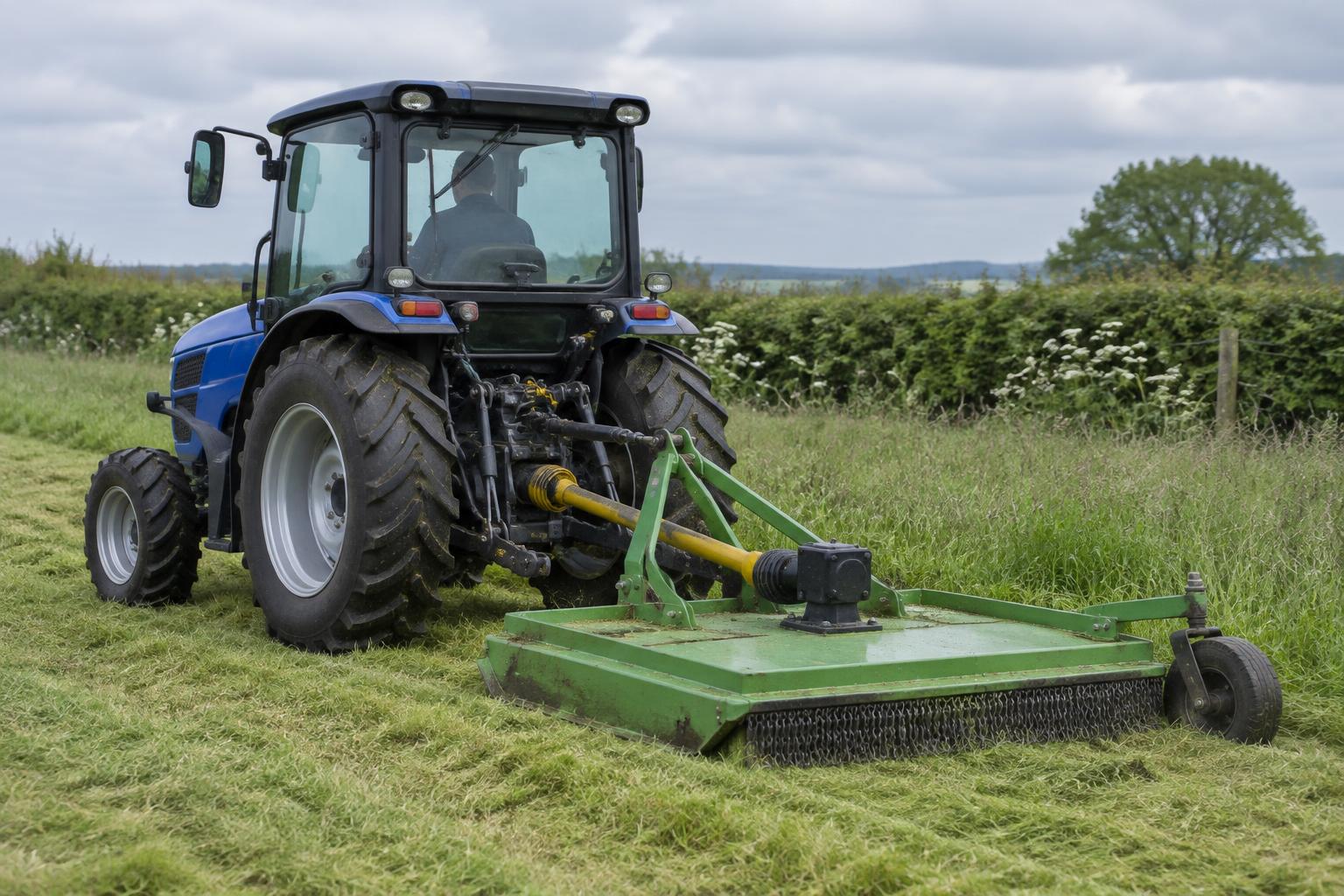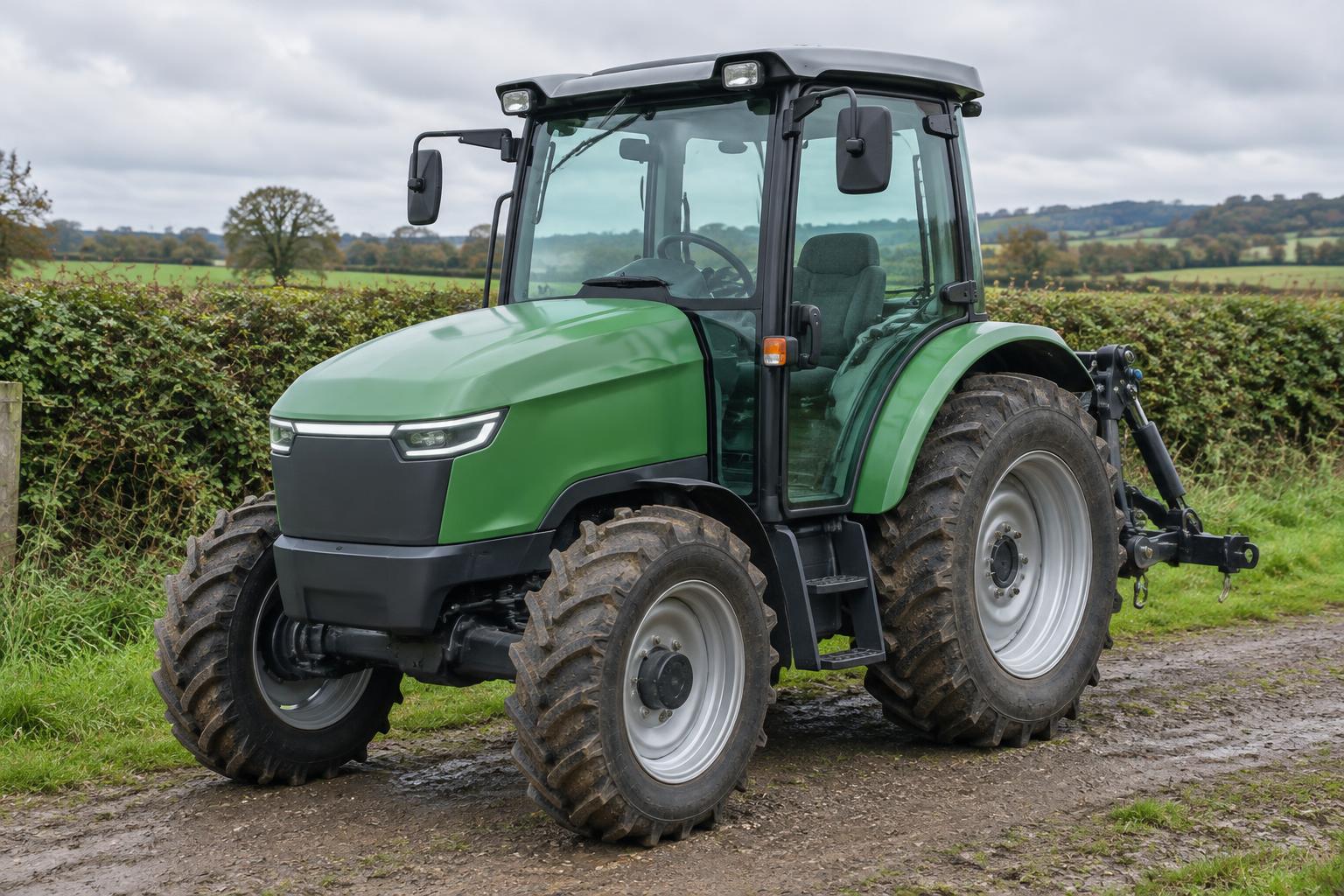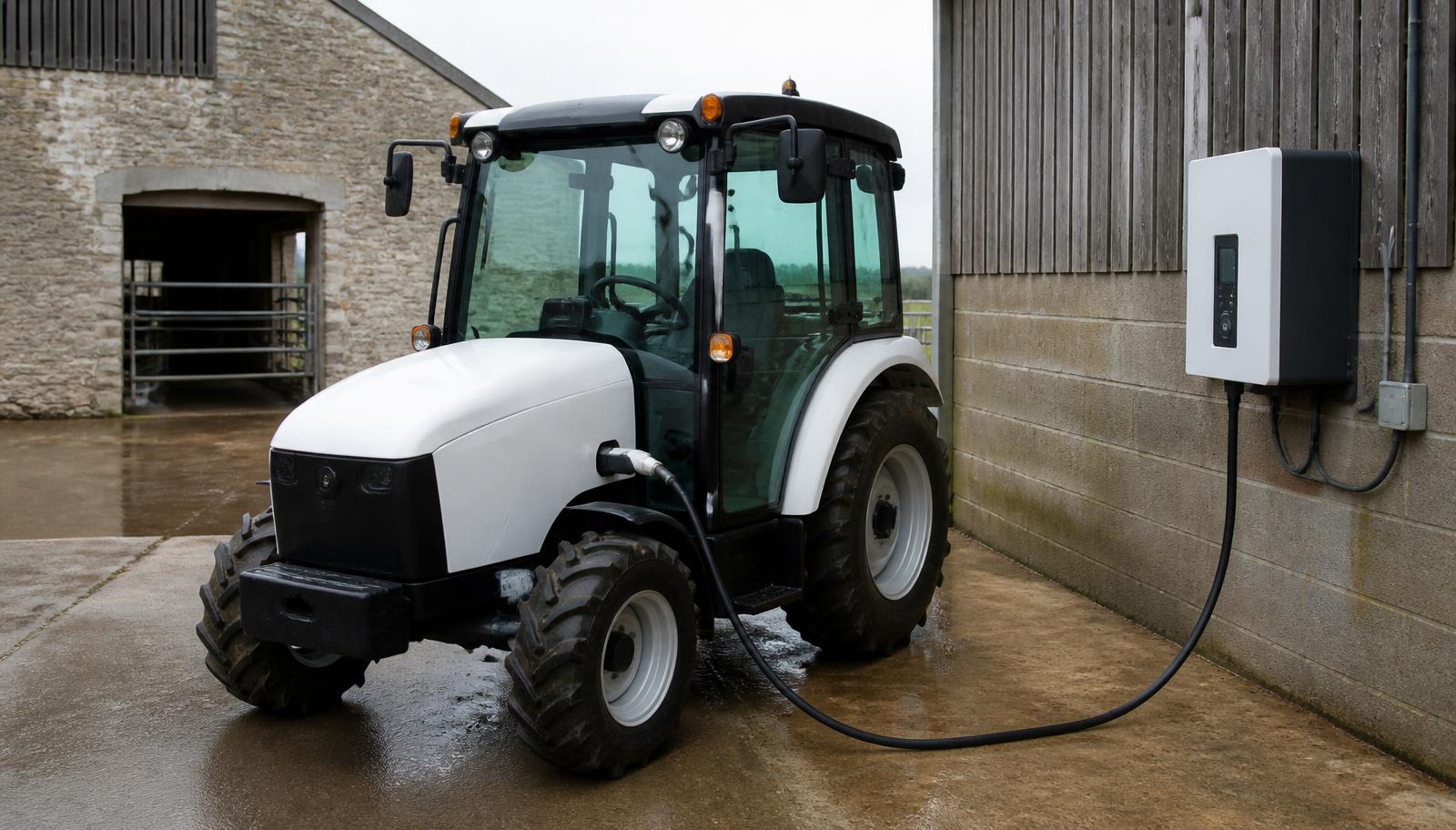
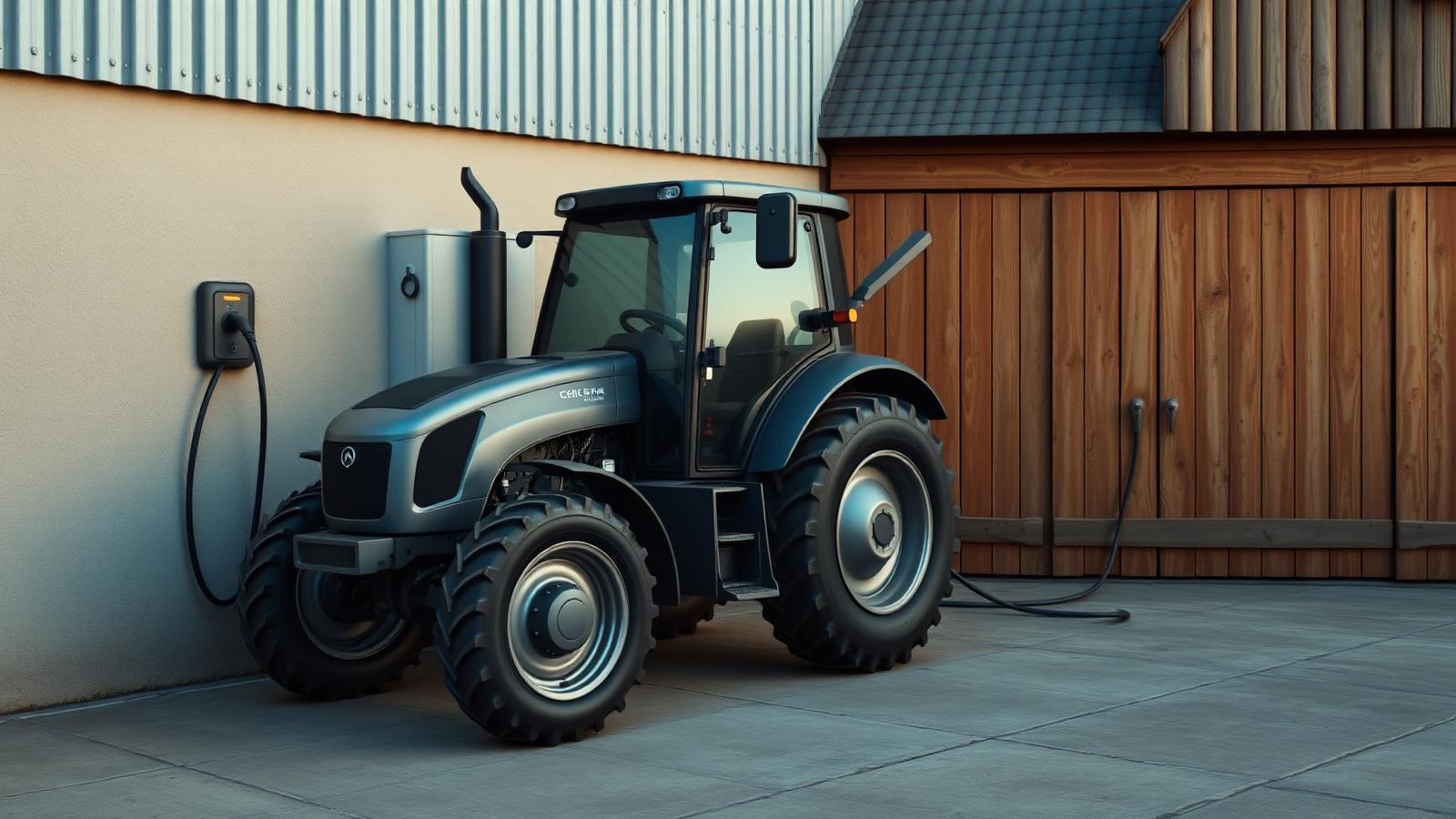
An electric tractor is a tractor that uses electric power for propulsion. In a fully battery-electric machine, electricity is stored in an onboard battery and fed through power electronics to one or more electric motors. Those motors replace the diesel engine as the main source of traction power.
That definition sounds straightforward, but “electric tractor” covers several designs. Some machines are fully battery electric. Others are hybrid and combine an engine with electrical components. This website focuses mainly on battery-electric tractors, because they represent the clearest move away from an internal-combustion powertrain.
What replaces the diesel engine?
The main components normally include a traction battery, an inverter or motor controller, one or more electric motors, a charging system and thermal management to keep important components within an appropriate temperature range.
The electric motor converts electrical energy into mechanical movement. Compared with an internal-combustion engine, an electric motor can deliver useful torque from very low rotational speed and can respond quickly to changes in demand.
How that power reaches the wheels differs between designs. An electric tractor does not necessarily abandon every familiar tractor component. Some designs retain conventional transmissions, axles, hydraulic systems and PTO arrangements. Others use a more highly electrified architecture.
What does the battery do?
The battery is the tractor's energy store, broadly doing the job that a fuel tank performs on a diesel machine, although the two cannot be compared litre for litre.
Battery capacity is commonly expressed in kilowatt-hours, or kWh. A larger kWh figure means more stored electrical energy, but it does not tell you on its own how long the tractor will work.
Runtime depends on power demand. Heavy cultivation, sustained PTO work or steep terrain can consume energy much faster than light yard duties or gentle mowing. This is why a simple “hours per charge” figure can be misleading unless the type of work is stated.
Read how long an electric tractor can run for a more practical explanation.
What is different to driving a diesel tractor?
An electric motor can provide smooth low-speed control and immediate torque. There is also no engine idling in the traditional sense, so energy use can fall very quickly when the machine is not doing useful work.
The sound is different too. An electric tractor is not silent because tyres, transmission components, hydraulics, cooling fans, implements and the work itself still create noise. However, removing a diesel engine can reduce powertrain noise substantially.
That may matter around livestock, residential areas, parks, glasshouses, stables and early-morning grounds work.
Do electric tractors still have hydraulics?
They can. Agricultural tractors still need to lift implements, steer and power attachments, so hydraulic systems remain relevant. The pump may be driven electrically or through another part of the drivetrain depending on the design.
Electrification can allow pumps and auxiliaries to run only when required rather than being continuously driven from an engine. That can improve efficiency, but again the implementation varies by machine.
What about the PTO?
Many tractor jobs depend on the power take-off. Electric tractors can be designed with a conventional mechanical PTO, an electrically driven PTO arrangement or other solutions.
The important buying question is not simply “does it have a PTO?” It is whether the tractor can provide the speed and sustained power needed by the actual implement, while still leaving enough battery energy for the intended working period.
Our guide to PTO and implement compatibility covers this in more detail.
How is an electric tractor charged?
The tractor is connected to an electrical supply through a charging system. Charging might be slow enough for an overnight routine or fast enough to add meaningful energy during a break, depending on the model and infrastructure.
A larger battery does not automatically mean inconvenient charging if the machine can accept a suitably high charging rate, but the farm must have the electrical capacity to supply it.
This is why the charger, site connection and operating schedule should be considered as one system. See how to charge an electric tractor.
Is an electric tractor automatically better?
No. It is a different powertrain with strengths and limitations.
Battery-electric tractors can offer no local exhaust, lower noise, high drivetrain efficiency and potentially lower energy and routine engine-service costs. Against that, batteries are expensive, heavy and finite energy stores. High-load work for long periods remains more demanding than short, predictable tasks.
A diesel tractor can be refuelled quickly and carries a high amount of usable energy in a relatively compact fuel tank. Electric machinery has to solve the same operational requirement through battery capacity, charging opportunities, energy efficiency or a different working pattern.
Why are electric tractors becoming more realistic?
Battery technology, power electronics, electric motors and charging systems have improved because of investment across cars, commercial vehicles, industrial equipment and stationary energy storage.
Agriculture can use many of those developments, but tractors have unusual requirements. They may work slowly under high load, run implements for long periods, operate away from buildings and face dirt, vibration, water, temperature swings and demanding seasonal schedules.
That is why electrifying a tractor is not simply a matter of fitting a larger car battery.
The simplest way to think about one
Treat an electric tractor as an energy system.
Ask:
- what jobs must it perform?
- how much power do those jobs require?
- for how many hours?
- where can it charge?
- how quickly does it need to return to work?
- what implements must it operate?
If those answers fit the machine, an electric tractor can be practical. If they do not, the badge on the bonnet is irrelevant.