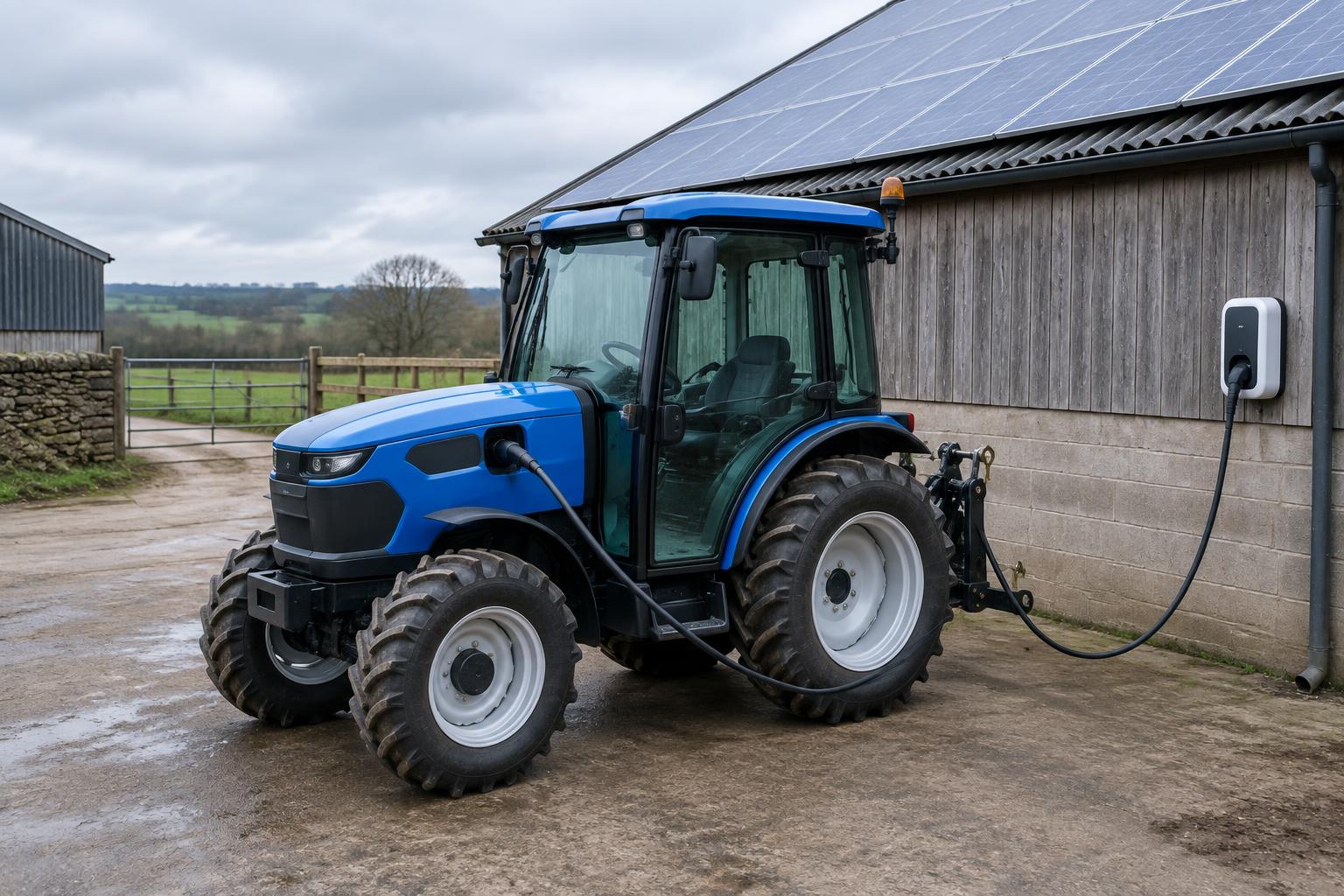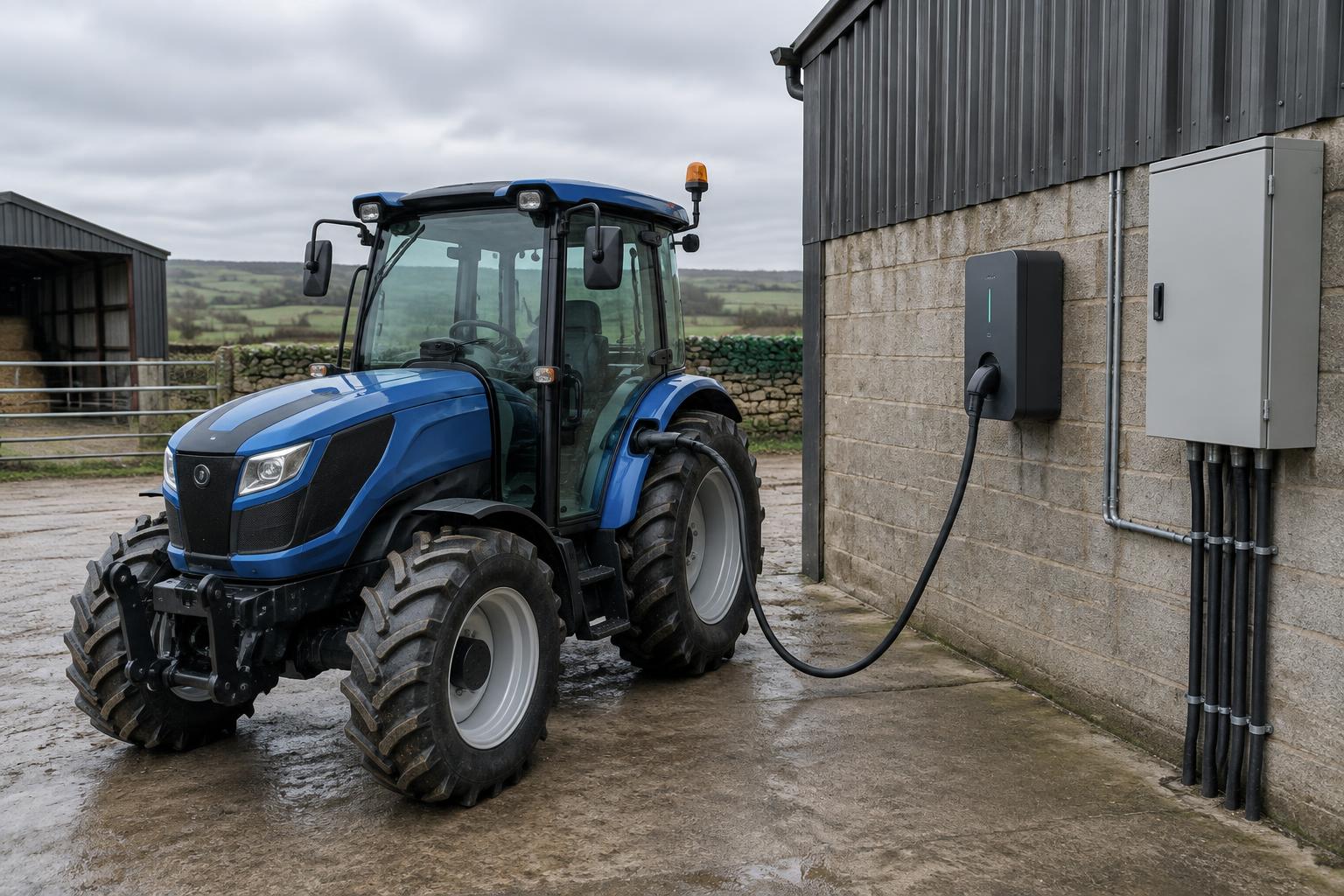
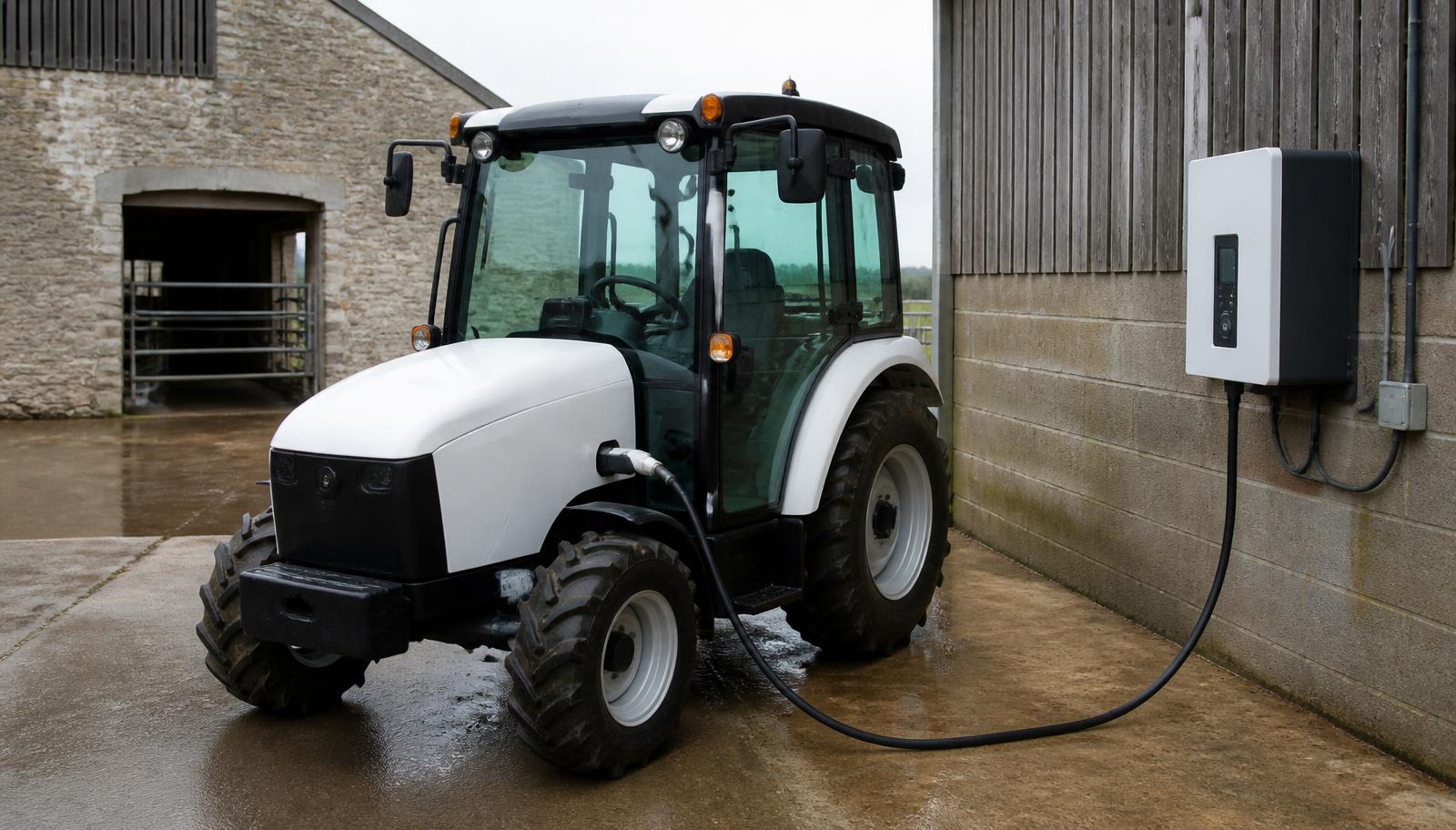
Charging an electric tractor means connecting it to compatible electrical equipment that can supply energy to the traction battery within the limits set by the tractor. In practice, successful charging depends on four things: the machine, the charger, the farm's electrical supply and the time available.
That makes charging part of the machinery plan, not an accessory to think about after purchase.
Understand the tractor's charging capability
Before choosing a charger, establish what the tractor actually supports.
Important specifications include:
- AC charging connection and maximum power;
- DC fast-charging capability, if any;
- battery capacity;
- manufacturer-approved charging equipment;
- temperature limits;
- charge scheduling or charge-limit features.
A charger capable of 50 kW does not make a tractor charge at 50 kW if the machine can only accept a lower rate.
AC charging
With AC charging, alternating current is supplied to the tractor and converted to the required DC voltage by onboard charging electronics.
AC can suit overnight or longer dwell periods. The exact power depends on the tractor and electrical installation.
If a machine finishes work at 5pm and is not needed until the following morning, a moderate charging rate may be perfectly adequate.
DC fast charging
DC charging can deliver higher power directly to a compatible battery system.
This can shorten charging stops, which is useful where a tractor must return to work during the day.
However, higher charging power places greater demands on the site's electrical infrastructure. Cable size, switchgear, available capacity and network connection all become more significant.
Fast charging is therefore a system decision, not merely a more expensive wall box.
How long will charging take?
A simplified estimate is:
charging time ≈ energy required ÷ average charging power
But the real time can be longer because charging power may taper as the battery fills and there are efficiency losses.
For example, adding 40 kWh at an average 20 kW cannot take less than about two hours before losses and power variation are considered.
Use the manufacturer's charging curve or documented times for accurate planning.
Check the farm's electrical capacity
Before installing higher-power charging, assess the site.
The farm may already have significant loads such as grain drying, refrigeration, ventilation, pumps, workshops, milking equipment or other EV charging.
A competent electrical designer or installer should determine whether the supply and distribution equipment can accommodate the new load safely.
Do not assume that because a building has three-phase electricity it automatically has enough spare capacity for the charger you want.
Read our three-phase guide for the distinction.
Choose the charger location carefully
The tractor needs a practical place to park and connect.
Consider:
- protection from vehicle impact;
- cable trip hazards;
- water and mud;
- drainage;
- access for other machinery;
- distance from the electrical intake;
- fire safety;
- security;
- overnight parking;
- future additional chargers.
Avoid a layout where the charging cable must routinely cross a busy route.
Charging outdoors
Electrical equipment used in agricultural environments must be suitable for the conditions.
Farms can be wet, dusty and corrosive, and equipment can be exposed to accidental impact. Agricultural electrical installations require proper design and inspection.
Use equipment and installers appropriate to the environment and follow the tractor and charger manufacturers' requirements.
Scheduling charging
One of the easiest ways to make electric machinery work operationally is to charge while the tractor would otherwise be idle.
Possible charging windows include:
- overnight;
- lunch;
- loading or processing periods;
- between shifts;
- during scheduled maintenance.
If the site's tariff varies by time, scheduling may also reduce cost.
Avoid creating a new demand peak
A powerful charger switched on at the same time as other major farm loads can increase peak demand or exceed available capacity.
Smart charging or load management can help allocate power according to site limits.
This becomes more important if the farm later adds electric vans, loaders or additional tractors.
Charging from solar
Solar generation can contribute to tractor charging, but the match between generation and demand matters.
A tractor parked overnight cannot directly use sunshine that was generated at midday unless the energy is stored or accounted for through the wider grid/site system.
See charging an electric tractor with solar.
Safety and competence
High-voltage vehicle systems and fixed electrical installations can be dangerous.
Users should follow manufacturer instructions and normal site procedures. Fixed charger installations should be designed, installed and inspected by appropriately competent people.
Damaged charging cables or connectors should be taken out of service and assessed rather than improvised or repaired casually.
Plan for growth
Even if the first tractor uses modest charging power, consider where the business may be in five years.
Installing ducting, allowing physical space and understanding spare capacity now may be cheaper than rebuilding the site later.
The charging question to answer
Do not ask only, “How fast can this tractor charge?”
Ask:
“Can our site put enough energy into this tractor during the time it is normally parked?”
If the answer is yes, charging may fit the operation very naturally. If the answer is no, work out what needs to change before committing to the machine.