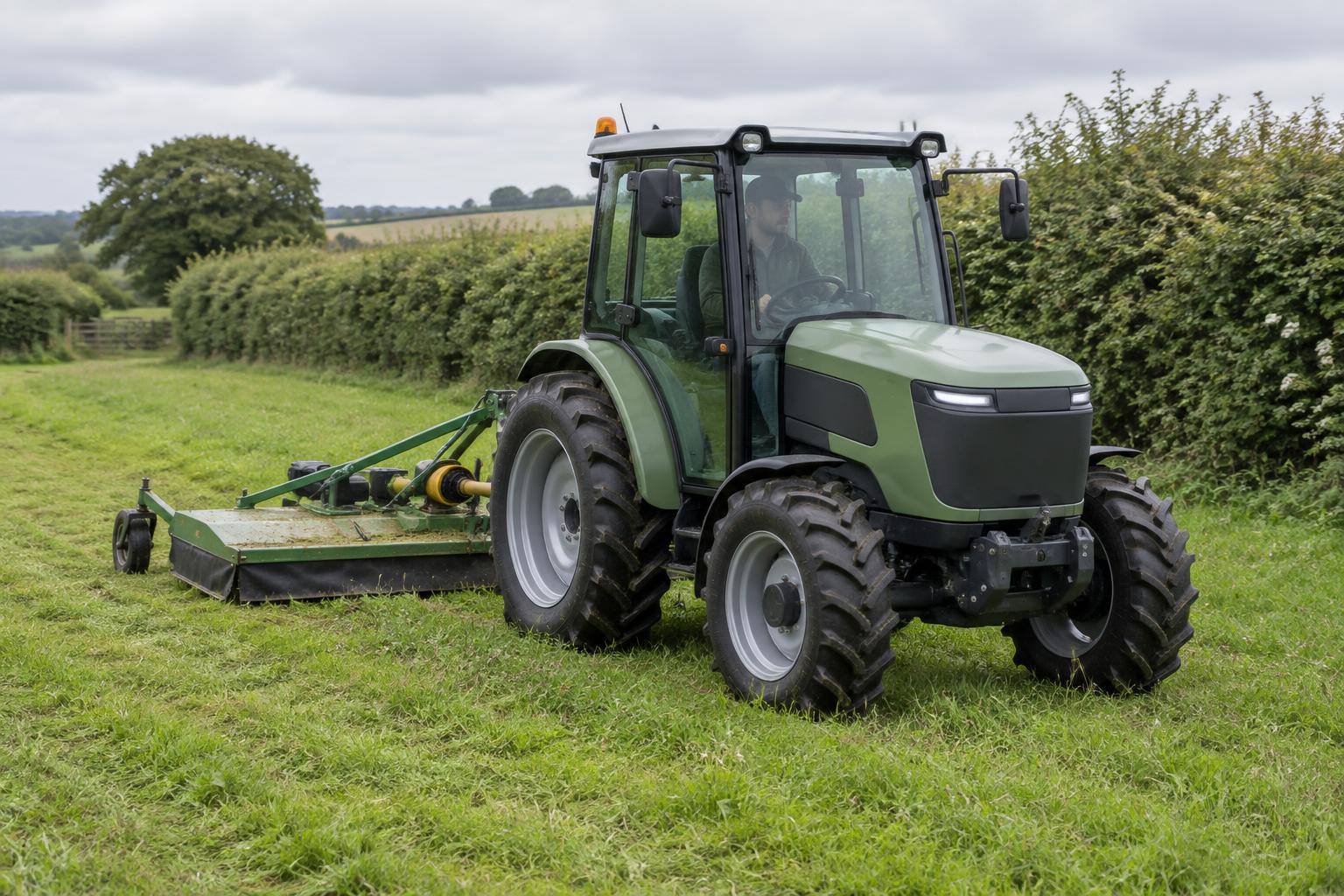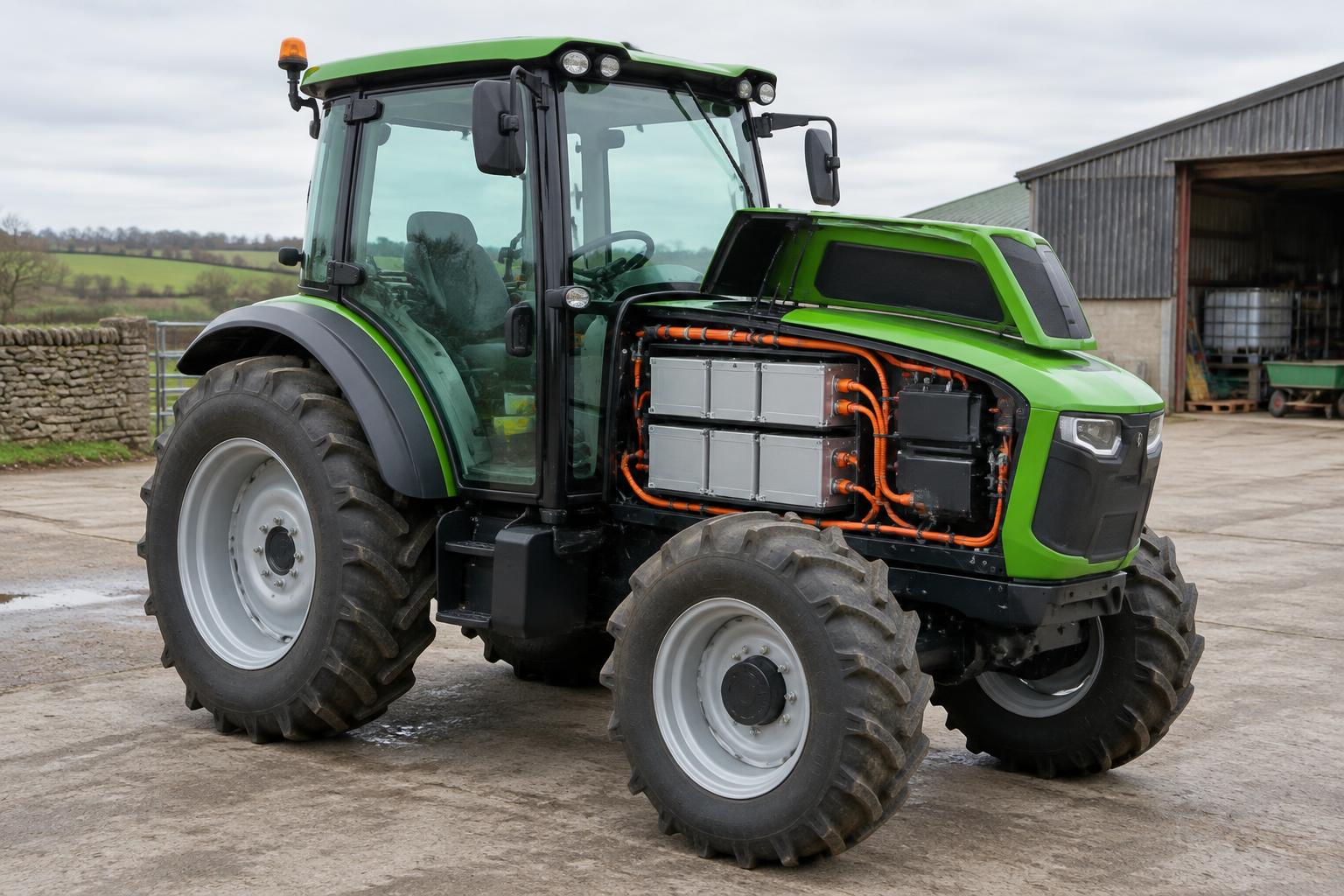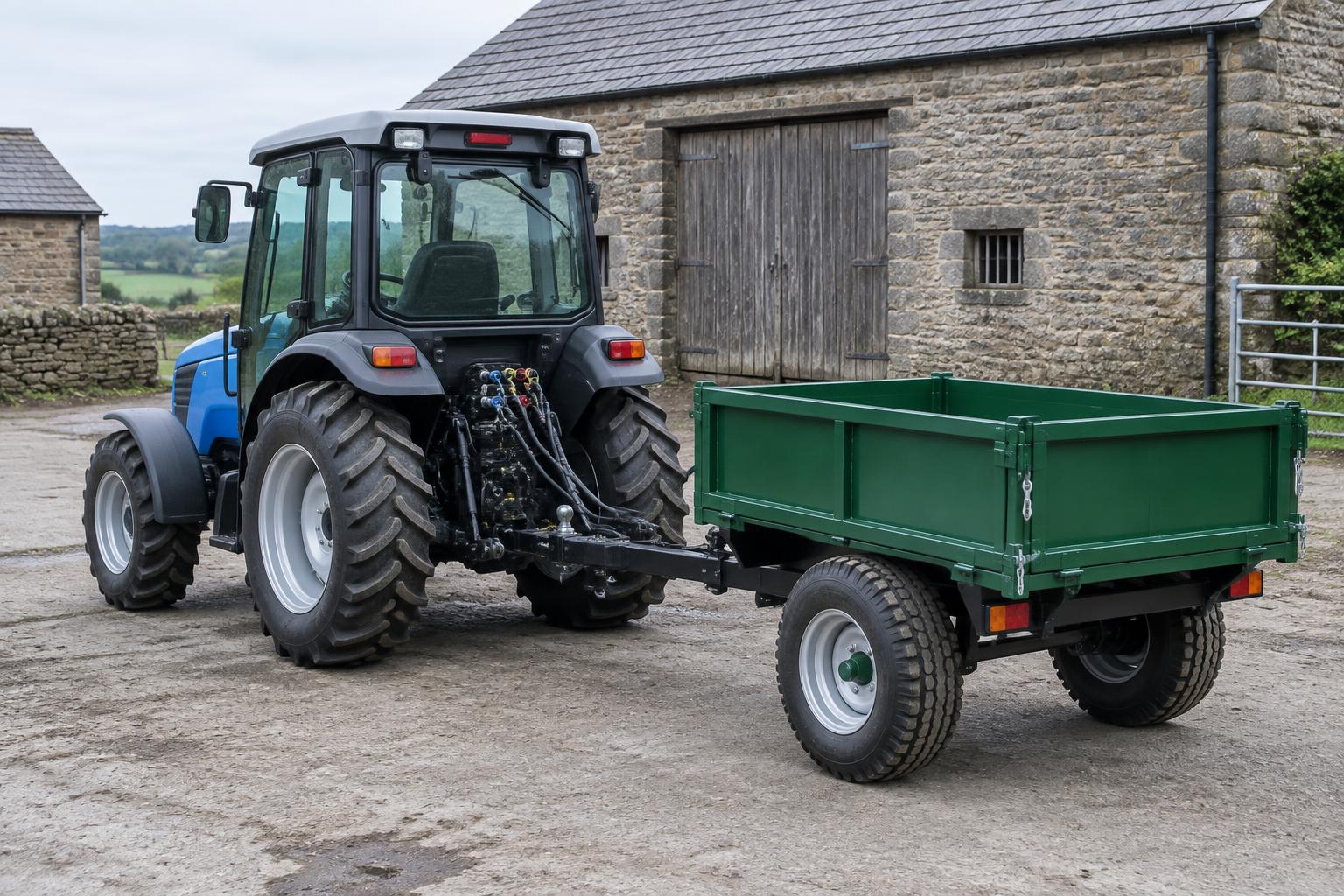
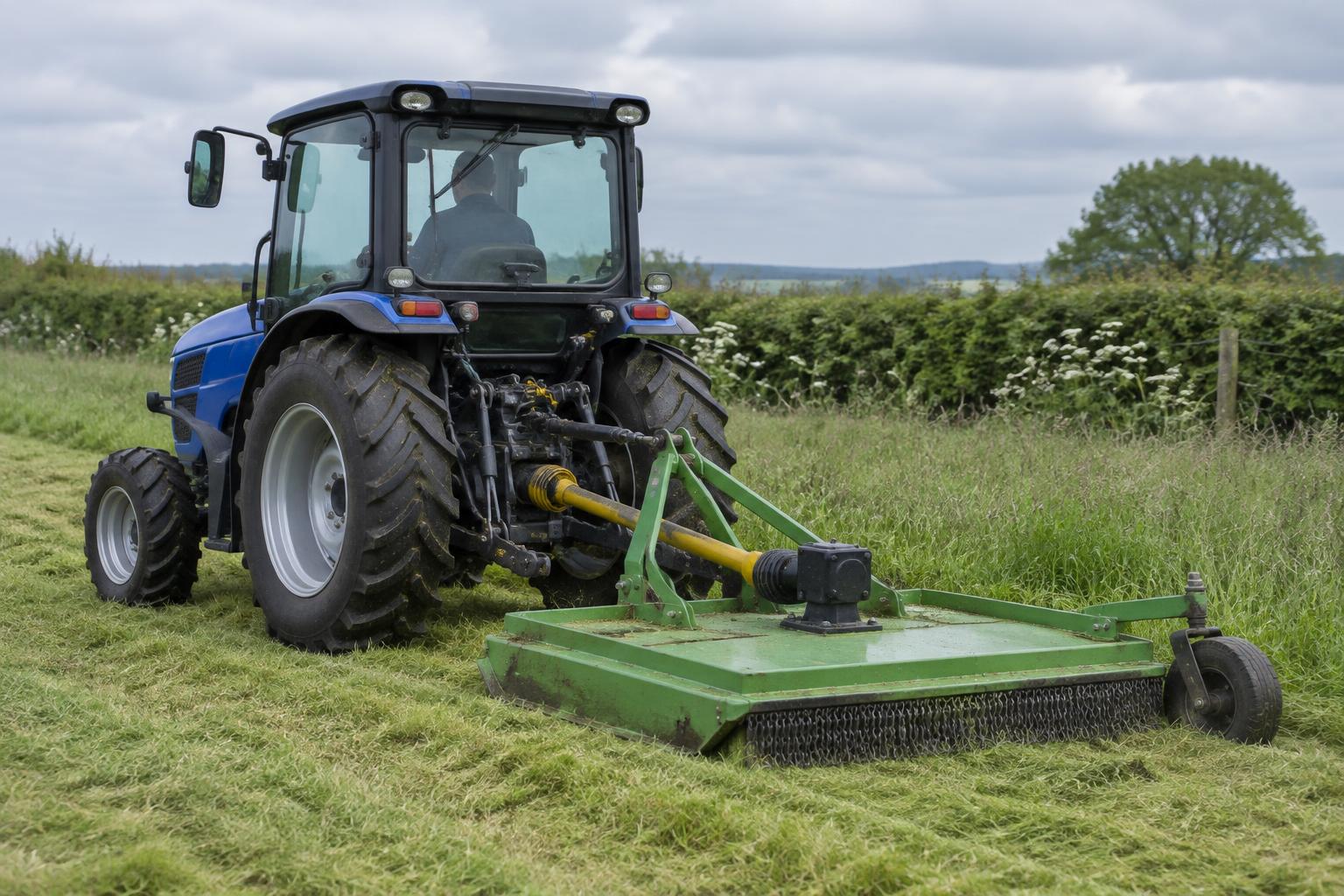
An electric tractor can be designed to use familiar three-point linkage, PTO and hydraulic implements. Whether a particular attachment is suitable depends on the tractor's specification and the implement's power, weight and hydraulic requirements.
The most common mistake is to ask only whether an implement fits. The better question is whether the tractor can operate it safely and for the required length of time.
Three-point linkage
Many tractors use standardised linkage categories to attach mounted implements.
An electric tractor may retain a conventional rear linkage, but buyers should check:
- linkage category;
- lift capacity;
- lift capacity at the required distance;
- tractor weight and stability;
- front ballast requirements;
- implement dimensions.
A heavy implement can be physically attachable but still unsuitable because of stability or axle-load limits.
PTO operation
The PTO transfers mechanical power to implements such as mowers, toppers, feeders and other equipment.
Electric tractors can provide PTO capability in different ways. Some designs retain a familiar mechanical PTO, while future designs may electrify implement power more directly.
Check:
- available PTO speeds;
- continuous PTO power;
- shaft type;
- control method;
- whether the required speed is independent of vehicle speed;
- how the load affects battery runtime.
Why continuous power matters
Peak motor power can look impressive on a specification sheet.
An implement may require sustained power for hours.
The tractor must therefore provide that output continuously within thermal and battery limits.
This is why rated or continuous power can be more useful than a short-duration peak figure for PTO work.
Hydraulics
Hydraulic requirements can be just as important.
Check:
- pump flow;
- maximum pressure;
- number of spool valves;
- power beyond if required;
- loader requirements;
- hydraulic oil compatibility;
- continuous flow capability.
High hydraulic demand draws energy from the battery even if the tractor is barely moving.
Electric implements
Electrification creates an opportunity to power some implements electrically rather than mechanically or hydraulically.
Electric drives can potentially improve control and efficiency because motors can operate only when needed and at variable speed.
However, interfaces are still developing. Do not assume that a future electrical connector or high-voltage implement is universally standardised.
Existing implements
One of the strongest practical questions for a farm is whether its existing equipment can continue to be used.
Replacing a tractor is one cost. Replacing an entire implement fleet is another.
Before purchase, make a list of every implement that the new tractor must handle.
Include:
- mounted weight;
- PTO requirement;
- hydraulic flow;
- towing requirement;
- electrical connections;
- working width;
- typical hours per day.
Then verify each against the tractor.
Battery impact
An implement can dominate energy consumption.
A tractor driving slowly with a heavy PTO load may use battery energy quickly even though it covers little distance.
This is why car-style range figures are poor measures of tractor suitability.
For runtime planning, see how long an electric tractor can run.
Front loaders
Loader work adds several requirements:
- hydraulic flow;
- repeated lifting;
- stability;
- axle load;
- ballast;
- visibility;
- attachment compatibility.
Electric motors can suit stop-start loader operation well, but the entire tractor-loader combination still needs to be approved.
Towed equipment
Towing depends on legal and technical limits as well as motor power.
Trailer weight, braking, drawbar limits, terrain and road use all matter.
Read electric tractors for towing and hydraulic work.
Efficiency opportunity
One advantage of electrification is that auxiliary systems do not always need to run continuously.
An electrically controlled hydraulic pump, for example, can potentially deliver power according to demand rather than being tied mechanically to engine speed.
This can reduce wasted energy.
The actual benefit depends on design and duty.
Safety
PTO guards, hydraulic pressure and suspended implements remain hazardous.
Electric power does not remove normal agricultural machinery risks.
High-voltage implement connections, where fitted, add another safety layer and should be handled only according to approved procedures.
Build an implement compatibility sheet
For each existing implement, create a simple table:
- implement name;
- linkage;
- weight;
- PTO speed;
- estimated power;
- hydraulic flow;
- towing requirement;
- daily hours.
Take that list to the supplier.
The important conclusion
An electric tractor does not need a completely new world of implements.
Many familiar attachments can remain usable when the tractor provides the right mechanical and hydraulic interfaces.
But compatibility is a whole-system question: connection, power, weight, energy and safe operation all have to work together.