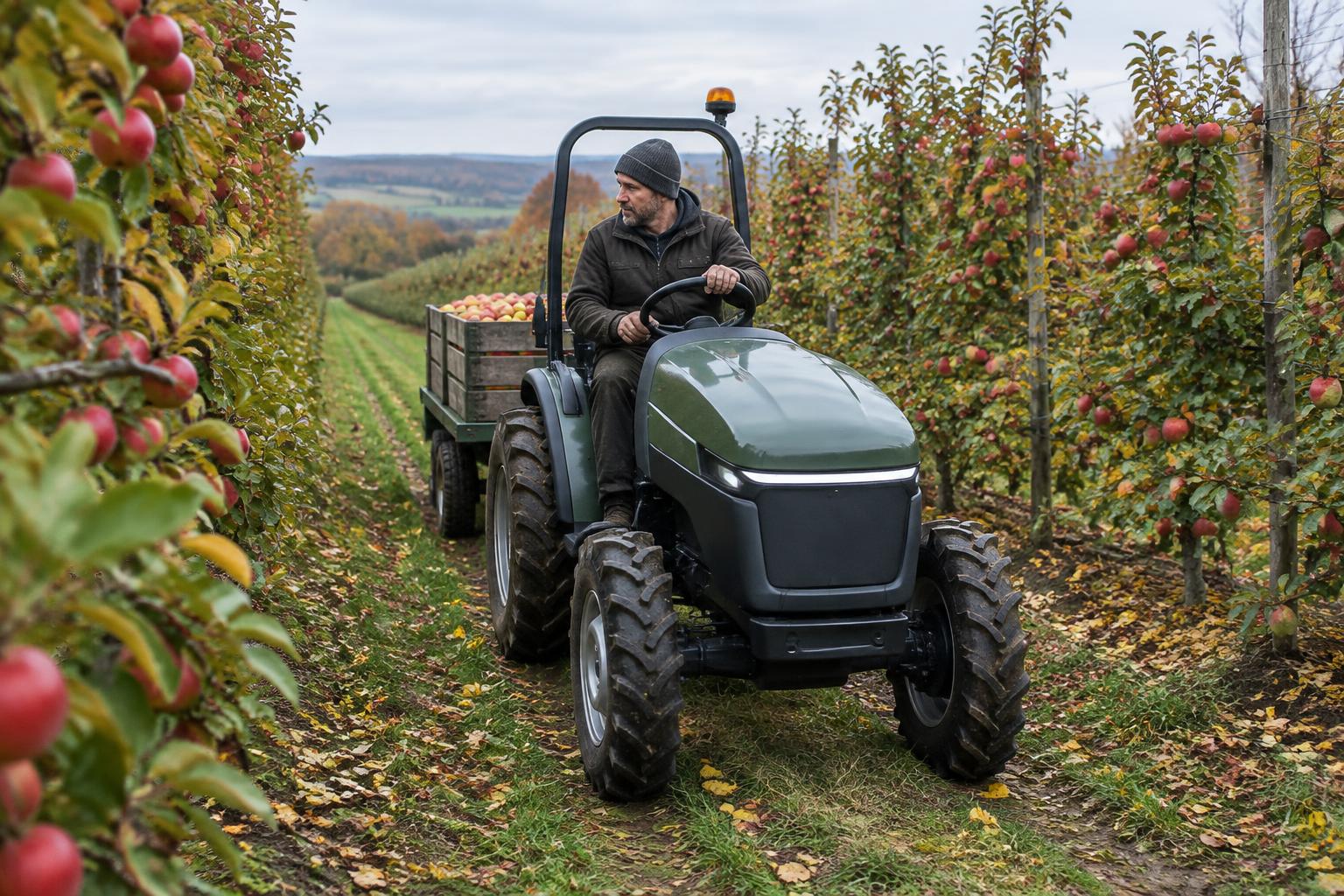
Orchards and vineyards can be attractive settings for electric tractors because machines often work at relatively low speeds on repeatable routes and return to the same site. Lower noise and no tailpipe exhaust can also be useful around workers, crops and nearby communities.
That does not mean every orchard or vineyard job is easy to electrify. Spraying, mowing, cultivation, transport and specialist attachments can all impose different power demands.
Narrow dimensions matter
Specialist crop tractors may need to work between close rows.
Width, turning circle, height and stability can therefore matter as much as motor power.
A generic compact electric tractor is not automatically an orchard tractor. Buyers should select a machine built for the physical constraints of the crop system.
Low-speed control
Electric motors can provide smooth control at low speed.
That can be valuable when working close to vines, trees, posts and workers.
Precise movement may also help with automated or sensor-guided operations as those technologies develop.
Noise
Orchards and vineyards can sit close to tourism, hospitality or residential areas.
Reduced powertrain noise may make working periods less disruptive.
Workers around the tractor may also benefit from a quieter environment, although hearing protection may still be required for noisy implements.
Tailpipe exhaust
Battery-electric tractors do not produce exhaust at the point of operation.
That can be useful in covered crops, tunnels or situations where workers spend long periods close to machinery.
It does not eliminate dust, spray exposure or emissions from other equipment, so normal occupational controls remain essential.
PTO demand
Many orchard and vineyard jobs rely on PTO-powered equipment.
Mowers, sprayers and other implements can place a sustained demand on the tractor.
The tractor needs enough continuous PTO capability and battery energy for the full operation.
Check PTO and implement compatibility before assuming an existing attachment will transfer.
Spraying
Spraying can involve long, repeated passes and equipment with pump or fan power requirements.
That makes energy modelling particularly important.
The distance travelled may be modest while the implement consumes significant power.
A demonstration with the actual sprayer or a well-matched equivalent can provide better evidence than a general runtime claim.
Mowing and under-row work
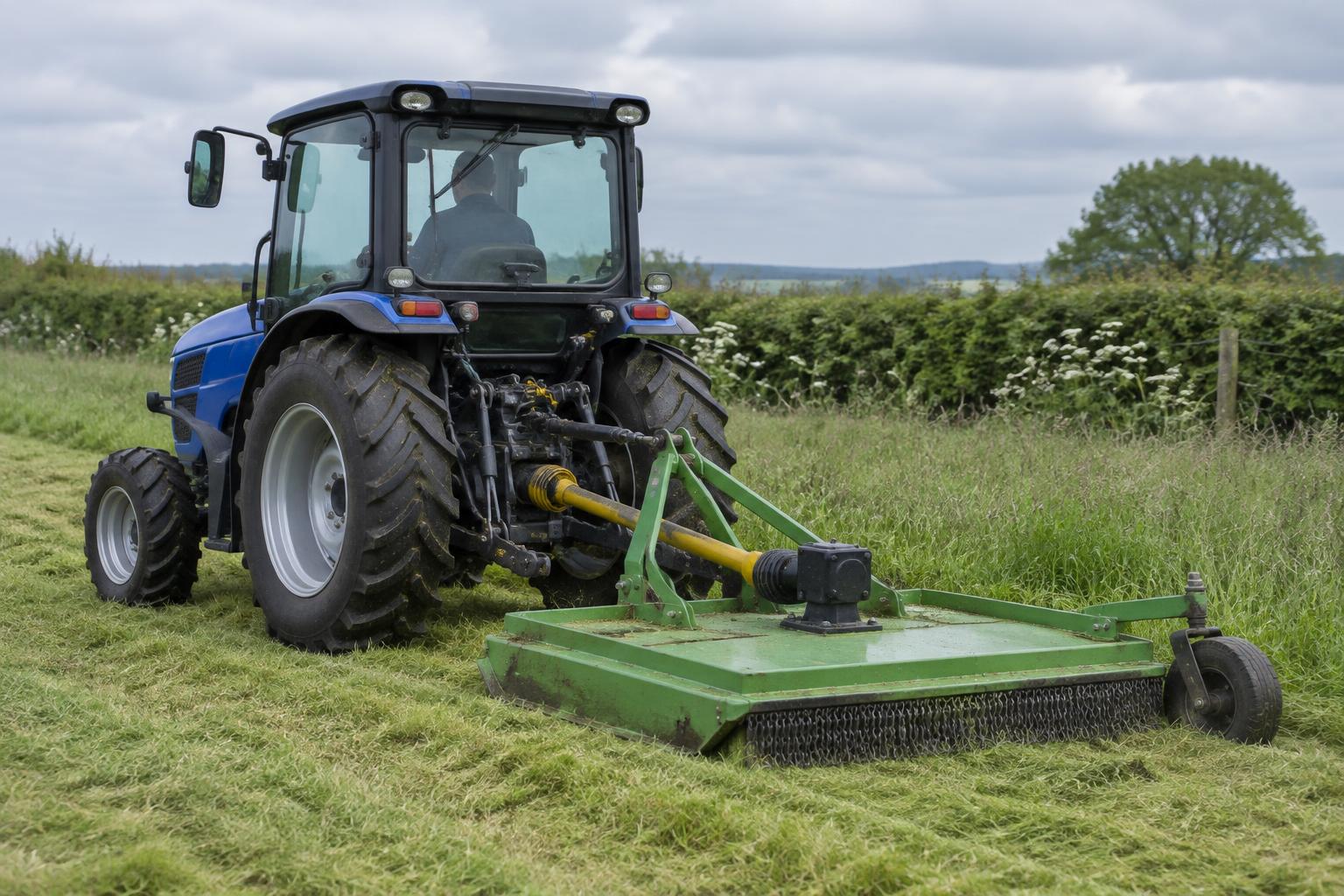
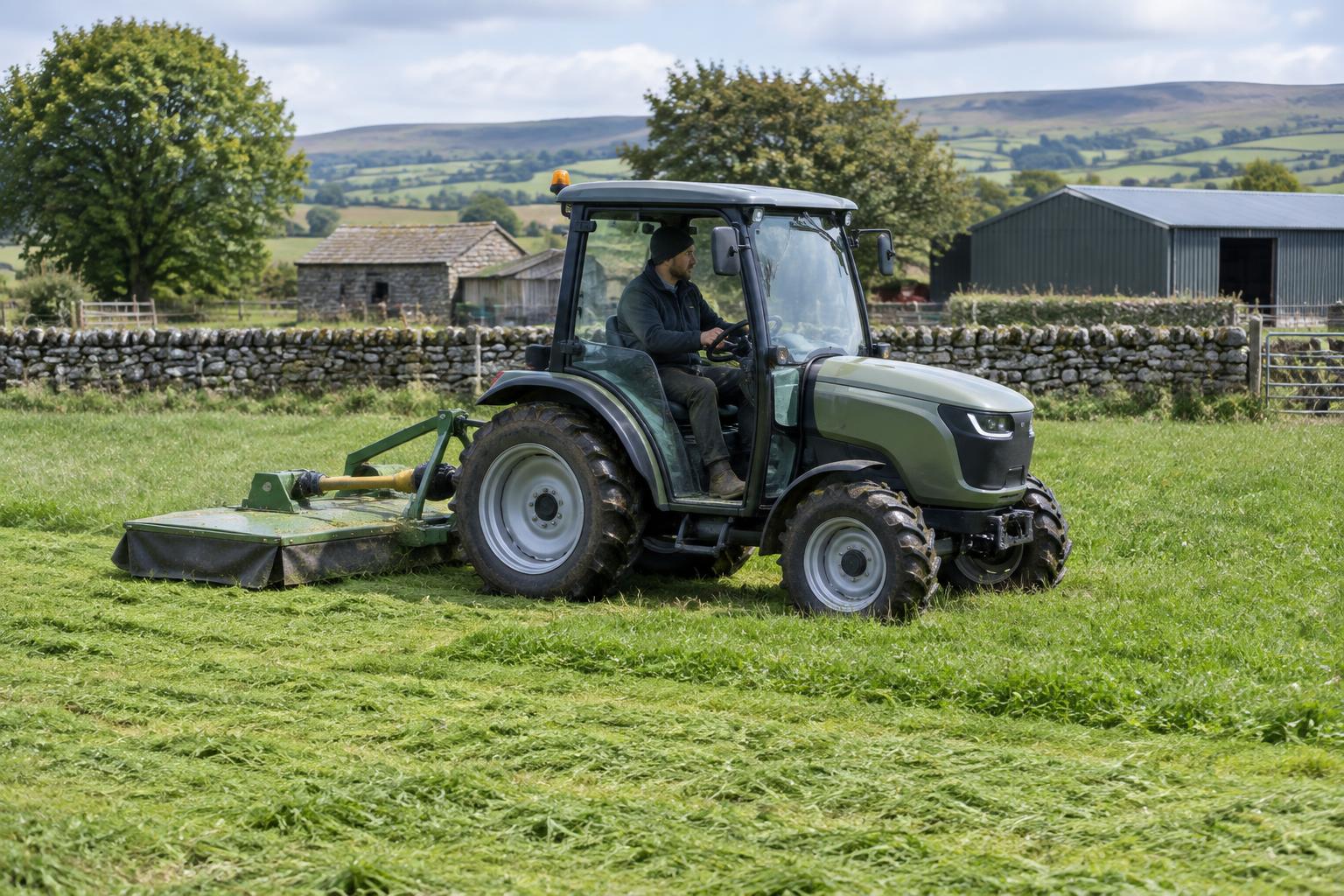
Mowing, sweeping and mechanical weed control can be well suited to lower-speed electrified machinery, depending on width and power.
Electric auxiliary drives may eventually allow more implement functions to be controlled independently, improving efficiency and precision.
Availability varies, so current compatibility should be verified.
Charging pattern
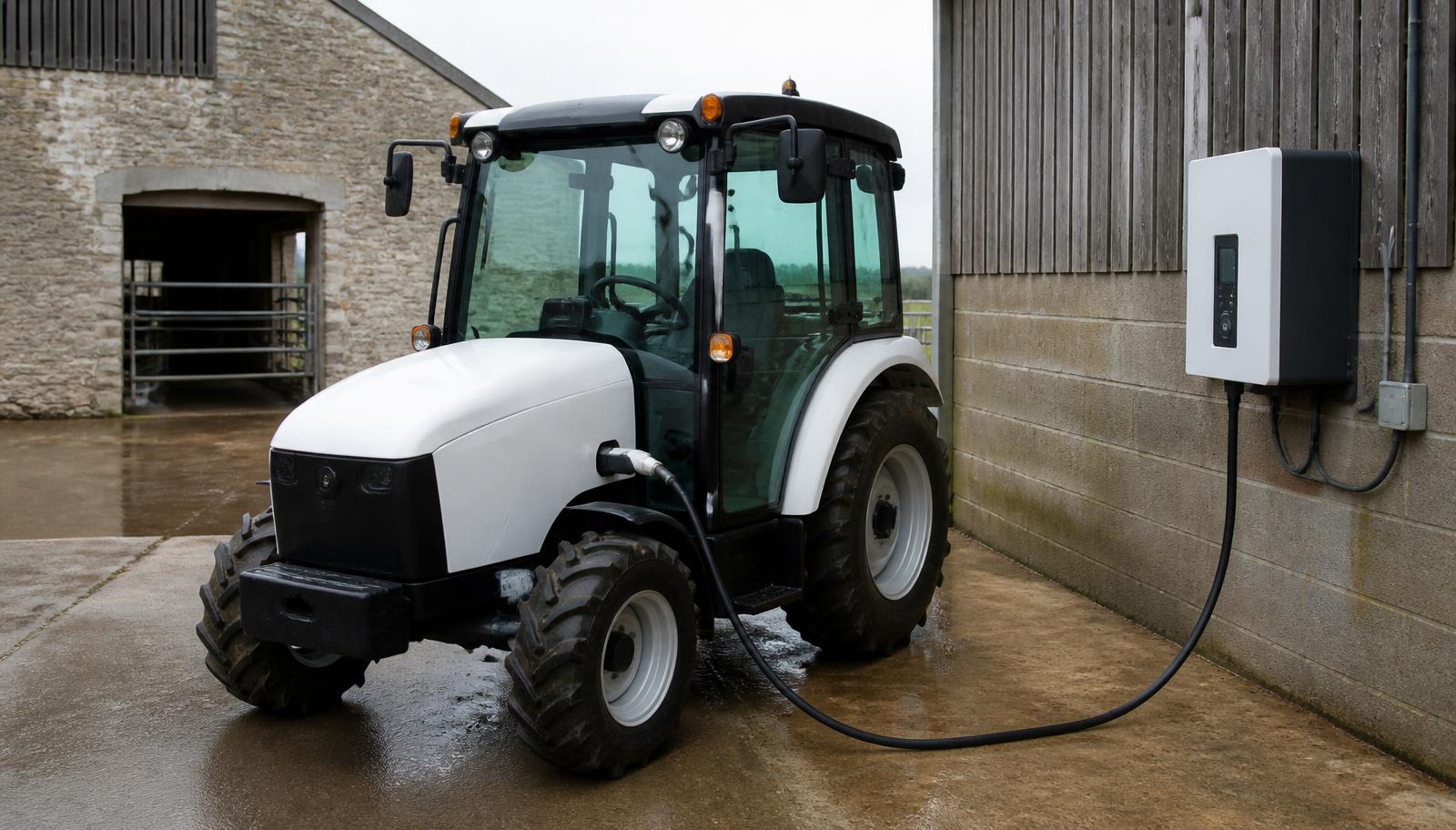
A crop tractor commonly returns to the same farm or winery.
That creates a clear charging location.
If work happens in blocks, the tractor may also have mid-day charging opportunities.
The question is whether enough energy can be added during natural downtime. See electric tractor charging.
Solar generation
Vineyards and orchards may have buildings or land suitable for solar generation, but direct charging still depends on timing and electrical design.
A tractor working all daylight hours may be parked just when solar output falls.
Storage or grid interaction may therefore be part of the energy strategy.
Our solar charging guide explains the trade-offs.
Slopes and terrain
Many vineyards sit on slopes.
Climbing uses energy, and wet ground affects traction.
Descending may offer some regenerative braking opportunity on compatible machines, but the energy recovered will be less than the energy required to climb.
Stability and braking are more important than energy recovery.
Chemical and washdown environments
Spraying and washdown can expose machinery to moisture and chemicals.
Electrical connectors and enclosures must be suitable for the environment, and cleaning should follow manufacturer instructions.
Electric does not mean fragile, but it does mean high-voltage components must remain protected.
Business case
The financial case can benefit from:
- predictable annual hours;
- cheaper electricity;
- on-site generation;
- lower routine powertrain service;
- value placed on quiet operation;
- no local exhaust.
Against that, specialist electric tractors may command a purchase premium and the dealer network may be smaller.
The right fit
Orchards and vineyards are often cited as strong early applications because the physical and operational pattern can align well with electrification.
The winning machine still needs the correct dimensions, implement capability, runtime, charging and support.
Start with the crop work, not the electric label.