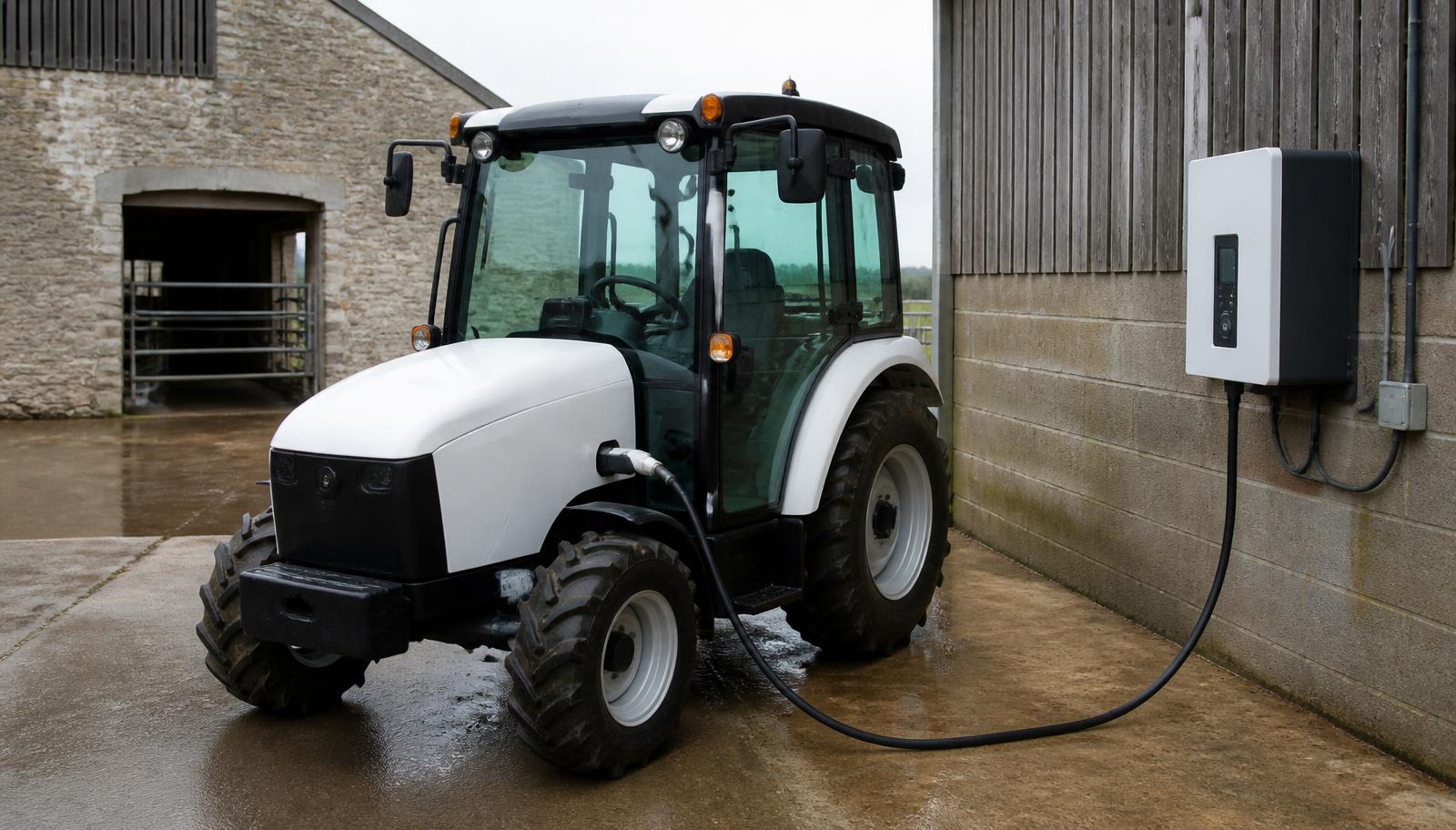
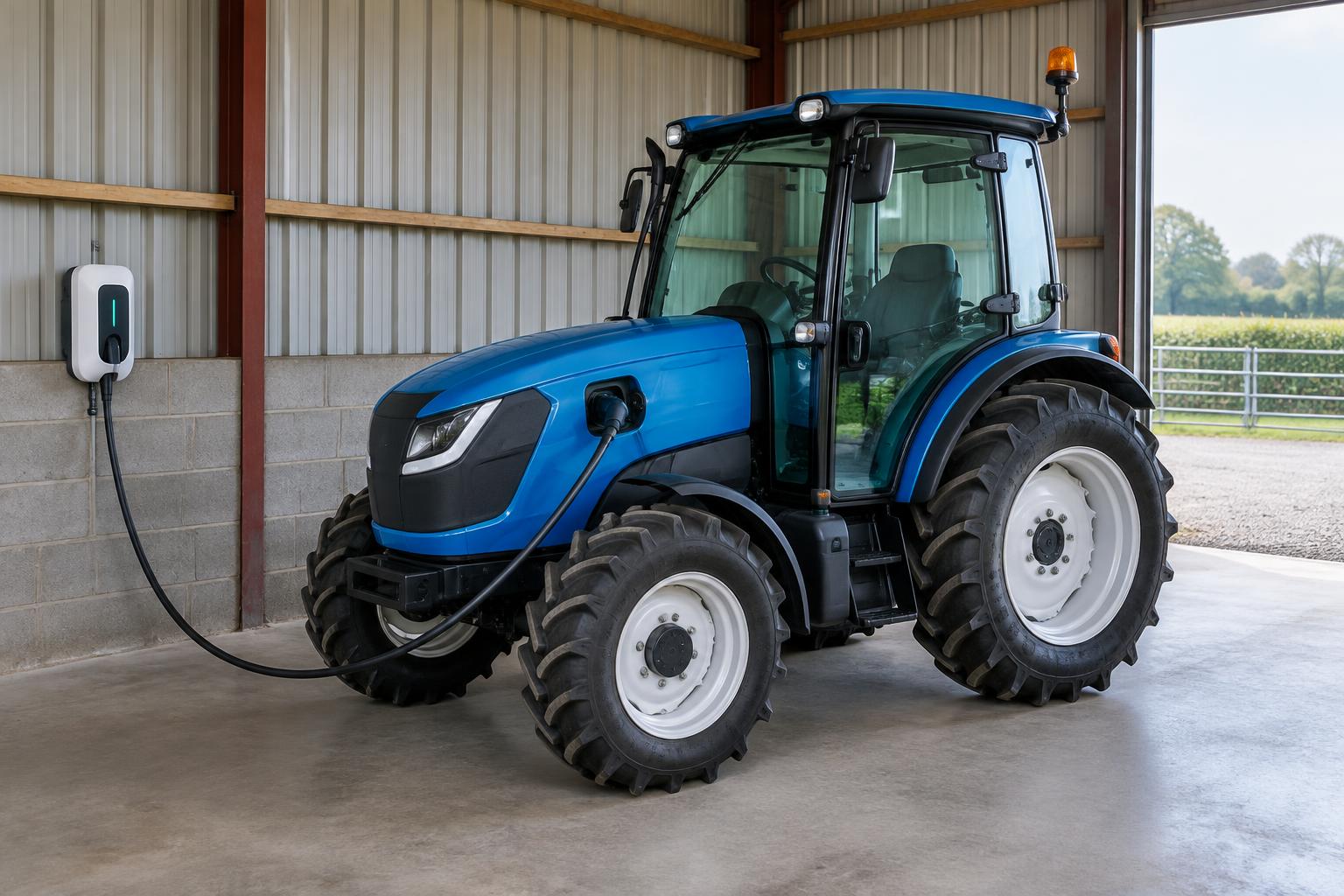
Electric tractor charging is routine when equipment is correctly designed, installed and maintained, but it involves high electrical energy and should be treated with the same seriousness as other farm electrical systems.
Good safety comes from proper installation, undamaged equipment, sensible parking and clear procedures rather than fear of the technology.
Use approved charging equipment
Use chargers, cables and connectors intended for the tractor.
Do not improvise adaptors, extend high-power charging cables or modify connectors because a plug happens to fit.
The tractor's charging system and battery-management software are designed around approved electrical limits.
Fixed installation requires competence
Agricultural electrical environments can be challenging.
Moisture, dust, corrosion, livestock, machinery impact and outdoor exposure all affect equipment selection.
Fixed charger installation should be designed and carried out by appropriately competent electrical professionals using equipment suitable for the environment.
Which UK rules apply to a charging installation?
Fixed charging equipment in the UK is covered by BS 7671, the Wiring Regulations. Section 722 of BS 7671 deals specifically with electric vehicle charging installations, and it applies to new installations as well as additions and alterations to existing ones, regardless of the age of the existing installation.
Section 722 covers requirements that do not arise in ordinary agricultural wiring, including a dedicated final circuit for each charging point, RCD protection with DC fault detection, and restrictions on the use of PME (TN-C-S) earthing arrangements under Regulation 722.411.4.1. The IET Code of Practice for Electric Vehicle Charging Equipment Installation gives practical guidance on applying it.
BS 7671 is amended periodically, so the amendment in force at the time of the work is the one that applies. Your electrician should confirm which edition and amendment they are certifying against.
There is also a network notification step. Under the Energy Networks Association process, where the maximum demand of the whole connection with the charging equipment installed does not exceed 13.8 kVA, the ENA should be notified after installation. Where the maximum demand exceeds 13.8 kVA, the Distribution Network Operator should be contacted before the work begins. Farm charging installations frequently exceed that threshold, so this is usually a step to take early rather than late.
This site does not give electrical installation guidance. Use an electrician competent in EV charging installation work, ask which BS 7671 amendment they are working to, and keep the certification.
Protect chargers from impact
A charger mounted beside a machinery route can be hit by a tractor, loader, trailer or telehandler.
Use sensible positioning and physical protection where needed.
The aim is to make charging convenient without placing expensive electrical equipment in the path of normal work.
Cable management
Charging cables should not create trip or entanglement hazards.
Avoid routes across:
- vehicle tracks;
- stable yards;
- pedestrian paths;
- doorways;
- drainage channels.
Provide a proper place to hang or retract the cable when not in use.
Inspect before connecting
Operators should visually check connectors and cables.
Take equipment out of service if there are signs of:
- cuts;
- crushed sections;
- exposed conductors;
- damaged pins;
- melted plastic;
- contamination;
- impact damage.
Do not tape up a damaged high-power cable and continue using it.
Keep connectors clean and dry as specified
Outdoor charging equipment is designed for environmental exposure to a stated level, but connectors should still be cared for.
Mud packed into a connector or a damaged seal can create problems.
Follow cleaning and inspection guidance supplied with the tractor and charger.
High-voltage vehicle systems
The traction battery operates at voltage far above a conventional 12V system.
Users should not open battery enclosures or access high-voltage components.
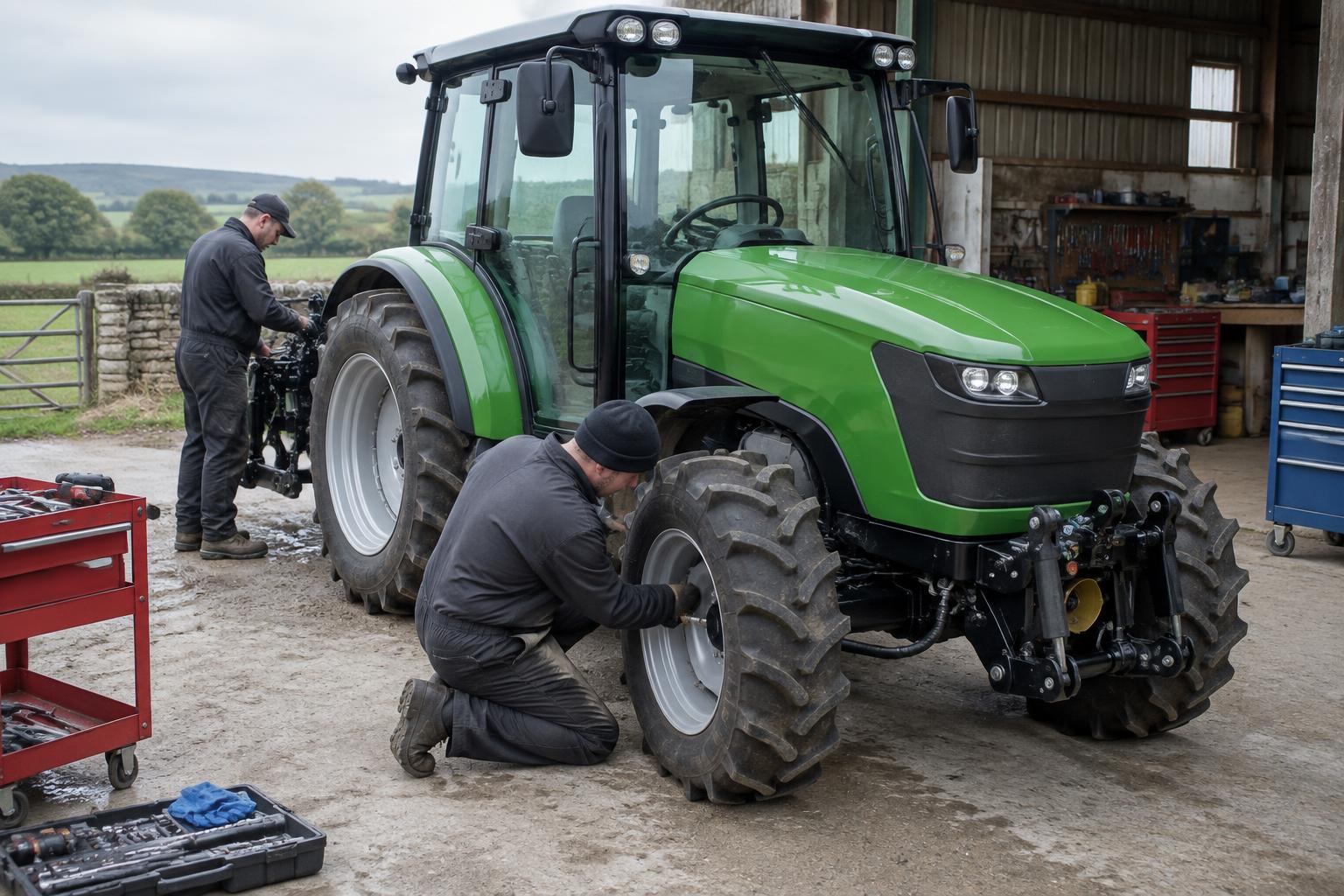
Repairs require trained personnel and the correct isolation procedures.
Accident damage
After a collision, underside strike, fire exposure or significant electrical fault, the tractor may need specialist inspection before use or charging.
Battery enclosure damage should never be ignored because the tractor still drives normally.
Charging inside buildings
Whether a particular machine can be charged in a building depends on manufacturer instructions, building design, fire risk assessment and local arrangements.
Do not create universal rules from electric-car advice.
Consider:
- escape routes;
- combustible storage;
- vehicle access;
- detection;
- emergency isolation;
- separation from other hazards.
The business's insurer may also have requirements.
Emergency planning
Staff should know:
- how to stop charging normally;
- where electrical isolation is located;
- who to contact if equipment is damaged;
- what warning signs require evacuation;
- how to provide emergency services with clear site information.
Do not ask untrained staff to intervene in a damaged high-voltage system.
Long-term storage
If the tractor will sit unused for an extended period, follow the manufacturer's state-of-charge and temperature guidance.
Some batteries should not be stored for months at a completely full or empty state.
The tractor may also require periodic wake-up, software or 12V-system checks.
Insurance
Tell the insurer how and where the tractor will be stored and charged if requested.
A proper installation and documented procedures are easier to defend than improvised charging.
Fire risk in perspective
Lithium-ion batteries introduce specific fire behaviour, while diesel machinery carries fuel and hot-engine risks of its own.
The useful response is not to claim one system is risk-free. It is to understand the hazards and design controls around the actual equipment.
Train operators
Every person using the tractor should know the normal charging routine and what not to do.
Training can be simple:
- inspect;
- connect correctly;
- confirm charging;
- disconnect correctly;
- store cable safely;
- report damage.
Keep records
For a commercial site, retain relevant records of charger inspection, electrical testing, servicing and faults.
That supports maintenance and demonstrates that the system is being managed.
The practical rule
Treat charging infrastructure as part of the farm's electrical installation and the tractor battery as a high-voltage vehicle system.
When both are handled by competent people and used according to instructions, charging can become an ordinary part of the working day.