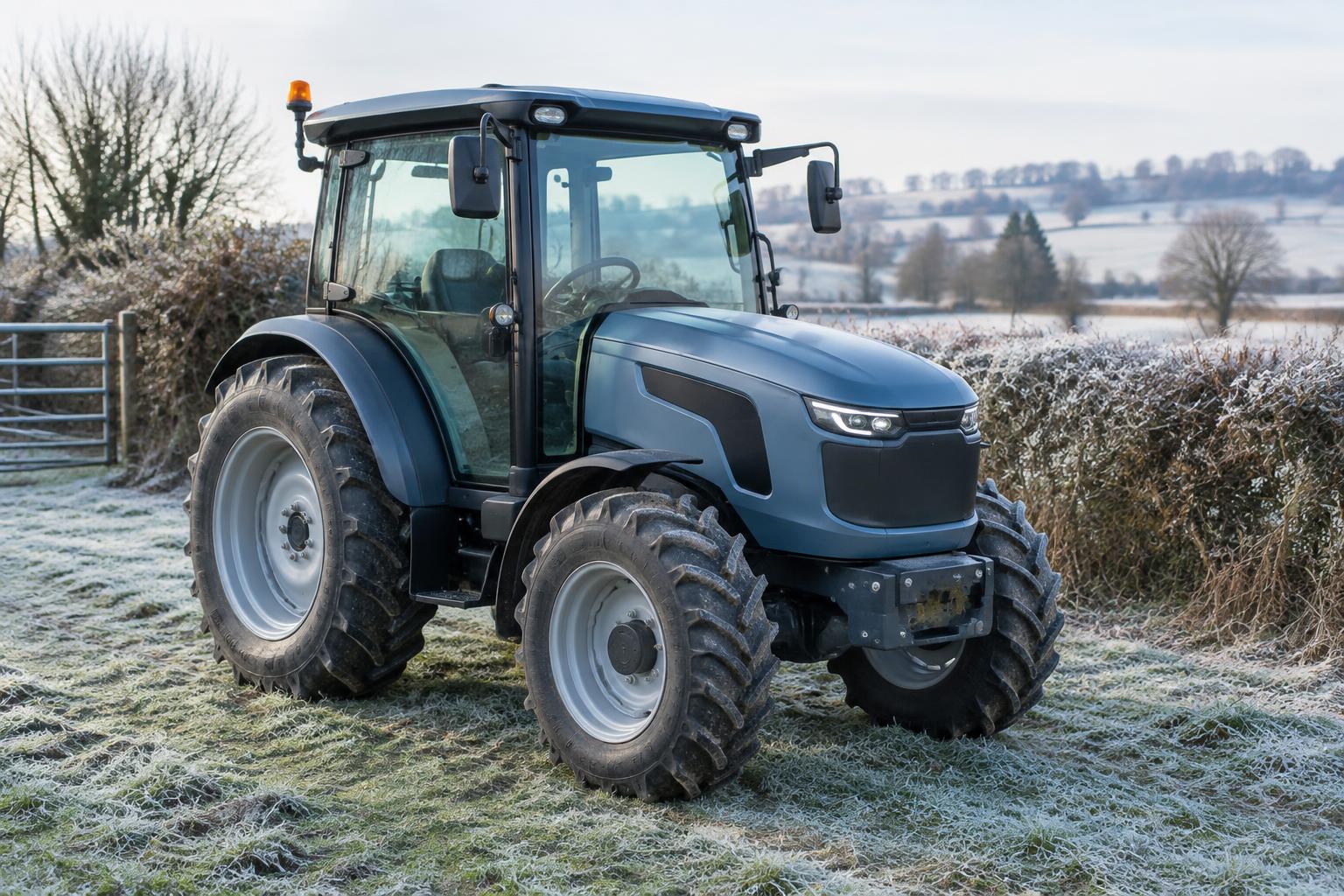
Electric tractors are designed to work outdoors, but batteries and electrical systems still respond to temperature and weather. In the UK, the most noticeable seasonal issue is likely to be cold weather, which can temporarily reduce available battery performance and increase the energy used for heating.
Wet ground, mud and wind can also raise energy consumption even though they do not directly change battery chemistry.
Cold weather and battery performance
Lithium-ion batteries generally deliver less usable performance when very cold than when operating in a moderate temperature range.
The effect can show up as reduced available energy, limited charging power or increased consumption while the battery warms.
A well-designed tractor uses thermal management to help keep the battery within its intended range, but that heating itself uses energy.
Cab heating matters too
A diesel tractor can use waste engine heat to warm the cab.
An electric tractor has much less waste heat available, so cabin heating may draw electrical energy directly from the battery or use a heat-pump system where fitted.
On a cold day, that can reduce the energy left for work.
The impact depends on cab size, heating technology, outside temperature and how long the tractor is used.
Pre-conditioning
Some electric vehicles can warm the battery and cab while still connected to the charger.
Where an electric tractor supports this, pre-conditioning can be useful because some of the heating energy comes from the mains rather than the traction battery after departure.
Check the manufacturer's instructions rather than assuming the feature exists.
Hot weather
High temperatures can also affect batteries.
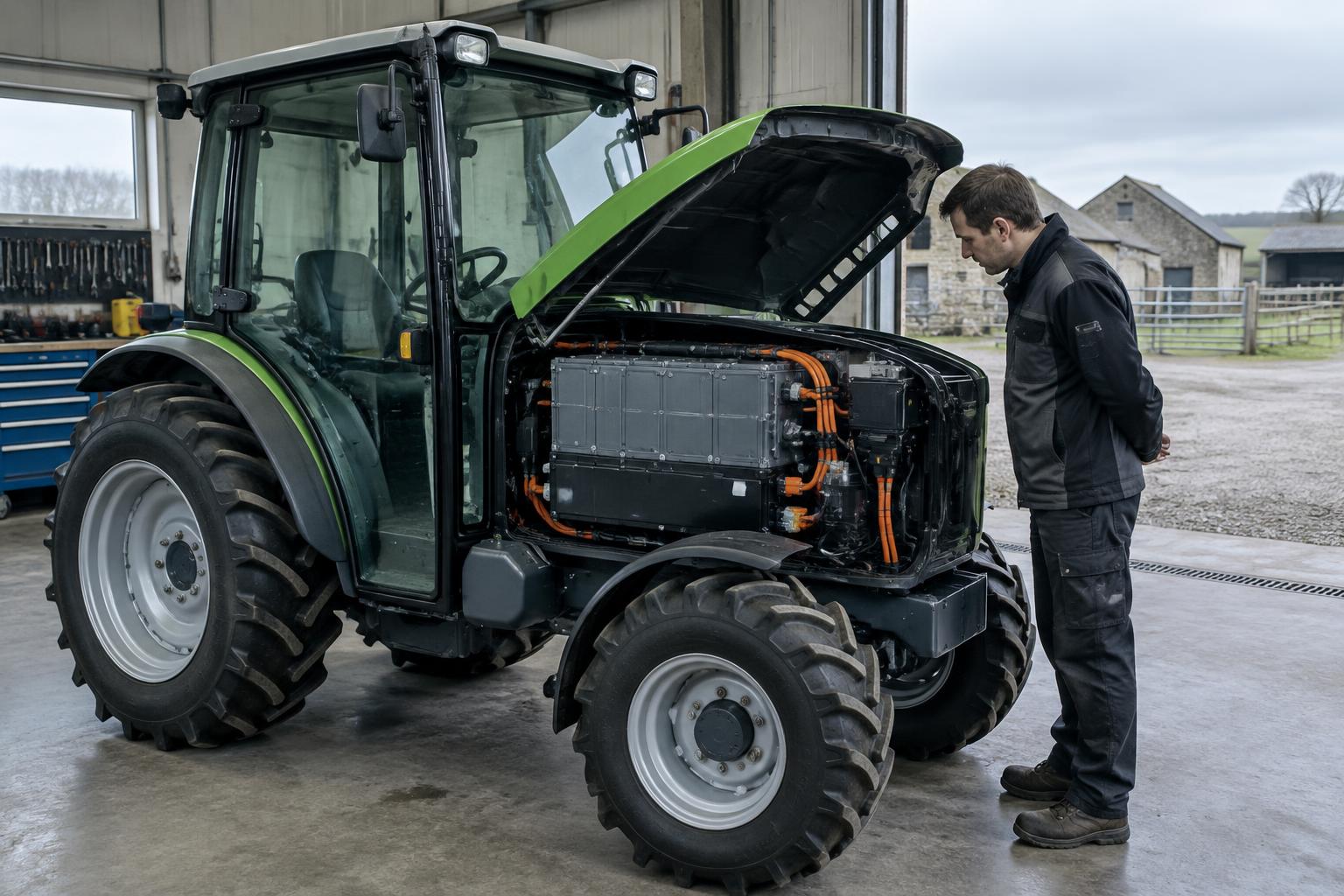
Thermal-management systems may need to cool the battery, motor and power electronics during sustained work or charging.
Battery-management software can reduce charging or output if temperatures move outside preferred limits.
This protection is useful, but it can mean performance differs from a cool demonstration day.
Wet conditions
Electric agricultural machinery must cope with rain, mud and washdown just like other modern equipment.
The important issue is whether connectors, enclosures and charging equipment are designed and maintained for the environment.
Never use damaged charging equipment and do not pressure-wash electrical areas contrary to manufacturer guidance.
Mud affects energy through resistance
Mud does not need to damage the battery to reduce runtime.
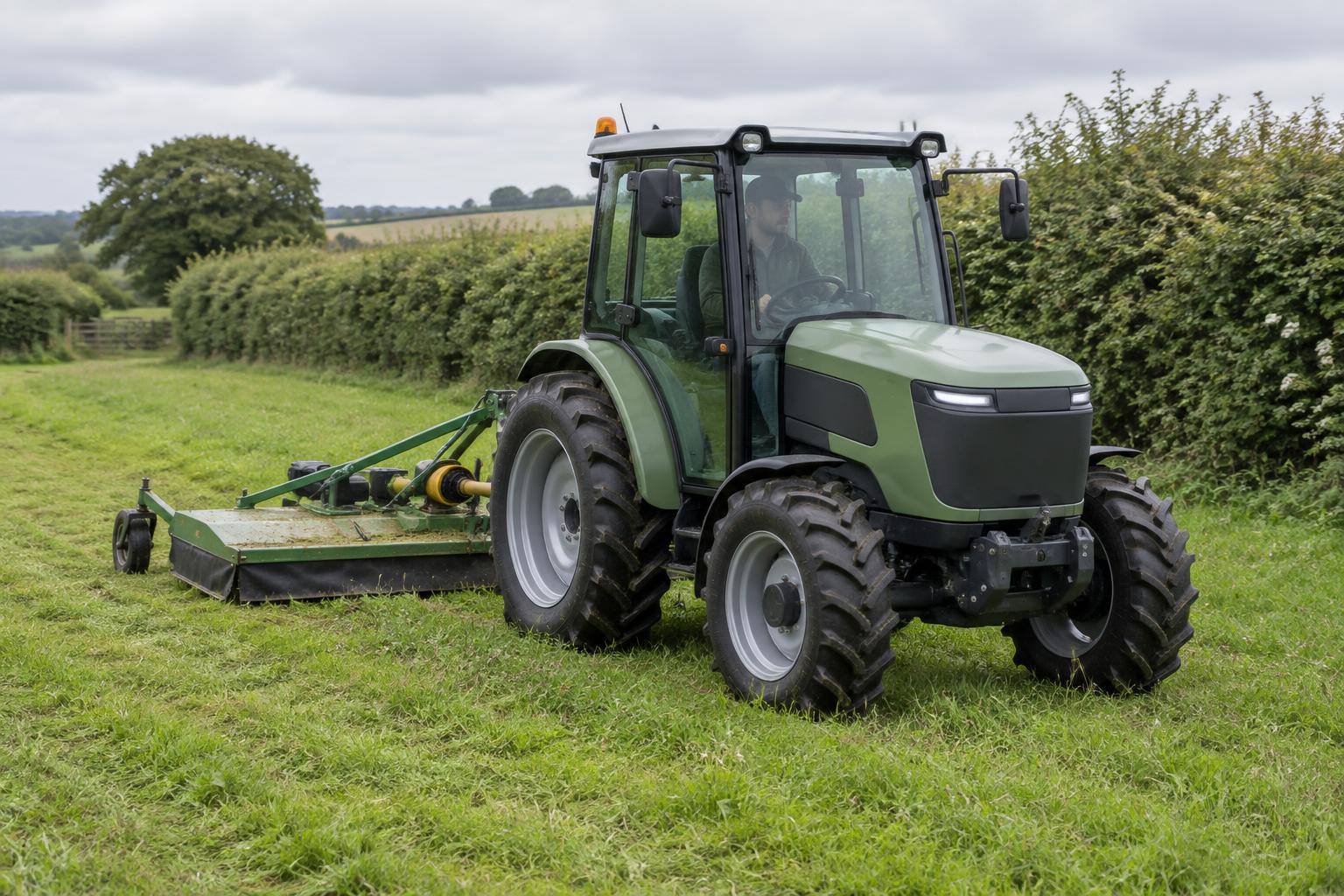
Soft ground increases rolling resistance and wheel slip. The tractor must use more energy to complete the same distance or field operation.
Tyre pressure, tread, ballast and driving technique therefore still matter.
Wind and road work
Headwinds are less important at field speed but can matter during road travel, particularly with trailers or bulky equipment.
The effect is the same principle as any vehicle: greater resistance requires more energy.
Winter towing and groundcare
Winter work can combine several penalties at once:
- lower battery temperature;
- cab heating;
- wet ground;
- heavier rolling resistance;
- lights and auxiliary electrical loads.
That makes a sensible battery reserve particularly important.
Our guide to electric tractor runtime explains why planning around the final few per cent of charge is risky.
Charging in cold conditions
Battery systems may limit charging power when cells are cold.
Thermal management can warm the battery first, but this may increase total charging time.
A tractor stored under cover or connected before a planned shift may therefore be easier to manage in winter.
Seasonal storage
Some agricultural tractors have quiet periods.
If the machine is stored for weeks, follow the manufacturer's recommended state of charge and inspection routine. Avoid assuming that leaving a battery at 100% for months is always best.
Read how long electric tractor batteries last for battery-ageing basics.
Build weather margin into the duty
If a tractor uses 95% of its battery on a mild summer day, the operating plan has almost no flexibility.
A colder day, softer ground or an unexpected extra task could push it beyond the available energy.
A more robust plan leaves enough reserve for seasonal variation.
Compare like-for-like demonstrations
If possible, assess machinery in conditions close to the real job.
A dry flat demonstration route will not replicate a wet winter paddock or hill towing.
Ask suppliers for evidence of operation in similar conditions and, where practical, test the machine on site.
The UK takeaway
Weather does not make electric tractors impractical, but it changes the energy budget.
Cold, heating, mud and other seasonal factors should be included in runtime planning. A tractor with adequate battery margin and good thermal management is much easier to live with than one selected around best-case conditions.