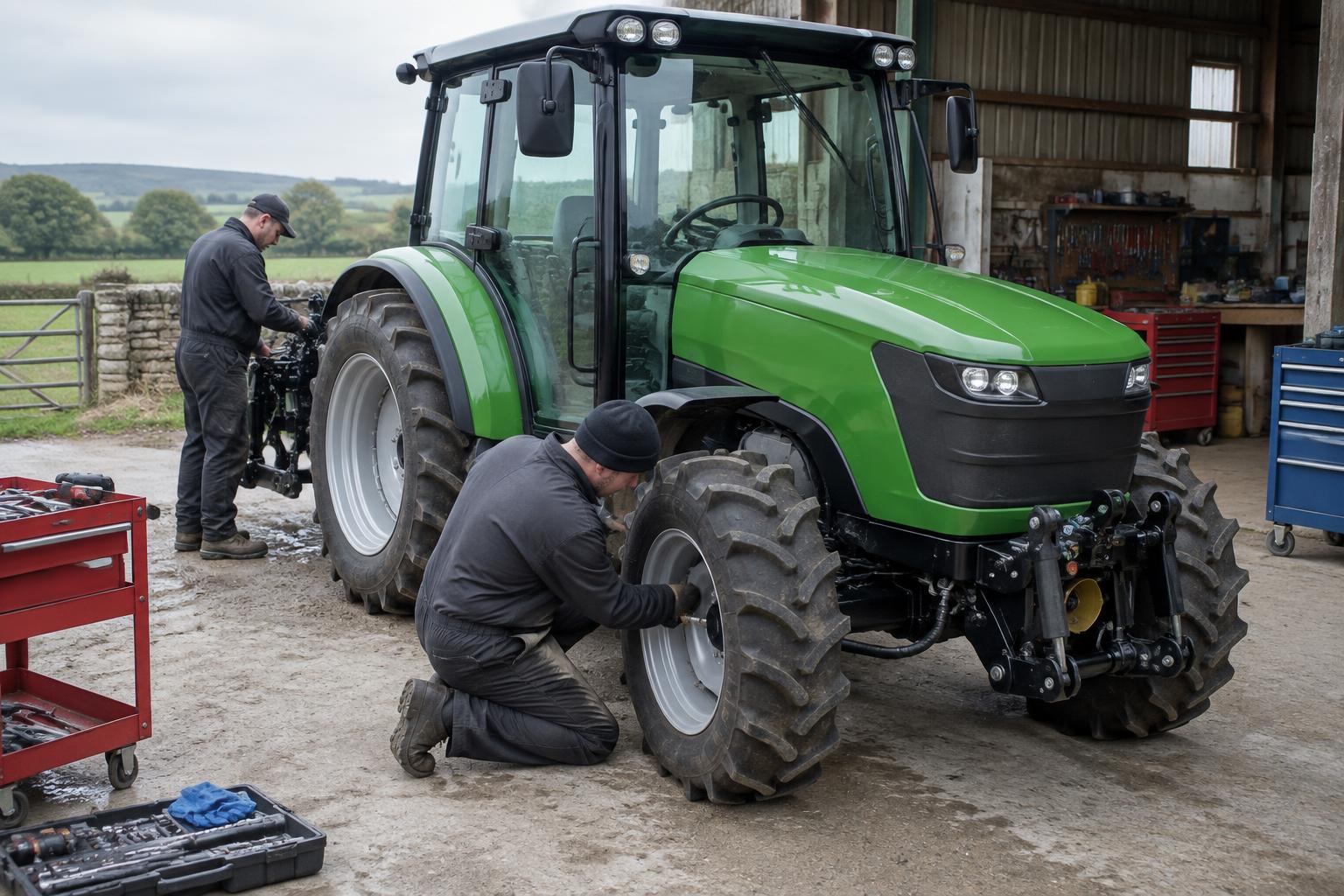
A battery-electric tractor can require less routine powertrain maintenance than a diesel tractor because there is no combustion engine, engine oil system, diesel fuel system or exhaust after-treatment system. That does not make the machine maintenance-free.
A tractor still has tyres, brakes, steering, bearings, hydraulics, cooling systems, electrical systems, linkages and implements. The correct maintenance schedule is always the one supplied for the individual machine.
What disappears without a diesel engine?
A pure battery-electric drivetrain can remove maintenance associated with:
- engine oil and engine oil filters;
- diesel fuel filters;
- engine belts in some designs;
- exhaust after-treatment systems;
- diesel injectors and fuel pumps;
- some engine cooling and intake components.
That can reduce routine service complexity and consumables.
It can also eliminate faults associated specifically with diesel exhaust systems, although an electric machine introduces different high-voltage and software-dependent systems.
The electric motor
Electric motors generally have fewer moving parts than combustion engines.
They do not need engine oil changes or fuel-system servicing. Bearings, cooling and electrical integrity still matter, and the exact service requirements depend on the design.
The motor should not be opened or repaired casually. High-voltage systems require appropriate training and procedures.
Battery maintenance
Modern traction batteries are largely managed electronically rather than through regular mechanical servicing.
The battery-management system monitors operation, while cooling or heating systems help keep the pack within its intended temperature range.
Owners should still:
- follow charging guidance;
- keep cooling systems maintained;
- act on warning messages;
- maintain software where required;
- inspect for damage after impacts;
- follow storage guidance.
Battery health may also be checked during scheduled service.
Cooling systems
Electric drivetrains produce less waste heat than diesel engines, but batteries, motors and power electronics still need thermal management.
Coolant may therefore remain a service item.
Cab air-conditioning and heating systems also require normal attention.
Hydraulics
Hydraulic systems remain one of the biggest maintenance areas on working tractors.
Oil, filters, hoses, seals, couplings and pumps need inspection and service according to schedule.
Leaks are still leaks regardless of the powertrain.
Loader work and high hydraulic utilisation can create the same wear concerns as on conventional machinery.
Tyres and traction
Tyres deserve particular attention.
Battery packs can add weight, and electric motors can deliver torque quickly. Incorrect pressure, poor ballast or unsuitable tyres can affect efficiency, soil impact, wear and traction.
Follow the machine's tyre and ballast guidance rather than assuming settings from an older diesel tractor transfer directly.
Brakes
Some electric drivetrains may use regenerative braking to recover energy, potentially reducing friction-brake use in certain conditions.
Agricultural machinery still needs a properly maintained mechanical braking system.
Brakes, parking systems and trailer braking must be inspected in the normal way.
PTO, linkage and implements
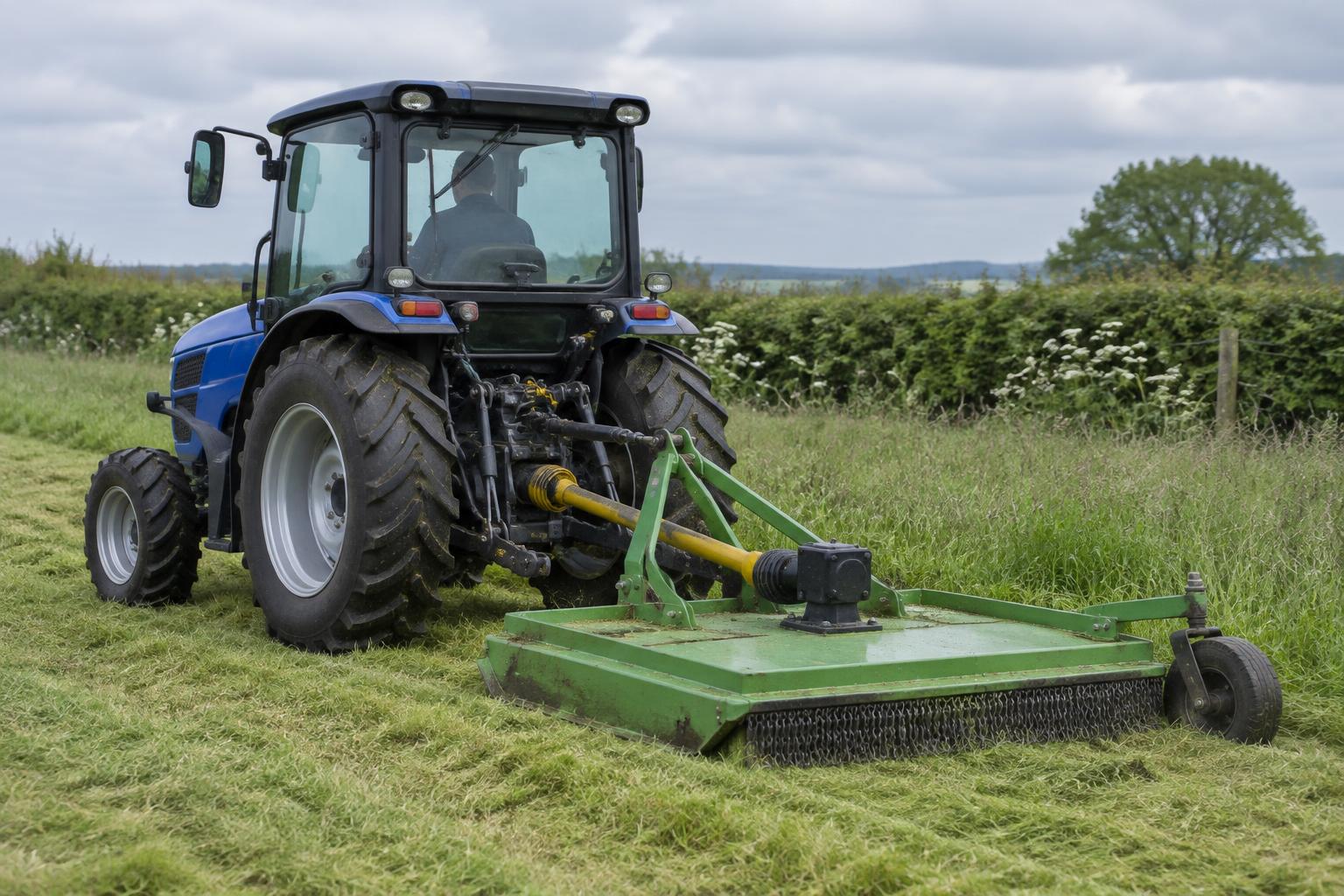
Three-point linkage components, PTO shafts, guards, couplings and implement connections remain safety-critical.
Electrification does not alter the need for proper guarding and maintenance.
If the tractor uses an electrically driven PTO or other high-voltage implement connection, follow the specialist procedures for those systems.
Software and diagnostics
This is a growing maintenance category.
Electric machinery relies on control software for the battery, motor, charging and thermal systems. Fault diagnosis may require manufacturer-specific tools.
Before buying, ask:
- who can diagnose the tractor locally?
- are remote diagnostics available?
- how are software updates delivered?
- what happens if the manufacturer stops supporting a model?
- can independent workshops access technical information?
Support quality can matter as much as service interval.
High-voltage safety
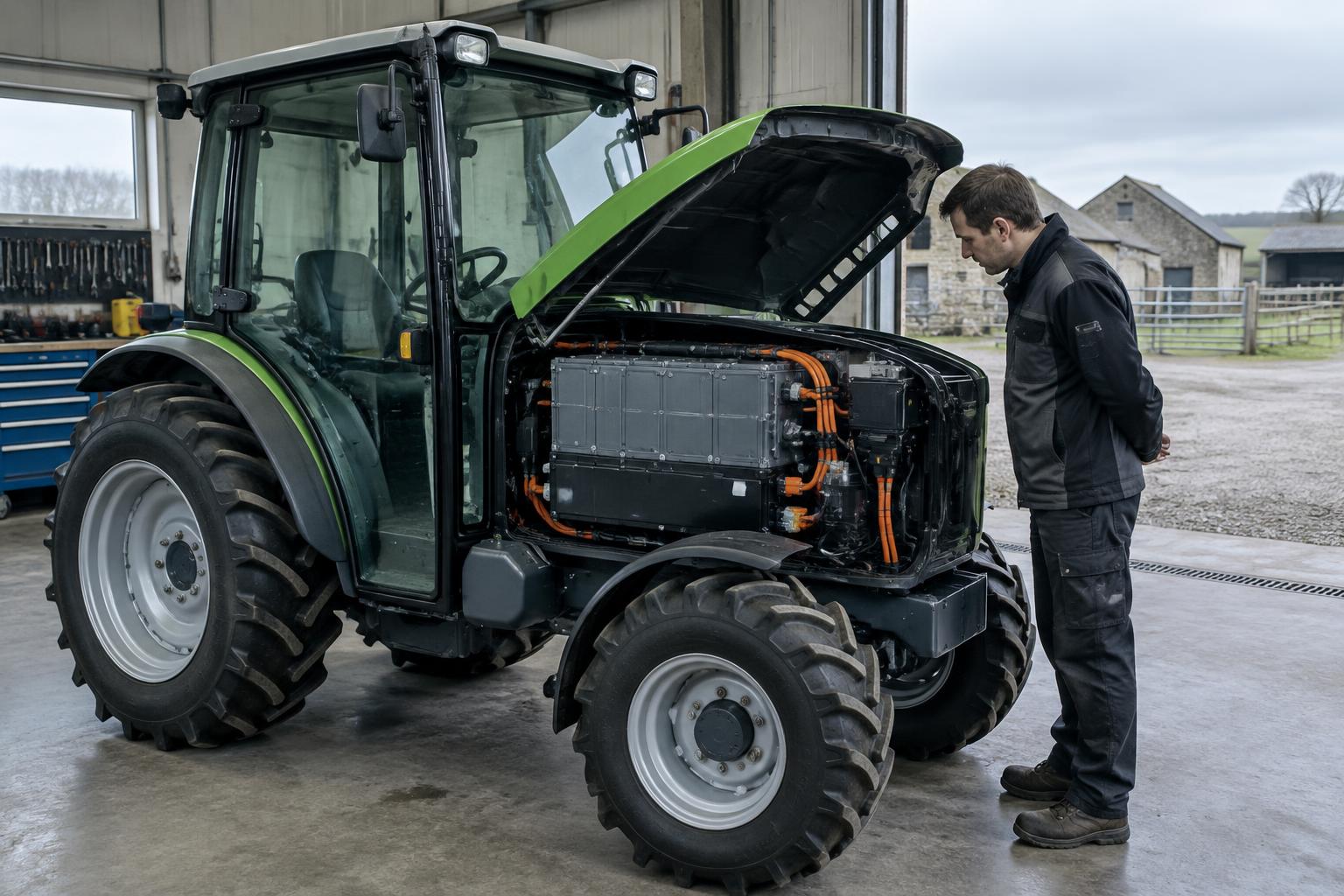
The traction battery operates at voltages that can cause serious injury.
Orange high-voltage cables and protected components should never be treated like ordinary 12V agricultural wiring.
Only appropriately trained people should carry out work that involves the high-voltage system.
Washing and storage
Electric tractors are designed for agricultural environments, but users should follow manufacturer instructions for pressure washing, connector protection and storage.
Do not direct high-pressure water into electrical connectors, vents or damaged enclosures unless specifically permitted.
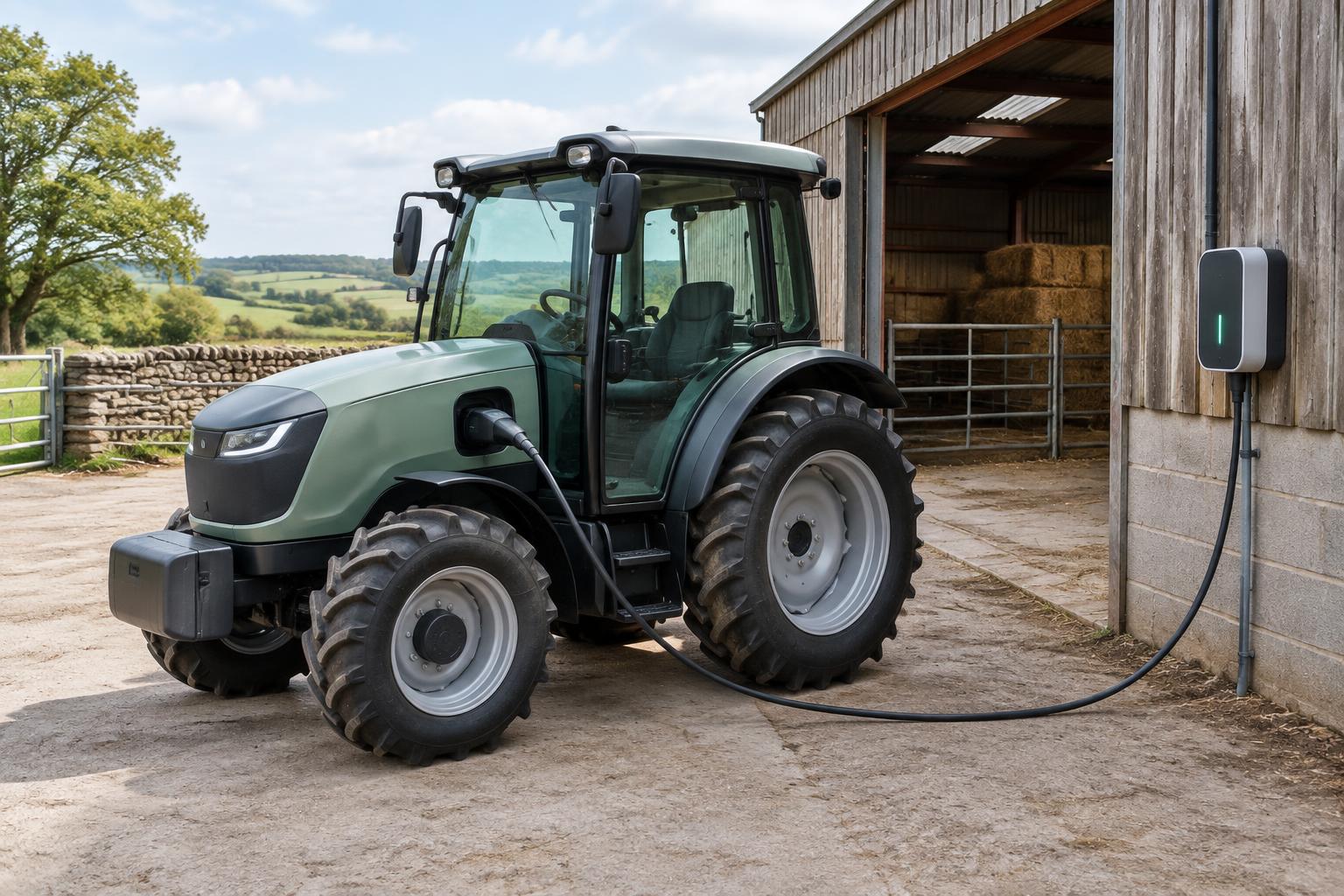
Charging connectors should be kept clean, protected and inspected for damage.
Will servicing cost less?
It can.
Removing engine-specific service items may reduce parts, labour and downtime. But savings depend on the tractor, annual hours, dealer rates and whether specialist diagnostics are expensive.
A proper comparison should use actual maintenance schedules rather than assuming a percentage reduction.
Before buying, ask for the service plan
Request:
- service intervals;
- scheduled parts and fluids;
- battery checks;
- warranty requirements;
- labour estimates;
- travel charges for mobile service;
- high-voltage technician availability;
- recovery arrangements.
Maintenance is simpler in some areas, not absent
Electric tractors can reduce routine engine-related servicing, which is a genuine advantage.
The machine still needs disciplined agricultural maintenance. Treat claims of “almost no maintenance” with caution and focus instead on which tasks disappear, which remain and how well the tractor can be supported locally.