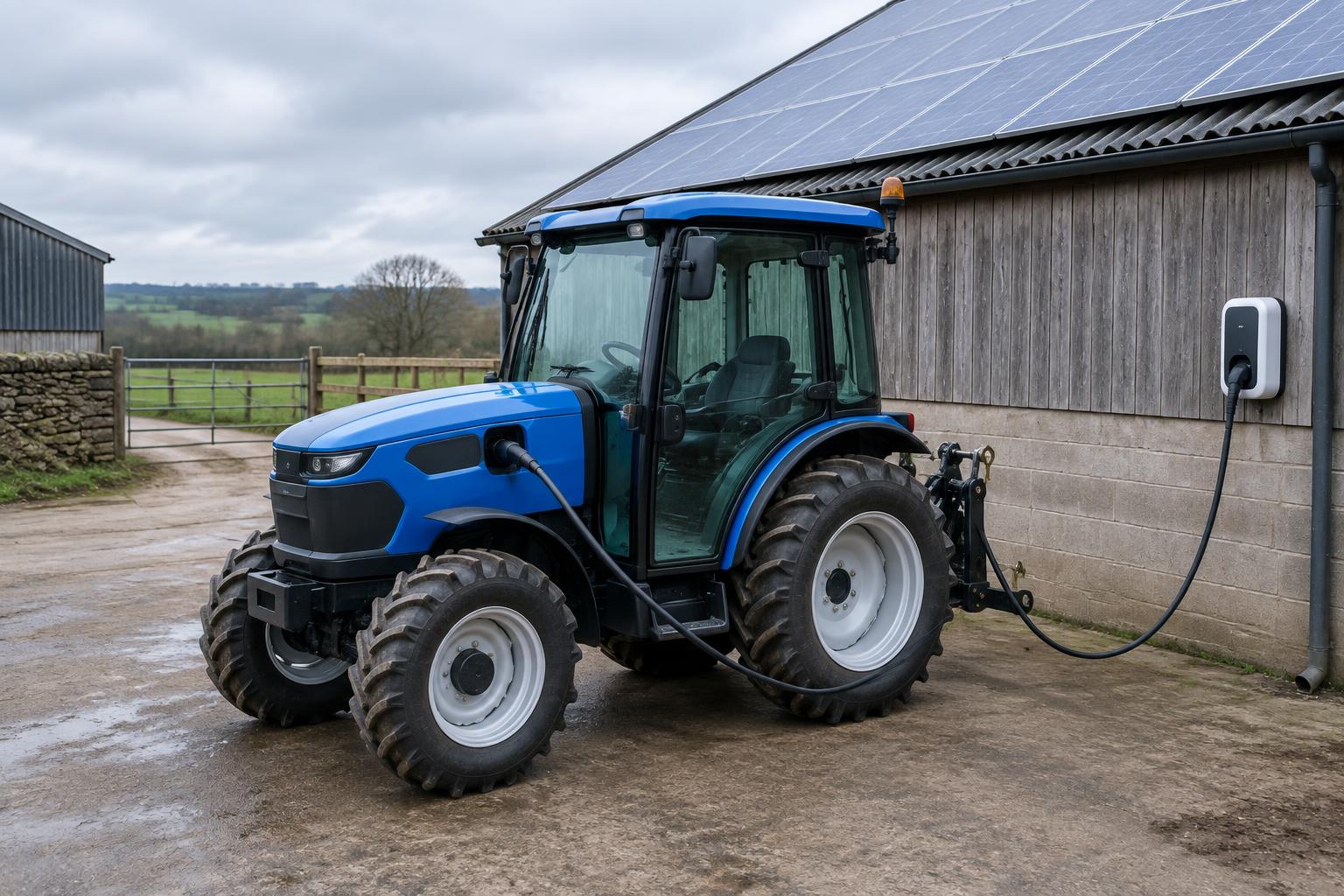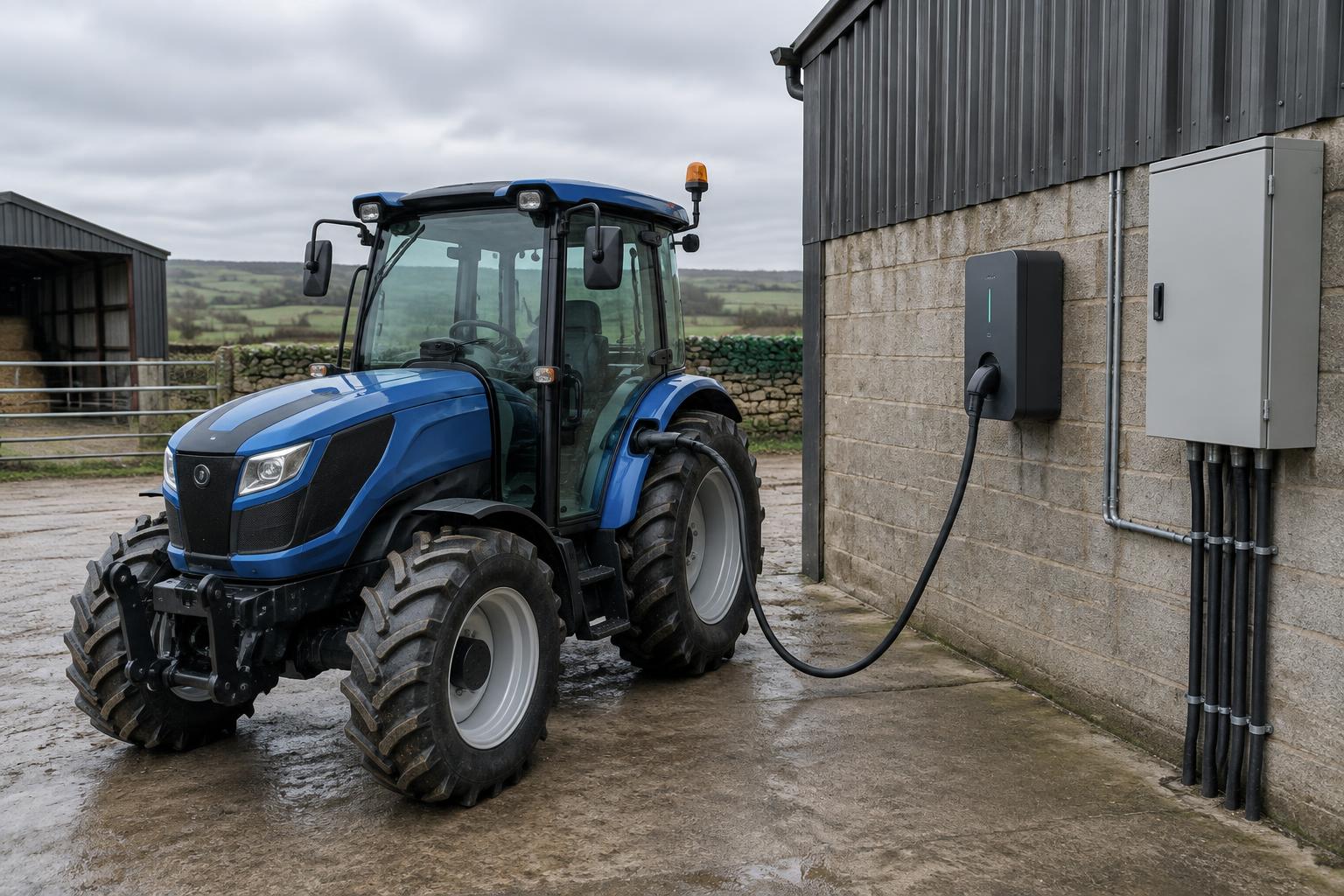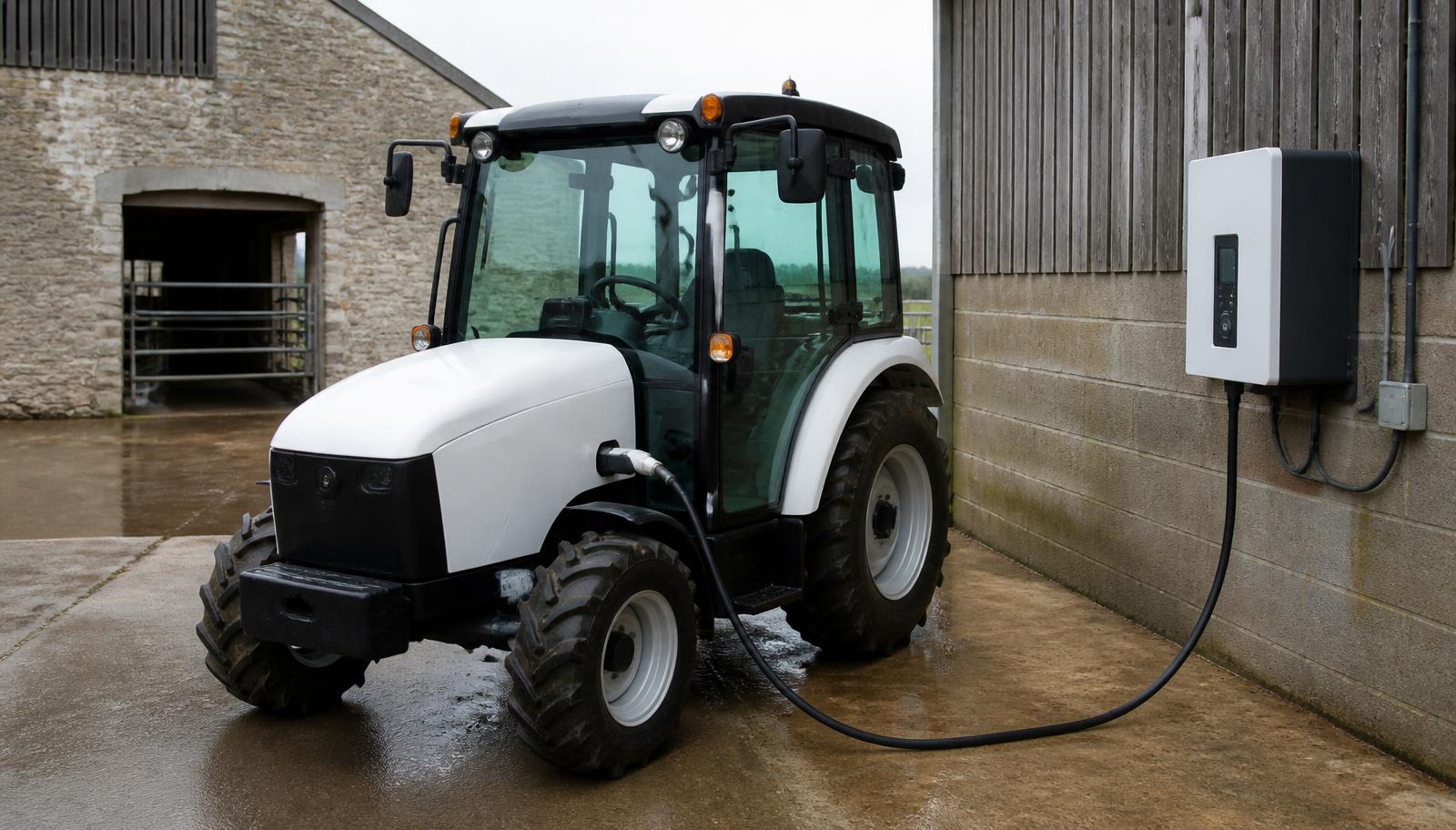
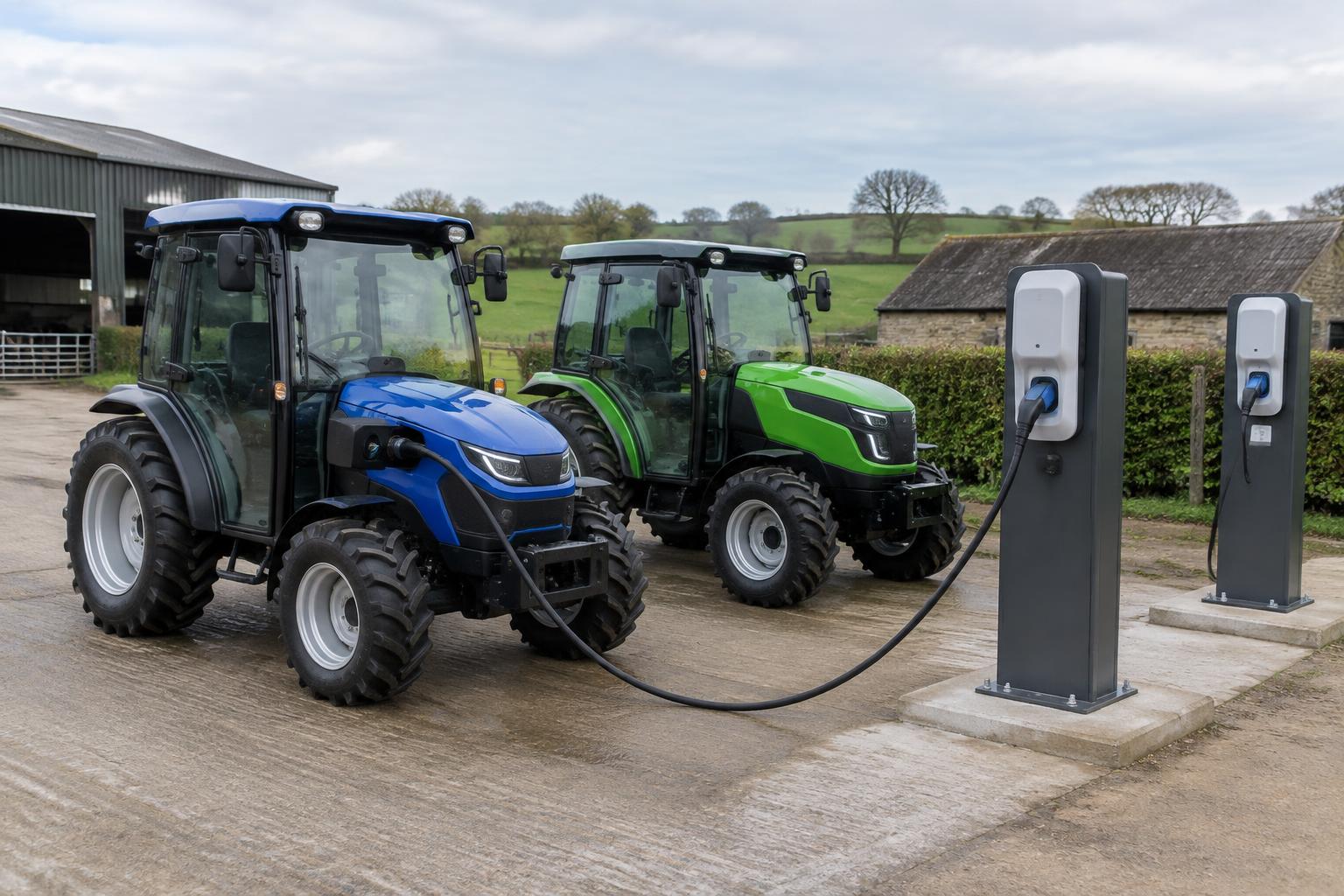
Farm charging infrastructure should be designed around how much energy machinery needs and when it is available to charge. Installing the largest charger a tractor can accept may be unnecessary, while installing too little power can create expensive downtime.
The best project starts with operations, then electrical capacity, then hardware.
Step 1: map the duty cycle
For each electric tractor or vehicle, record:
- daily energy use;
- return-to-base time;
- next required departure;
- busiest seasonal day;
- potential mid-shift breaks;
- priority compared with other equipment.
This tells you how many kWh must be replenished and the charging window available.
Step 2: calculate required average power
A simple first estimate is:
required average charging power = energy to replace ÷ hours available
If a tractor needs 50 kWh overnight and has ten hours parked, the average requirement is fundamentally different from needing the same energy in one hour.
Allow for charging losses and real-world charging curves when moving from rough planning to final design.
Step 3: assess the site supply
A competent electrical professional should assess:
- incoming supply;
- maximum demand;
- spare capacity;
- three-phase availability;
- distribution boards;
- cable routes;
- earthing;
- other major loads.
Do not look at the rating stamped on the main supply and assume all of it is free.
Step 3a: establish the network notification position early
The Distribution Network Operator step is a common cause of delay, so establish it before design work goes far.
Under the Energy Networks Association process, if the maximum demand of the whole connection with the charging equipment installed stays at or below 13.8 kVA, the ENA is notified after installation. Above 13.8 kVA, the DNO must be contacted before connection.
A farm adding tractor charging to existing dryer, refrigeration, workshop or pump loads will usually be above that threshold. Ask your electrician to establish the position at the survey stage, because the answer affects both the timetable and whether load management becomes worth designing in.
Step 4: understand coincident demand
Farms can have large loads at specific times.
Grain drying, refrigeration, milking, pumps, ventilation and workshops may coincide with vehicle charging.
A charger that is easy to support in February might overload the plan during harvest.
Use real half-hourly demand data where available.
Step 5: consider load management
Smart charging can reduce vehicle power when the rest of the farm is busy and increase it when capacity is available.
This can allow more vehicles to share a constrained connection.
The system must still guarantee that priority machinery is ready when needed.
Step 6: choose the right charger mix
Not every vehicle needs fast charging.
A fleet might use:
- lower-power overnight AC charging for predictable machines;
- one higher-power charger for urgent turnaround;
- managed priority rules.
This can be cheaper and more resilient than installing maximum-power equipment at every bay.
Step 7: design the physical layout
Place chargers where machinery naturally parks.
Consider:
- turning space;
- trailer access;
- cable length;
- collision protection;
- weather;
- drainage;
- lighting;
- security;
- pedestrians;
- future bays.
A technically perfect charger in the wrong place will be frustrating every day.
Step 8: plan for future machinery
If the first tractor is a pilot, future-proof the civil works.
Extra ducting, space in switchgear and a larger cable route can be inexpensive during initial installation compared with digging the yard up again.
Do not overspend on unused hardware purely for hypothetical growth, but preserve sensible options.
Step 9: include solar and storage intelligently
On-site solar can reduce imported electricity when generation aligns with charging.
Stationary storage may help with peak demand or time-shifting, but it needs a separate economic case.
Read charging with solar before assuming a solar array automatically solves capacity constraints.
Step 10: think about resilience
Ask what happens if:
- a charger fails;
- grid power is interrupted;
- a tractor returns later than expected;
- two machines need priority charging;
- a scheduled job changes.
Operationally important machinery needs a contingency.
That could be another charger, flexible fleet allocation or access to alternative equipment.
Metering
Separate or charger-level metering helps understand actual electricity consumption.
That is valuable for:
- running-cost calculations;
- charge scheduling;
- fault detection;
- comparing vehicles;
- future business cases.
Without data, operators end up guessing.
Maintenance and inspection
Chargers and cables live in a harsh environment.
Create a simple inspection routine and make damaged equipment easy to report.
Fixed installations should also receive inspection and testing in line with applicable requirements and risk.
User experience matters
Charging should be simple enough that every trained operator uses it correctly.
Clear bay marking, cable storage and obvious status indication reduce mistakes.
If the process is awkward, people will create workarounds.
The infrastructure principle
Design for the kWh required during the available parking time.
That single approach prevents both under-building and expensive over-building.
Farm electrification works best when machinery and electrical infrastructure are planned as one system rather than separate purchases.