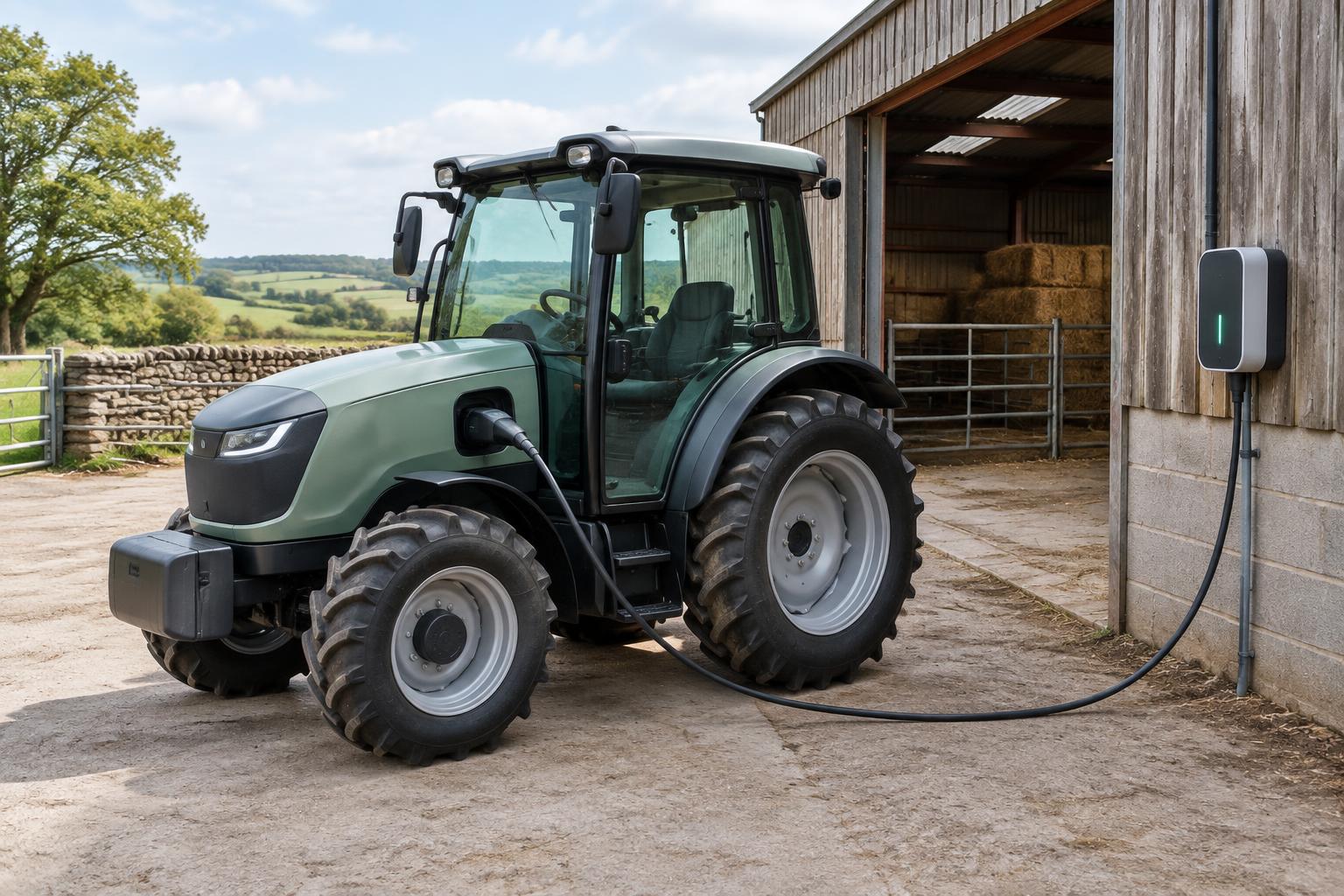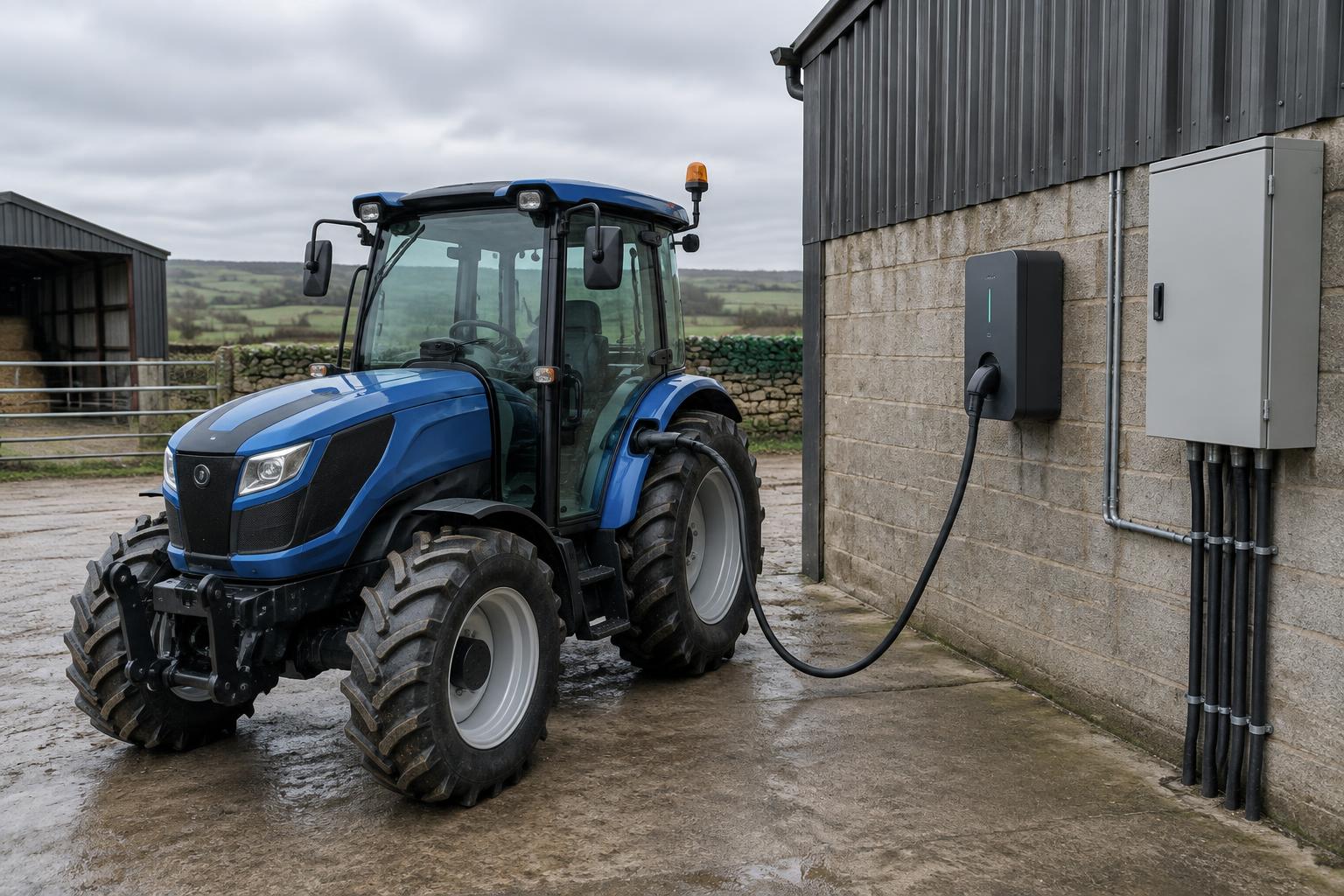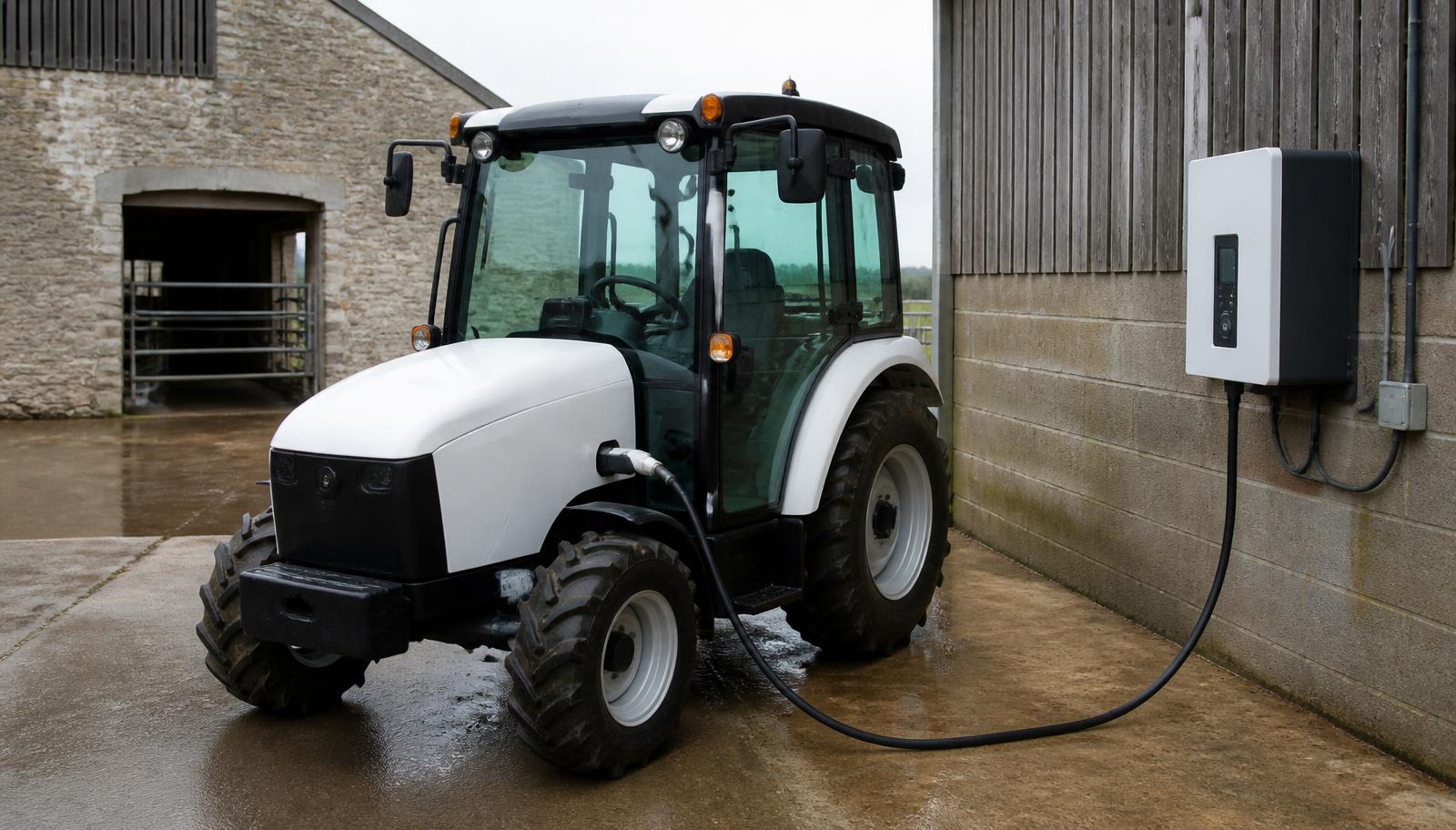
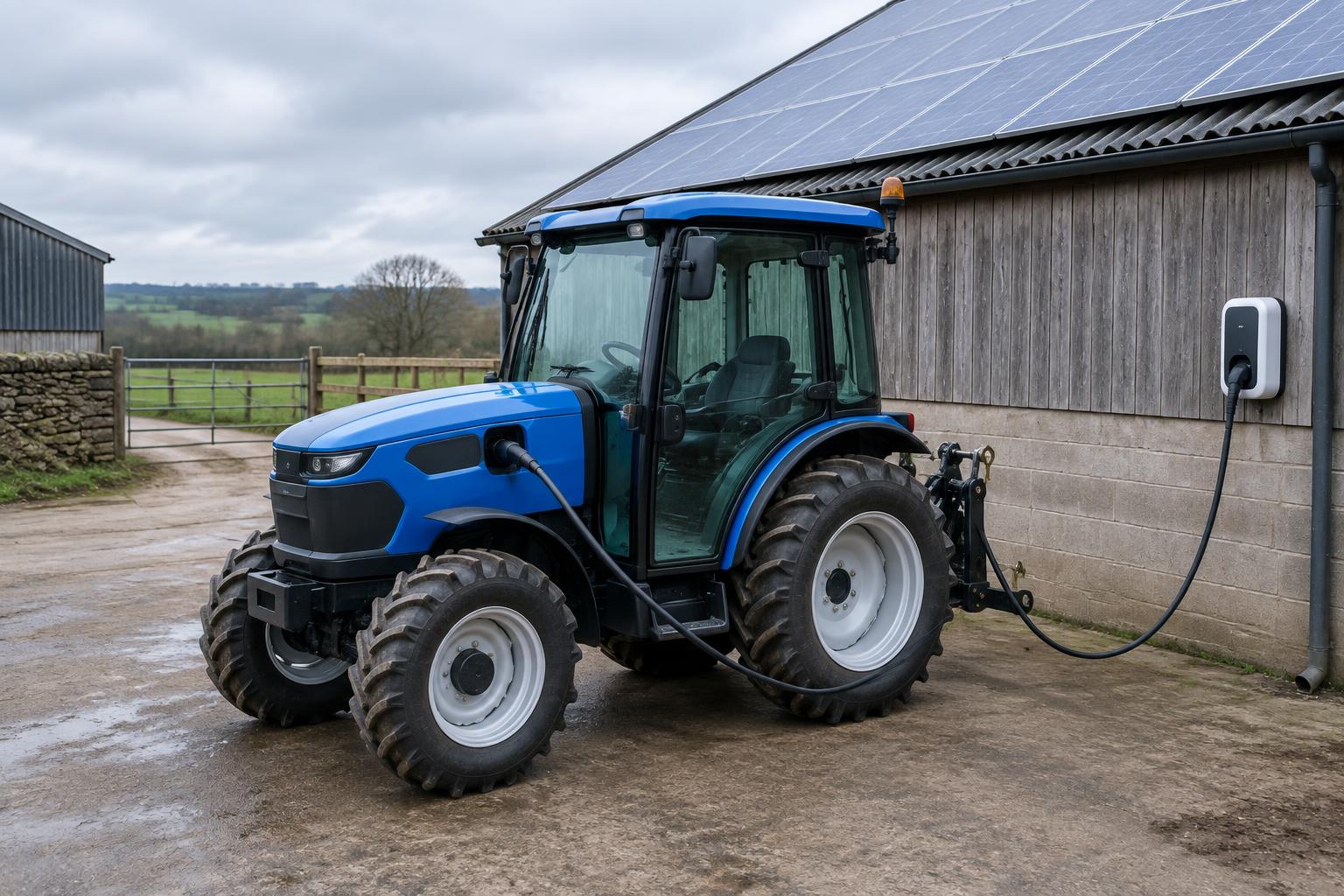
An electric tractor can be charged using electricity generated by farm solar panels, provided that the electrical system is designed to route that energy safely through compatible charging equipment. The harder question is how much of the tractor's charging demand can genuinely be met by solar at the right time.
Solar generation varies with daylight, weather, season and array size. Tractor use varies with the farm calendar. Those patterns need to be compared.
The basic energy flow
A typical arrangement can be thought of as:
solar panels → inverter/site electrical system → tractor charger → tractor battery
If solar generation is lower than the tractor's charging demand, the site can normally draw the difference from the grid where the connection permits.
If generation exceeds on-site demand, surplus may be exported, curtailed or stored depending on the installation.
The tractor does not need a special “solar battery”. It charges from a compatible electrical system.
Energy and power are different
This distinction is important.
A solar array's kW rating describes power under specified conditions. The amount of energy generated over time is measured in kWh.
A tractor battery is also described in kWh.
So a 50 kW solar array does not continuously produce 50 kW all day and cannot be assumed to add 50 kWh every hour. Cloud, sun angle, season, inverter limits and other factors affect output.
Does the tractor charge when the sun shines?
Sometimes.
If the tractor works through the day and returns to the yard in the evening, most solar generation may already have occurred. The energy can still have reduced the farm's overall grid import during the day, but it was not necessarily charging the tractor directly at that moment.
If the tractor has regular daytime breaks, direct solar-to-vehicle use may be much higher.
What about battery storage?
Stationary battery storage can capture surplus solar electricity and release it later.
In principle, that can allow daytime generation to help charge a tractor after sunset.
However, a stationary battery adds substantial capital cost and introduces conversion losses. Installing storage solely to charge a tractor may or may not make financial sense.
The battery may have wider value if it also helps manage peak demand, backup requirements or time-of-use electricity costs.
Size solar around real consumption
Do not start by asking how many panels are needed for “an electric tractor”.
First estimate annual and daily tractor electricity use from the intended workload.
Then compare that demand with:
- existing farm electricity consumption;
- solar generation profile;
- available roof/land;
- grid connection;
- export arrangements;
- charging times.
A farm-energy professional can model those flows more accurately than a simple panel-count calculator.
Is solar charging free?
No, not in an economic sense.
Existing solar can produce electricity with a low marginal cost, but the system had a capital cost and generated power may have another use or export value.
For a new solar installation, include:
- panels;
- inverter;
- mounting;
- cabling;
- grid/network requirements;
- finance;
- maintenance;
- storage if used.
The right comparison is the value of the electricity displaced over the system's life.
Can solar reduce running costs?
Potentially.
Where solar generation would otherwise be exported at a lower value than the cost of importing electricity later, using more of that generation on site can be financially attractive.
The exact result depends on contracts and timing, so use current business tariffs and export arrangements rather than broad assumptions.
Solar and seasonal farming
There is an interesting match and mismatch.
Solar generation is generally stronger in summer, when some agricultural and estate operations are also busy. But individual farm peaks vary enormously. Harvest, cultivation, winter livestock work and grounds maintenance all have different patterns.
A yearly total can hide days when the tractor needs much more energy than the solar system produces.
Charger power still matters
Even if a farm has a large solar array, the tractor can only charge at the rate supported by:
- the tractor;
- charger;
- site electrical system;
- available instantaneous generation and grid capacity.
A solar array therefore does not replace normal charger planning.
Read how to charge an electric tractor.
Should the tractor wait for cheap energy?
Smart charging can potentially schedule energy use around solar generation, tariffs and site loads.
That works best where the tractor's duty is predictable and there is flexibility over when it must be fully charged.
For time-critical field work, operational readiness should take priority over chasing the cheapest kWh.
Environmental case
Using lower-carbon electricity can improve the lifecycle emissions case for battery-electric machinery.
Research into agricultural electrification regularly identifies integration with renewable generation as a promising pathway. However, the whole system still has manufacturing and infrastructure impacts, so “solar charged” should not be confused with “impact free”.
A practical first calculation
Collect:
- expected tractor kWh per day or week;
- months of highest use;
- existing half-hourly electricity data if available;
- solar generation data;
- time the tractor is normally parked.
Plot them together.
You may discover that existing solar and tractor charging align well. You may instead find that grid charging overnight is simpler.
The best solar-charging setup
The best setup is not necessarily the biggest array or battery.
It is the system that supplies the tractor reliably, uses available renewable generation intelligently and produces a sensible return without compromising farm operations.