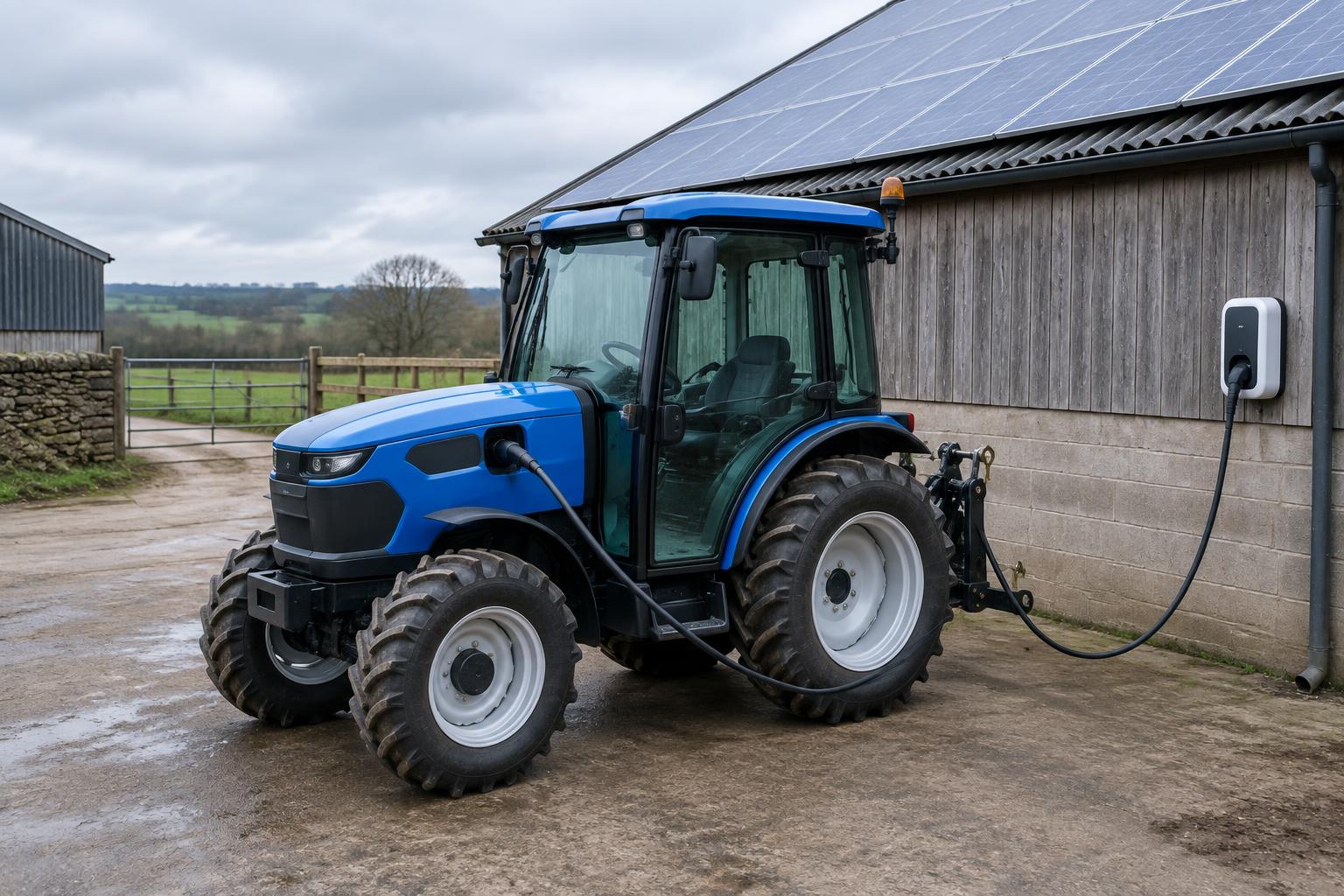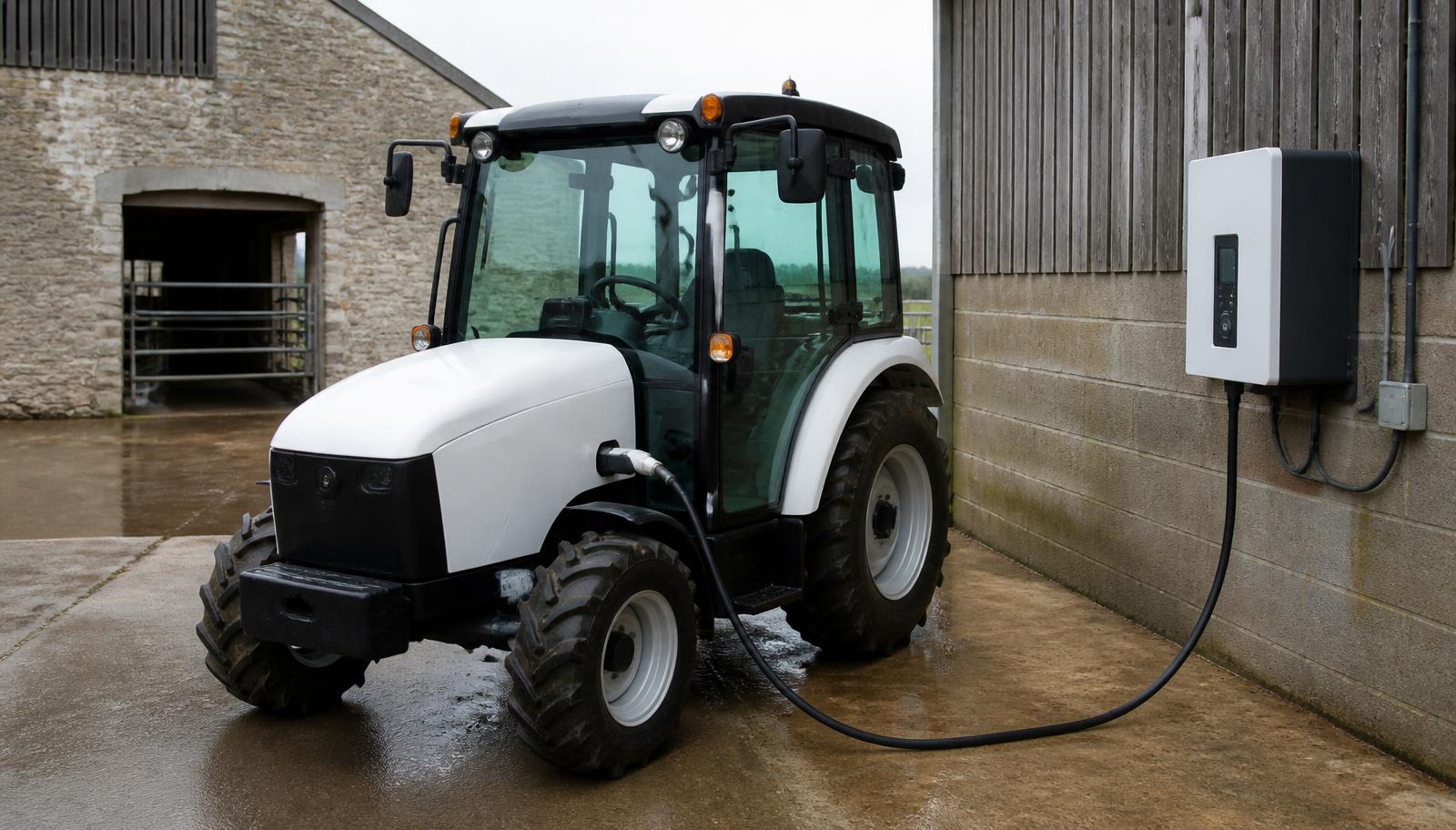
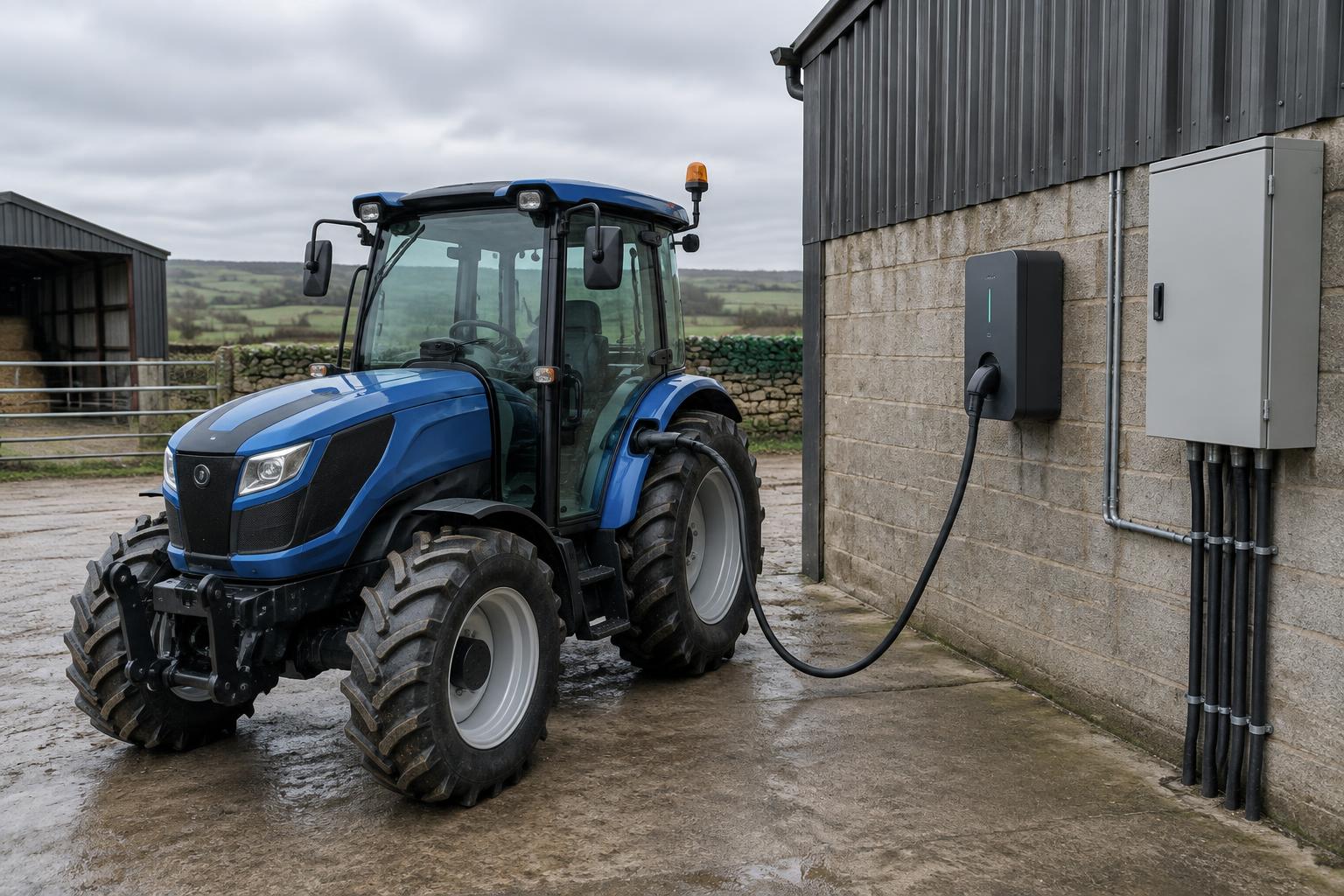
An electric tractor does not automatically require three-phase electricity simply because it is electric. The charging method depends on the tractor, charger and power level required. However, higher charging power is commonly easier to provide from a suitable three-phase supply, so farms considering larger battery-electric machinery should understand what electrical capacity is actually available.
The key issue is not the label on the supply. It is whether the site can safely deliver enough power during the time the tractor is parked.
What is three-phase electricity?
Three-phase power is widely used in commercial, industrial and agricultural premises because it can deliver larger electrical loads efficiently.
Many farms already use three-phase equipment for pumps, dryers, refrigeration, workshops, ventilation or processing machinery. That does not mean unlimited spare capacity exists.
A farm may have three-phase electricity but already be close to the limit of its incoming supply or distribution equipment.
Can an electric tractor charge from single phase?
Some lower-power charging arrangements may be possible from single-phase supplies if the tractor and approved charger support them.
The trade-off is normally charging speed.
If a tractor needs only a modest amount of energy and can remain connected overnight, a lower charging rate may still fit the duty perfectly well.
This is why charging time and operating schedule matter more than chasing the highest possible charger rating.
Why three phase becomes useful
As charging power rises, the electrical current required becomes substantial.
Three-phase systems distribute power across phases and are commonly used for higher-power equipment. This can make them better suited to larger AC chargers and the supporting infrastructure for rapid charging.
But the site still needs:
- adequate incoming capacity;
- suitable switchgear;
- correctly sized cabling;
- protection equipment;
- appropriate earthing;
- a safe charger location.
Three-phase supply is therefore one part of the answer, not the whole answer.
Start with the energy requirement
Suppose a tractor returns to the yard having used a significant amount of battery energy.
Ask how many kWh need to be replaced and how many hours are available before the next shift.
If 60 kWh must be replenished over ten hours, the average power requirement is very different from replenishing the same energy in one hour.
That calculation helps determine whether a modest overnight charger is sufficient or whether higher-power infrastructure is operationally necessary.
Farm loads can clash
Agricultural sites often have large seasonal electrical demand.
A grain dryer, refrigeration system, water pump or workshop load can operate at the same time as the tractor charger. If everything starts together, the combined demand may exceed site limits.
Load-management systems can sometimes allocate charging power dynamically according to what the farm is using elsewhere.
This can avoid an expensive supply upgrade in some situations, although the design must still be assessed properly.
What if the supply is too small?
Possible options include:
- charging more slowly;
- charging at different times;
- smart load management;
- network or supply upgrade;
- on-site generation;
- stationary battery storage in appropriate cases;
- choosing machinery with a duty that better matches available infrastructure.
Each option has different cost and complexity.
A large stationary battery should not automatically be viewed as a cheap substitute for a grid upgrade. It needs its own business case.
Does solar solve the problem?
Solar can reduce grid import when generation and charging happen at the same time, but it does not guarantee charging power.
Cloud and time of day affect output. If the tractor needs full charging overnight, direct solar generation is unavailable unless energy has been stored or the wider electrical system accounts for it in another way.
See solar charging for electric tractors.
What should an electrician check?
A competent electrical professional may need to assess:
- incoming supply rating;
- phase balance;
- existing maximum demand;
- distribution board capacity;
- cable routes;
- earthing and protective measures;
- charger location;
- simultaneous farm loads;
- expansion plans.
The exact technical requirements depend on the installation.
Ask specifically whether the installation will need the Distribution Network Operator to be contacted before work starts. Under the Energy Networks Association process, a connection whose maximum demand exceeds 13.8 kVA once the charging equipment is installed requires the DNO to be contacted in advance rather than notified afterwards. On a farm adding a tractor charger to existing loads, that threshold is often passed, and the lead time for a network response can shape the whole project timetable.
Do not size infrastructure from the brochure alone
A tractor's maximum charging rate is not necessarily the rate you need every day.
If the machine normally sits unused for 12 hours overnight, installing a very expensive fast charger simply because the tractor supports one may have little benefit.
Likewise, if the tractor has only a short mid-day charging window, an undersized charger could make the machine operationally unsuitable.
Think five years ahead
If the farm may later add an electric loader, van or second tractor, consider that during the first charger project.
Ducting, switchgear space and a sensible parking layout can make later expansion easier.
The answer in one sentence
Three-phase power is not an automatic requirement for every electric tractor, but it becomes increasingly important as charging power and battery size increase.
The right solution comes from matching energy demand, available charging time and the farm's real electrical capacity.