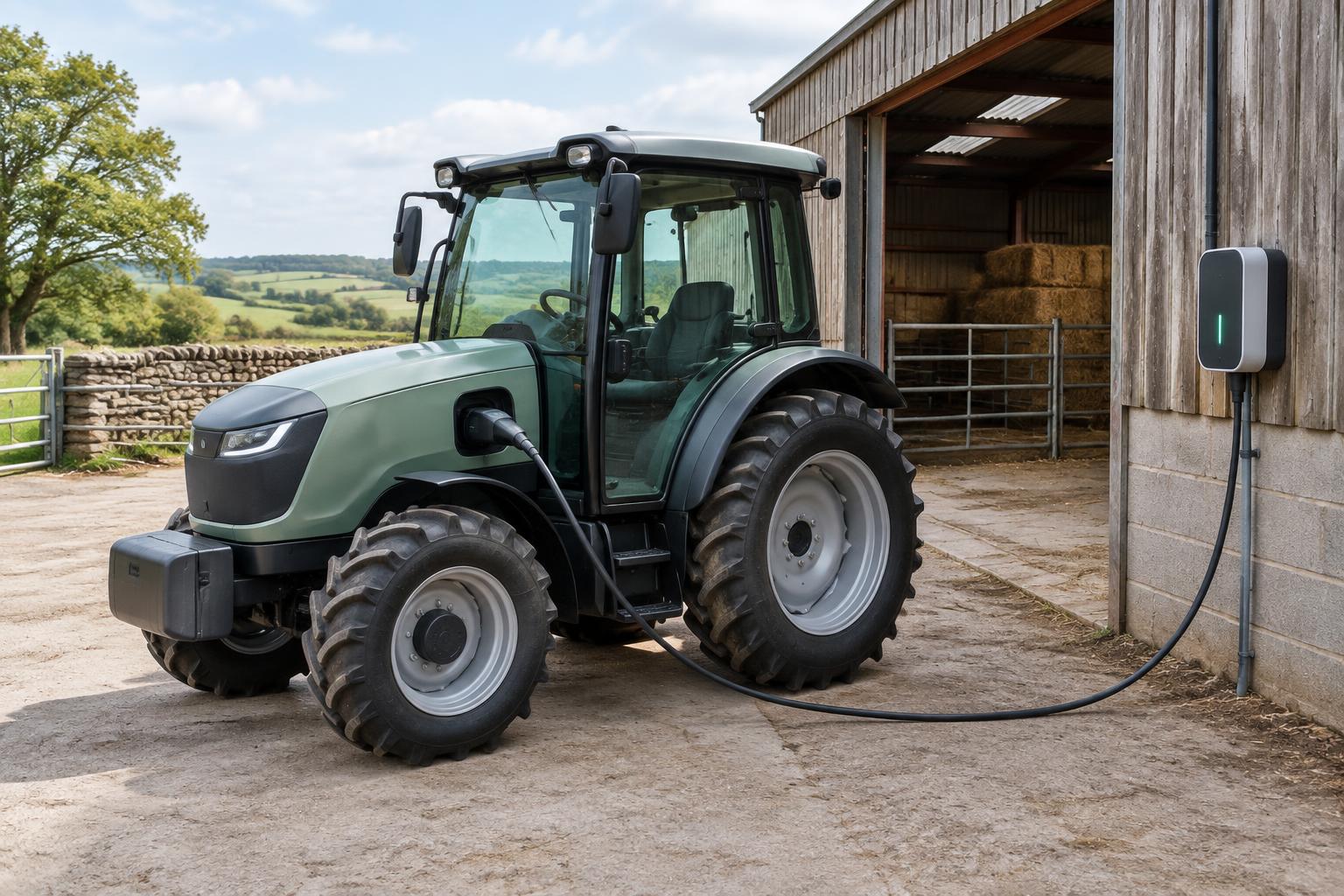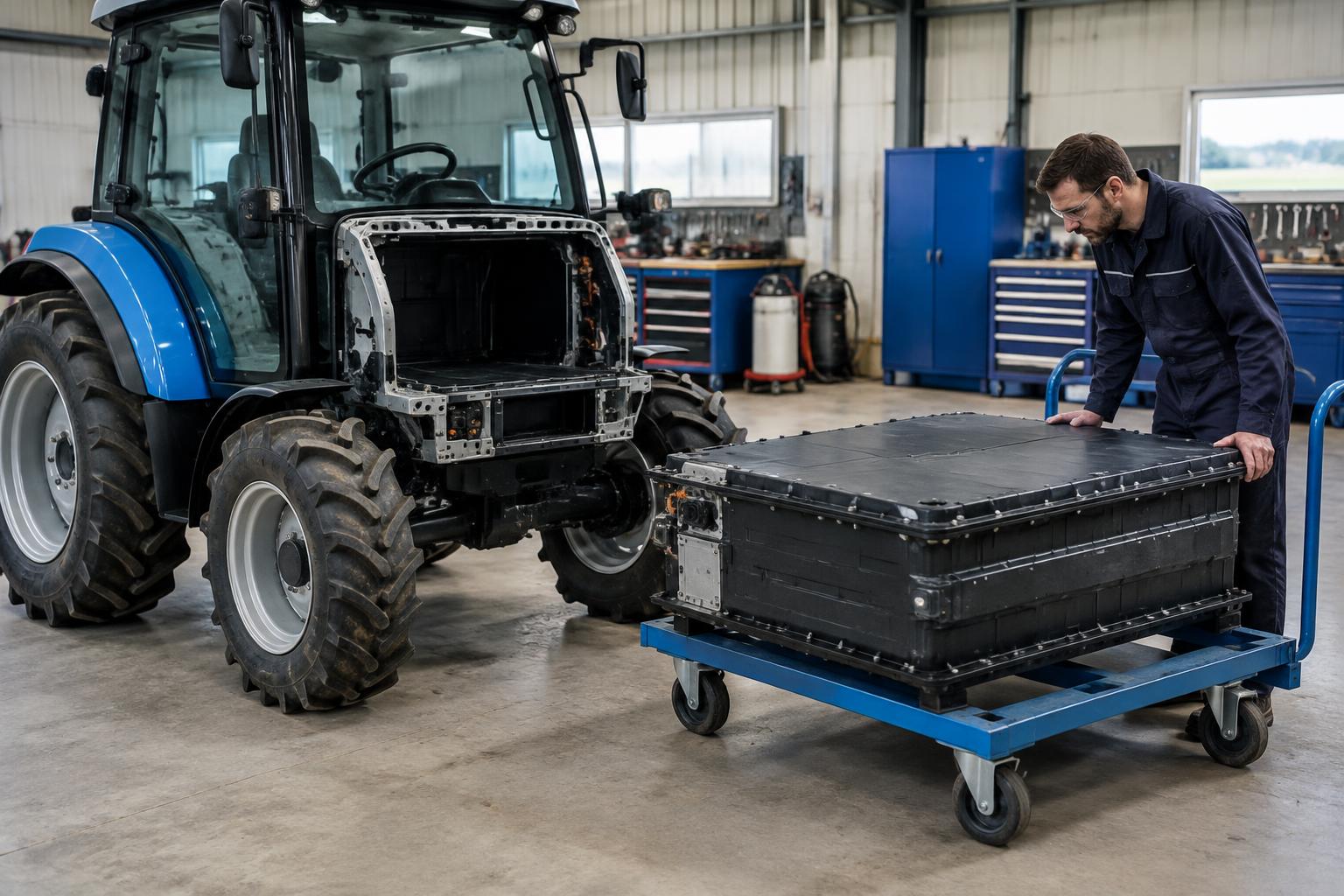
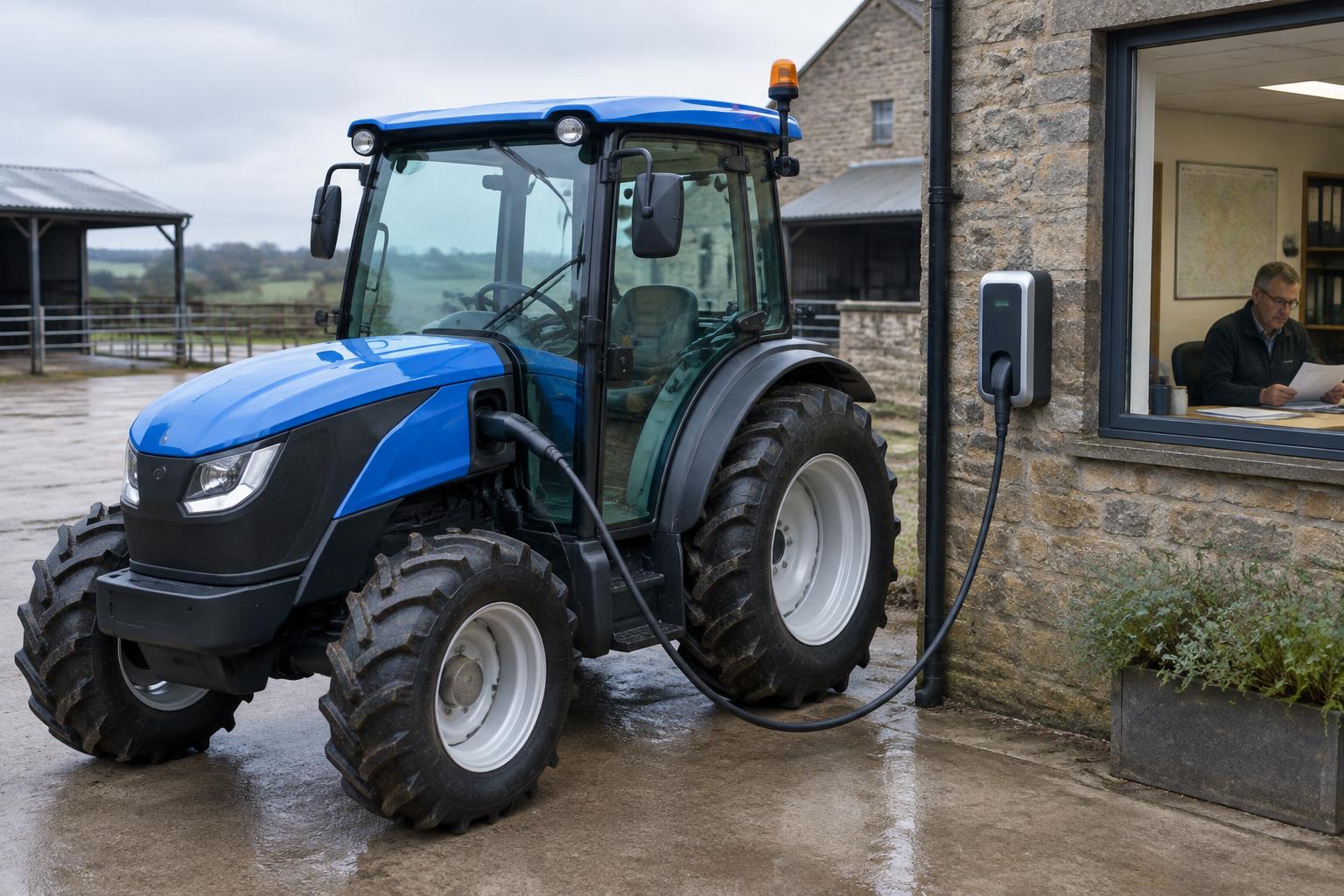
Total cost of ownership, often shortened to TCO, adds the major costs of owning and operating a tractor over a chosen period and subtracts its expected resale value. It is a better measure than purchase price alone because electric tractors can combine higher capital cost with lower energy and some lower maintenance costs.
The calculation still needs realistic assumptions. A spreadsheet can look precise while being based on guesses.
Choose the comparison period
Start with a period such as five, seven or ten years that reflects how the business normally owns machinery.
Use the same period for electric and diesel options.
Also estimate annual operating hours and likely changes in workload.
Initial tractor cost
Record the actual quoted price including the specification needed for the job.
Do not compare a base electric tractor with a fully optioned diesel machine or vice versa.
Include necessary items such as:
- cab;
- tyres;
- loader preparation;
- ballast;
- PTO options;
- delivery;
- dealer preparation.
Charging infrastructure
For the electric option, include:
- charger;
- installation;
- cabling;
- groundworks;
- switchgear;
- network or supply upgrades where required.
If infrastructure will serve several future vehicles, decide how fairly to allocate that cost.
Finance cost
If machinery is financed, compare total interest and fees over the ownership period.
A monthly payment alone can hide differences in deposit, term and final payment.
Use like-for-like finance assumptions where possible.
Energy cost
For electric: annual kWh from the meter × expected electricity price
For diesel: annual litres × expected diesel price
Both prices can change. Run more than one scenario rather than assuming today's tariff remains fixed for ten years.
Charging losses
Electricity drawn from the meter will be greater than energy ultimately stored in the battery because charging is not perfectly efficient.
Use measured or supplier-supported data when possible.
Do not calculate annual cost from battery capacity multiplied by number of workdays unless that genuinely matches use.
Maintenance
Compare scheduled maintenance over the same hours.
Electric tractors can avoid engine oil, diesel fuel and exhaust after-treatment servicing, but hydraulic and mechanical maintenance remains.
Include:
- scheduled parts;
- labour;
- travel;
- tyres;
- expected wear items.
Do not invent a flat “50% maintenance saving” unless you have evidence.
Battery risk
A traction battery may last through the entire ownership period without major replacement.
It may also lose useful capacity or require repair.
Rather than automatically inserting a full battery replacement, model scenarios:
- base: no major battery work;
- cautious: allowance for repair;
- downside: larger battery intervention.
This makes uncertainty visible.
Downtime
If charging interrupts work, assign a cost where it genuinely affects productivity.
If charging happens overnight while the tractor is parked anyway, do not invent downtime simply because charging takes hours.
Likewise, if electric servicing saves workshop time, that can have value.
Insurance and tax
Include insurance and any relevant taxes or charges that differ.
Use current information and avoid assuming today's policy treatment will remain unchanged for the entire ownership period.
Residual value
Estimate what each tractor may be worth at the end.
This is difficult for a young electric market.
Use conservative scenarios rather than pretending the residual is known.
Battery-health evidence and long-term manufacturer support are likely to influence electric resale values.
Cost per productive hour
Once total ownership cost is calculated:
TCO per hour = net ownership cost ÷ productive operating hours
This helps compare machines with different utilisation.
A tractor with high annual hours spreads its capital cost across more work.
Cost per unit of work
For some duties, cost per hectare, tonne moved or other output may be even more useful.
That captures productivity differences.
If one machine takes longer to complete the same job, cost per hour can hide the problem.
Run sensitivity tests
Change the uncertain assumptions:
- electricity price +20%;
- diesel price -20%;
- annual hours lower;
- residual value lower;
- battery repair required;
- charger shared by two machines.
If the electric option only works under perfect assumptions, the business case is fragile.
If it remains competitive across several scenarios, confidence is much stronger.
Include non-financial value separately
Lower noise, no local exhaust and sustainability targets can matter.
Give them explicit consideration, but avoid manipulating the spreadsheet with arbitrary financial values unless the business has a defensible method.
The most important input is utilisation
Research into electric tractor economics consistently shows that the outcome is highly dependent on use case and operating conditions.
A higher upfront cost can be recovered more easily when the machine works enough hours in a duty where electricity and maintenance savings are real.
Build the model before the purchase
A TCO model does not need to be complicated.
It needs honest data.
Use actual quotes, actual farm fuel records, actual electricity tariffs and a realistic duty cycle. That will tell you far more than a headline claim that electric is always cheaper or always too expensive.