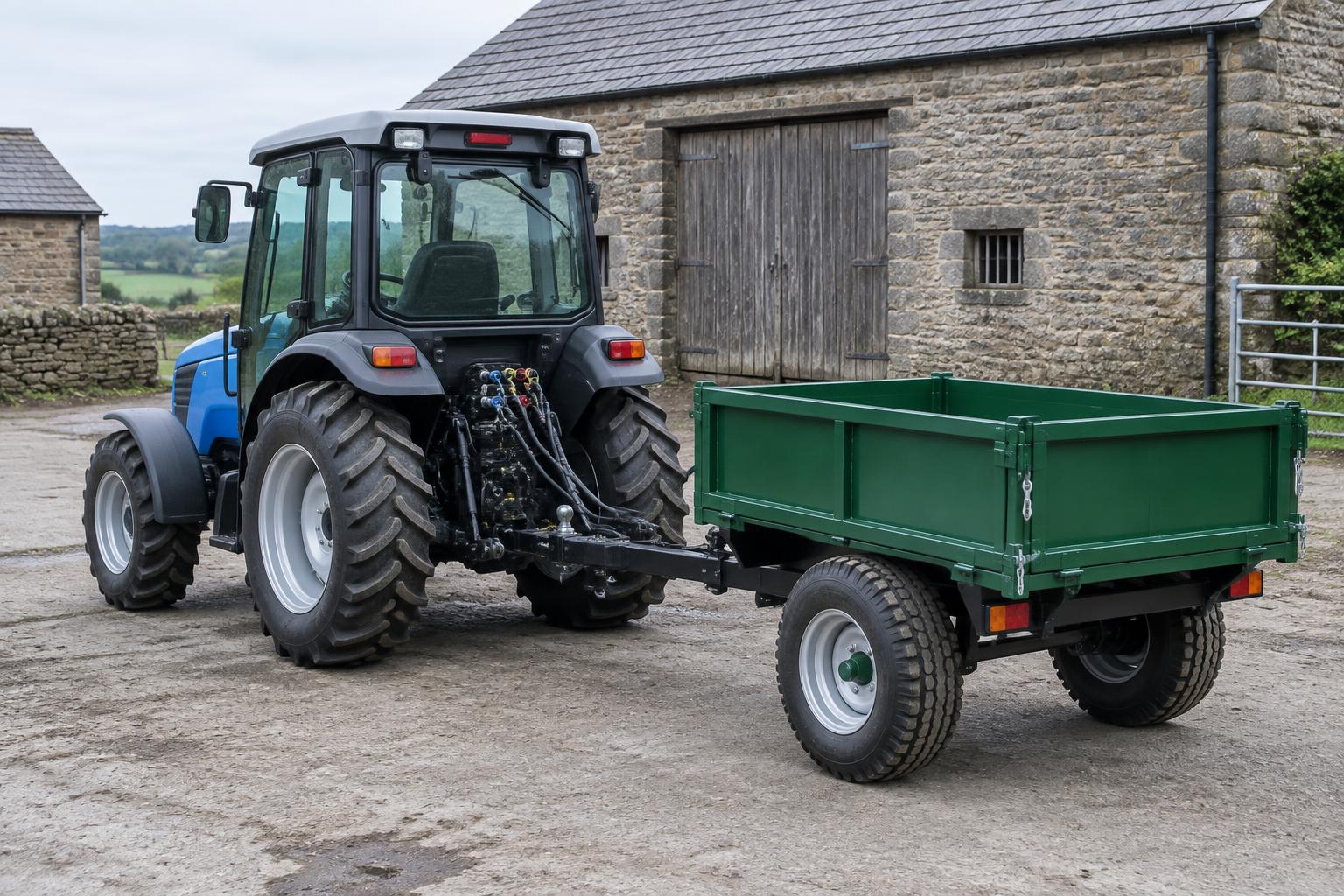
Electric tractors can tow trailers and operate hydraulic equipment when they are designed and rated for those jobs. Strong low-speed electric motor torque can be useful, but it does not override vehicle weight, braking limits, drawbar ratings, hydraulic capacity or battery energy.
A tractor's ability to pull is only one part of safe towing.
Torque is not the same as towing capacity
Electric motors can produce high torque from low speed.
That helps get a load moving and provides smooth control.
Official towing limits still depend on the tractor's design, tyres, brakes, structure, hitch or drawbar and legal requirements.
Never infer a safe trailer weight from motor torque alone.
Tractor mass matters
A towing tractor needs enough mass and traction to control the load.
Battery packs can add weight, which may help traction in some circumstances but can also increase soil pressure and affect payload or axle limits.
Ballast should be set according to the manufacturer's guidance.
Trailer brakes
Braking requirements remain critical.
A tractor may be capable of accelerating a heavy trailer more easily than it can safely stop it without the correct braking arrangement.
Check the tractor's approved trailer braking systems and legal limits for the intended road and off-road use.
Road transport uses energy
Towing on the road can consume significant battery energy.
Factors include:
- speed;
- gradient;
- total mass;
- tyres;
- wind;
- stops and starts;
- distance.
Regenerative braking can recover some energy during deceleration on compatible systems, but it will never recover everything used to move the load.
A return journey should be planned with a sensible energy reserve.
Yard towing can be a good fit
Short repeated trailer movements around a yard or site can suit electric operation well.
The tractor returns close to charging infrastructure, speeds are lower and work can be predictable.
Lower powertrain noise and no tailpipe exhaust may also be useful around buildings.
Hydraulic loader work
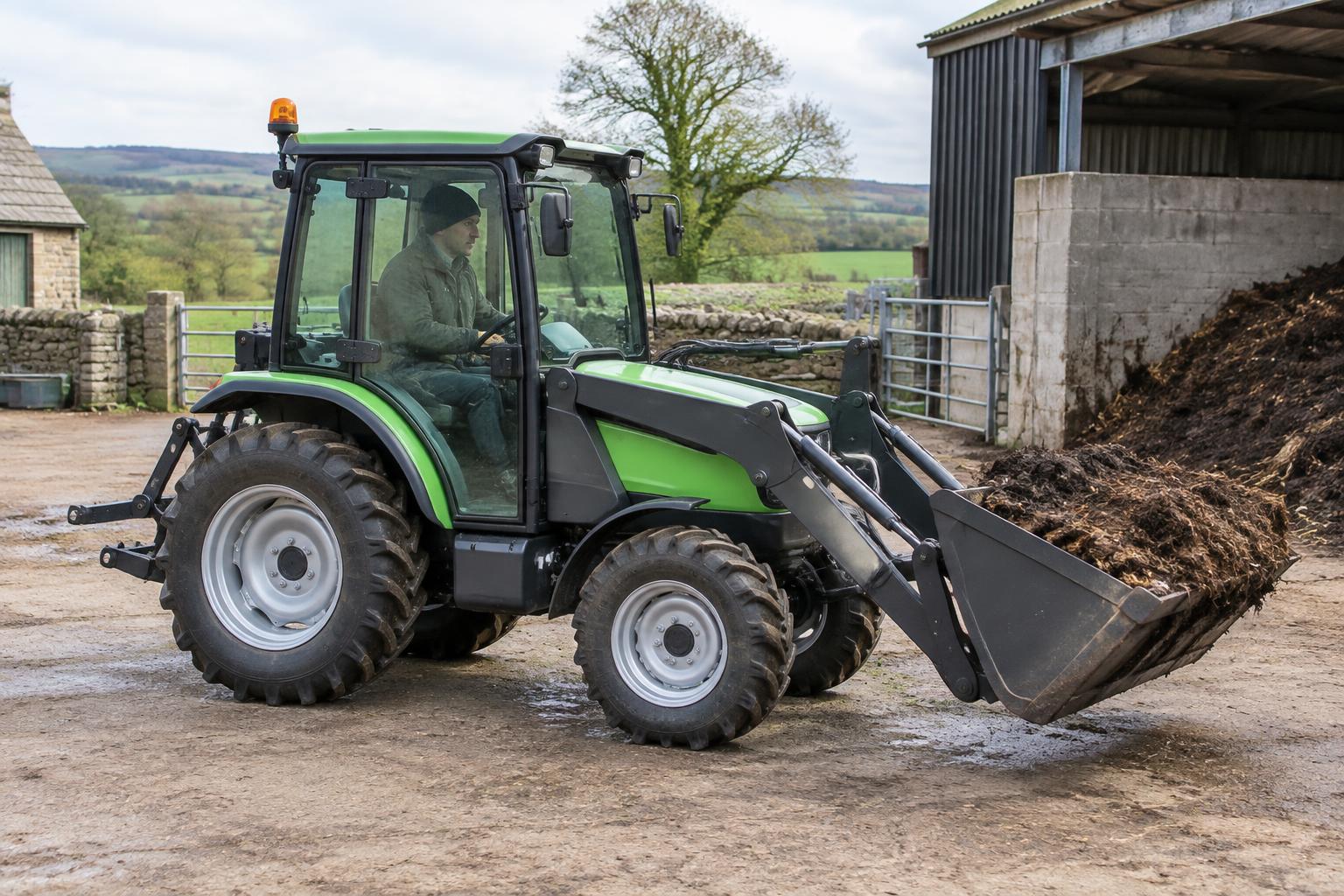
Loader cycles require hydraulic energy.
An electrically driven hydraulic pump can respond to demand and may avoid some idle losses, but repeated lifting still consumes power.
Check:
- hydraulic flow;
- pressure;
- loader approval;
- lift capacity;
- cycle performance;
- battery consumption under realistic use.
High-flow hydraulic implements
Some specialist implements require continuous high hydraulic flow.
That can represent a substantial sustained energy load.
A tractor with adequate traction power may still be unsuitable if the hydraulic system cannot deliver the required flow or if doing so reduces runtime too far.
Electric auxiliaries
One benefit of electrification is more independent control of auxiliary systems.
Instead of tying pump output directly to engine speed, an electric system can potentially deliver only the flow needed.
This may improve efficiency and operator control.
Heat management
Sustained towing on gradients or heavy hydraulic use can generate heat in motors, inverters, batteries and hydraulic systems.
The tractor's thermal-management system must maintain performance within design limits.
Ask whether continuous output is reduced in demanding conditions rather than looking only at peak figures.
Terrain
Wet fields, steep slopes and loose surfaces increase energy use and reduce traction.
These are familiar tractor issues, but battery-electric operation makes the energy penalty more visible.
A route that looks acceptable on a dry demonstration day may be more demanding in winter.
Working away from base
A towing job that repeatedly returns to the yard can fit electric operation.
A trailer route that leaves the farm for hours may require a much larger energy reserve.
Charging access at the destination can change the equation, but only if compatible equipment and time are available.
Assess the actual load
Before considering an electric tractor for towing, record:
- typical trailer gross weight;
- maximum trailer weight;
- route length;
- hills;
- road speed;
- number of trips;
- turnaround time;
- braking system;
- charging opportunities.
For hydraulics, record flow, pressure and hours of use.
Demonstrate the hardest realistic job
If possible, test the machine with the actual trailer or hydraulic implement.
A no-load road demonstration says little about a tractor expected to tow a full trailer uphill.
The practical answer
Electric tractors can be very capable at towing and hydraulic work, especially in short, repeatable duties.
The safe and useful limit is set by the whole machine and energy system. Check approved capacities first, then check whether the battery can support the required working pattern.