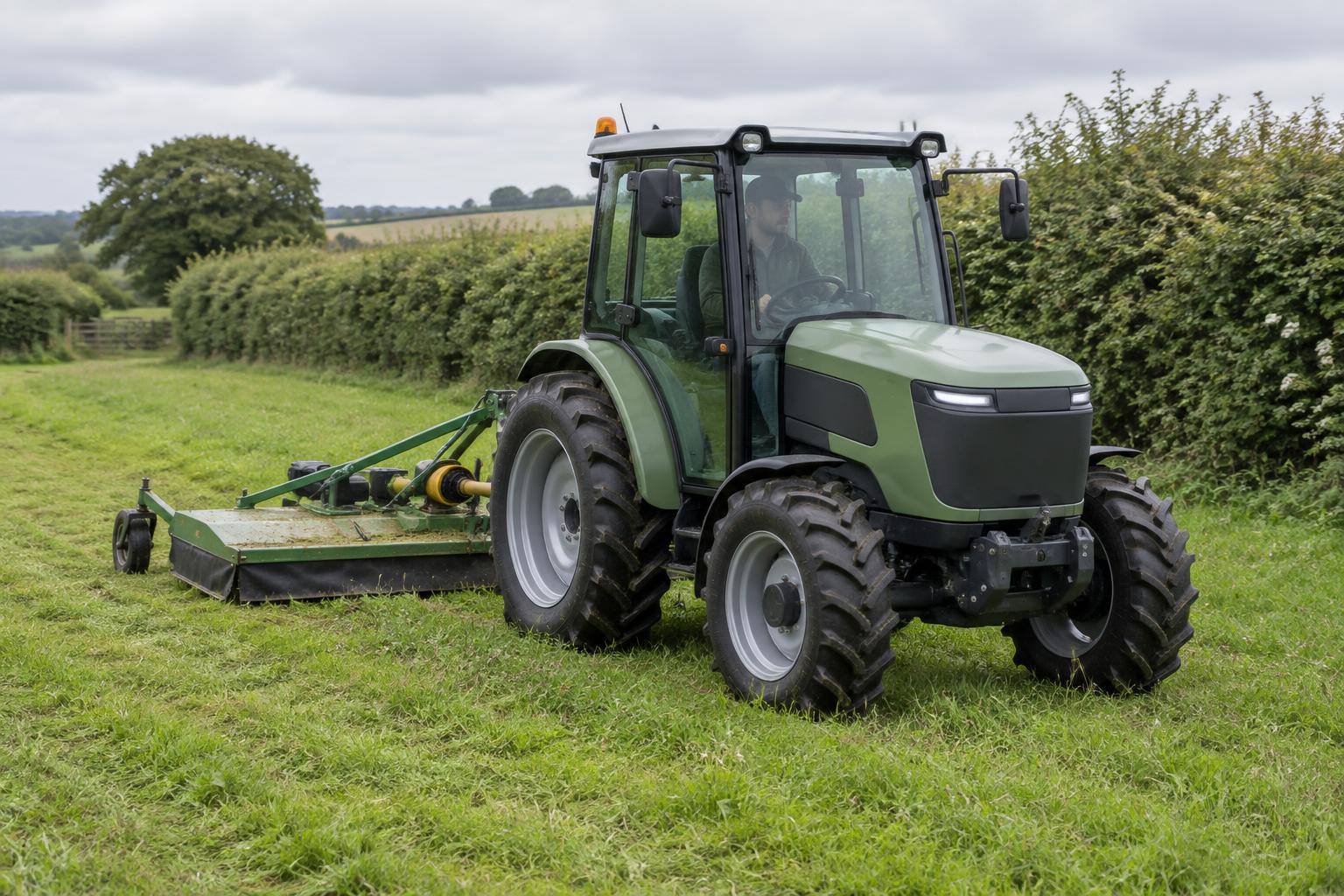
An electric tractor can run only as long as its stored energy and operating conditions allow. That sounds obvious, but it explains why a single “hours per charge” figure can be a poor way to compare machines.
A tractor mowing lightly, moving trailers around a yard or cultivating hard soil can draw very different levels of power. Runtime is therefore a duty-cycle question.
Battery capacity sets the energy budget
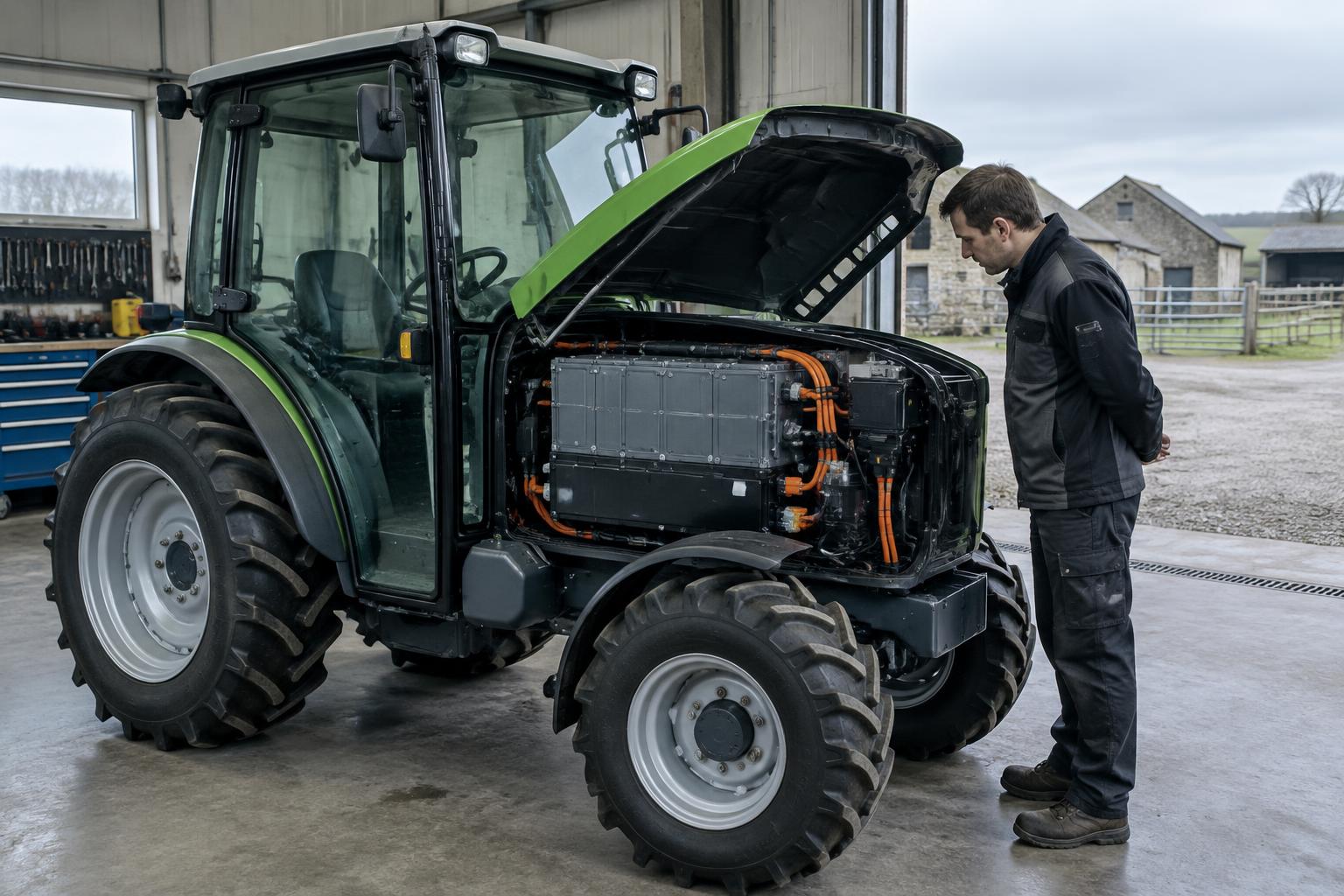
Battery capacity is usually quoted in kWh.
If two tractors were otherwise identical and performed exactly the same work, the one with more usable battery energy would generally be able to work longer.
Real tractors are not identical, though. Motor efficiency, transmission, tyres, weight, hydraulics and software all influence consumption.
Also check whether a specification refers to gross or usable battery capacity.
Power demand determines how fast the budget is spent
A useful simplified idea is:
runtime ≈ usable battery energy ÷ average electrical power demand
If average demand rises, runtime falls.
This is not a substitute for manufacturer data because real systems have losses and power limits, but it explains the relationship.
A tractor drawing an average 10 kW from its battery can theoretically use energy much more slowly than the same machine averaging 40 kW.
Heavy draft work
Ploughing, deep cultivation and other high-draft operations can demand sustained traction power.
These jobs can be difficult for battery machinery because high power may be required for long periods with few natural charging breaks.
Soil condition, working depth, implement width and tyre slip can all change the energy needed.
An electric tractor should be evaluated against the actual cultivation duty, not simply its peak motor power.
PTO work
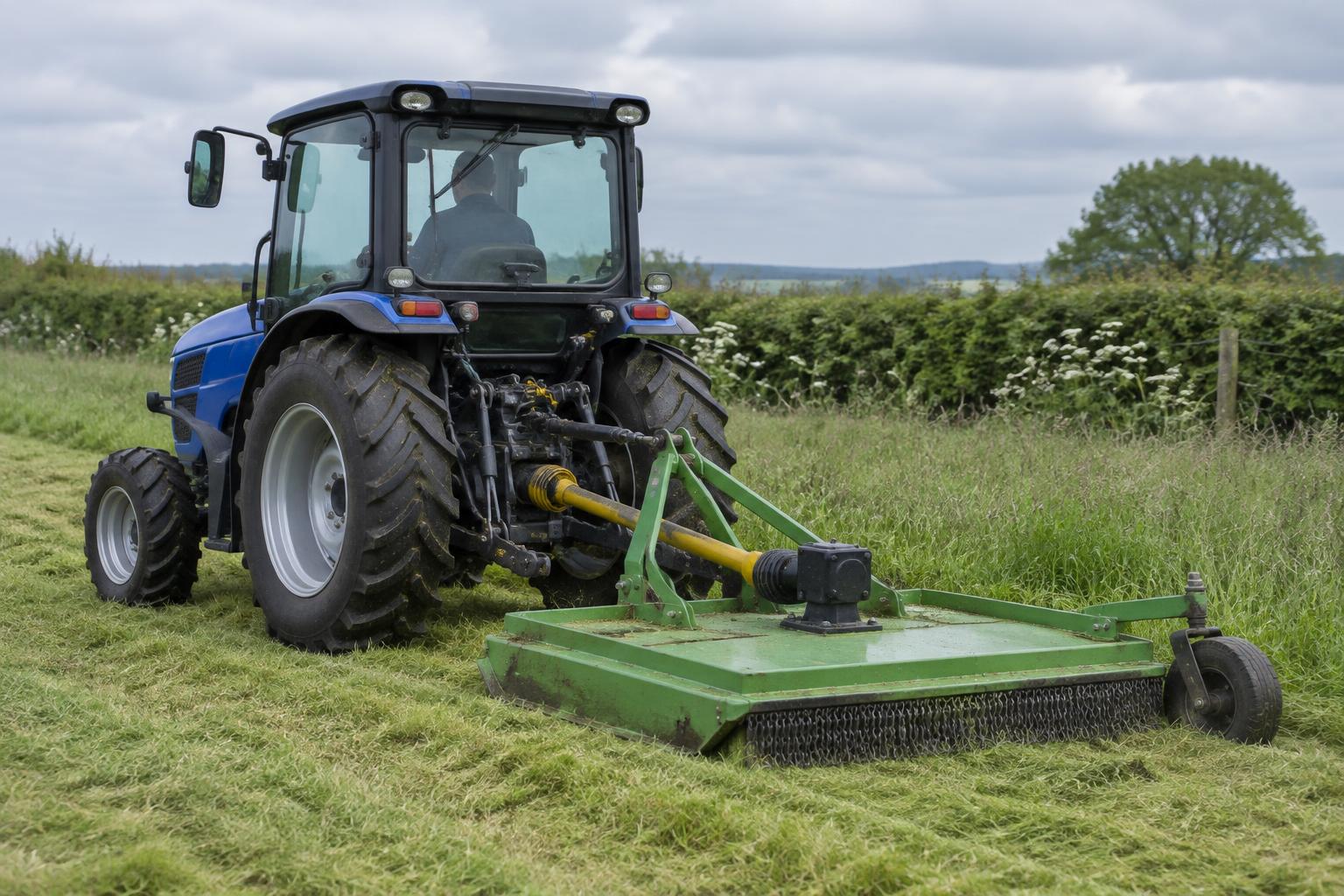
PTO-driven implements can consume significant energy even when the tractor itself is moving slowly.
A mower, topper, feeder or other attachment can place a fairly continuous load on the drivetrain.
This makes PTO power and expected operating duration important parts of the energy calculation. See electric tractors, PTO and implements.
Hydraulics
Loader work, high-flow implements and repeated linkage operations use hydraulic power.
An electric hydraulic pump may operate efficiently on demand, but the energy still comes from the traction battery.
If an application is hydraulically intensive, include it in any runtime estimate.
Road travel
Road work introduces speed, aerodynamic drag, hills and vehicle weight.
Unlike an electric car, a tractor is not designed primarily for efficient high-speed road travel. Towing a heavy trailer can materially increase energy use.
Regenerative braking may recover some energy during suitable deceleration, but it should not be counted on to cancel the energy required to move the load.
Weather
Cold weather can reduce available battery performance and increase heating demand.
Hot weather may increase cooling requirements.
Wet or soft ground can also increase rolling resistance and slip, which is a mechanical rather than battery-specific issue but still raises energy consumption.
Operator behaviour
Speed choice, acceleration, tyre pressure, ballast and implement setup can affect efficiency.
The same principles already matter with diesel fuel consumption. Electric tractors simply make the energy budget more visible because the available battery charge is finite and displayed.
Why manufacturer runtime claims vary
One manufacturer might quote a figure based on mixed light work. Another may quote a range for specific duties.
Unless the test conditions are described, two runtime claims may not be directly comparable.
Ask:
- what task was being performed?
- at what average power?
- with which implement?
- in what conditions?
- what battery reserve remained?
- was cab heating or cooling in use?
Can fast charging extend the working day?
Potentially.
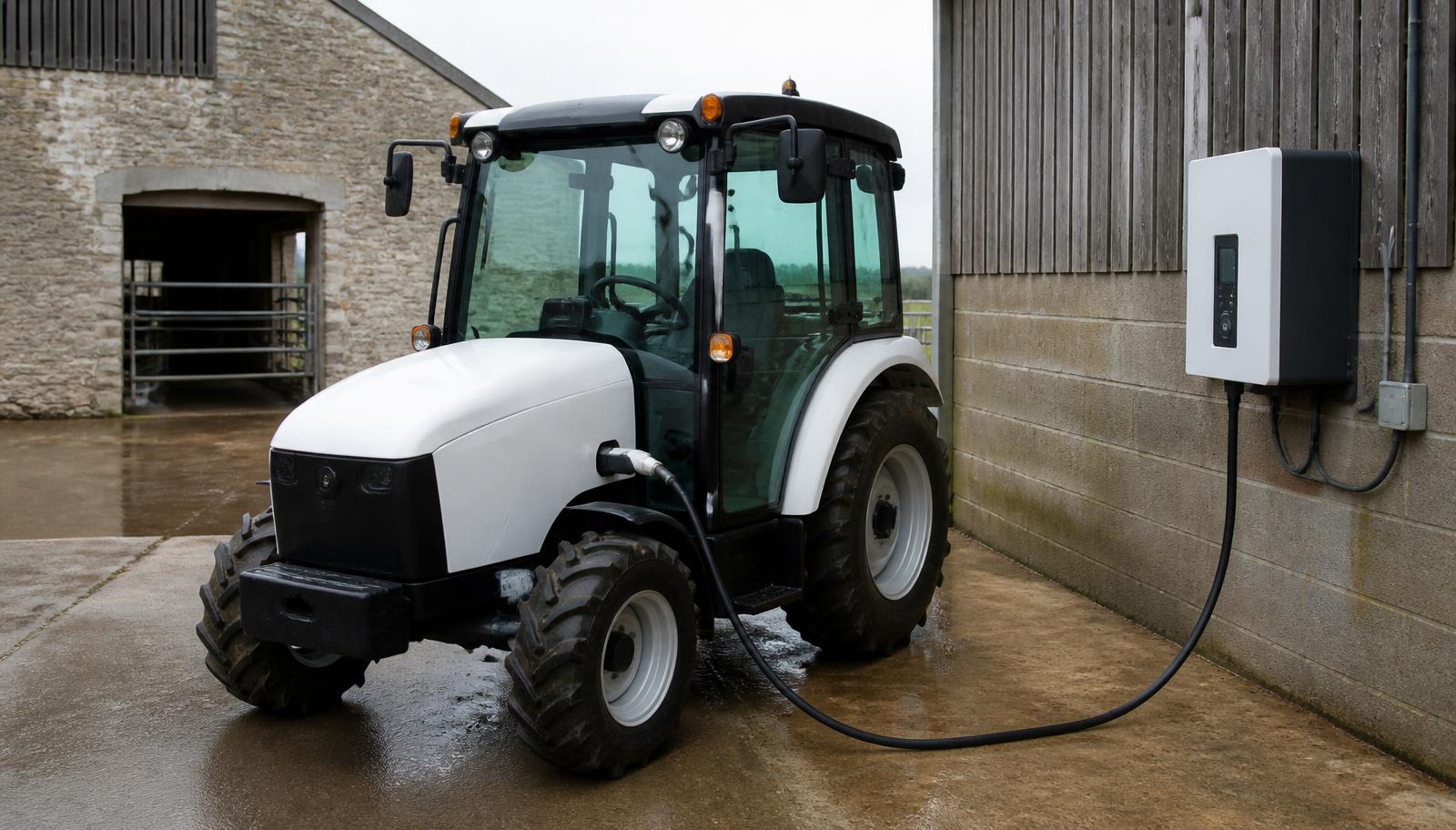
A tractor that cannot complete the entire day on one charge may still be practical if it can add enough energy during lunch, loading time or another planned stop.
The charger must support the required power, and so must the site electrical supply.
A 45-minute break can be useful only if the tractor and charger can transfer a meaningful amount of energy during it.
Read how to charge an electric tractor before relying on mid-day charging.
Build a duty-cycle worksheet
For each tractor task, record:
- start and finish time;
- productive hours;
- implement;
- average and peak workload if known;
- field/road/yard split;
- breaks;
- distance from the charger;
- seasonal urgency.
Then ask whether the electric tractor has enough energy with a reserve.
Avoid designing around 0%
A working machine should not routinely need to reach an almost empty battery to complete normal work.
A reserve allows for colder weather, unexpected extra work, battery ageing and detours.
The size of that reserve depends on operational risk, but planning with some margin is more sensible than assuming every kWh will always be available.
Runtime is only one measure
If a tractor completes all required work and charges when it would otherwise be parked, its nominal runtime may barely matter.
If it must stop during a narrow weather window, runtime becomes critical.
So the answer to “How long can an electric tractor run?” is: long enough only if its battery and charging strategy match the work.