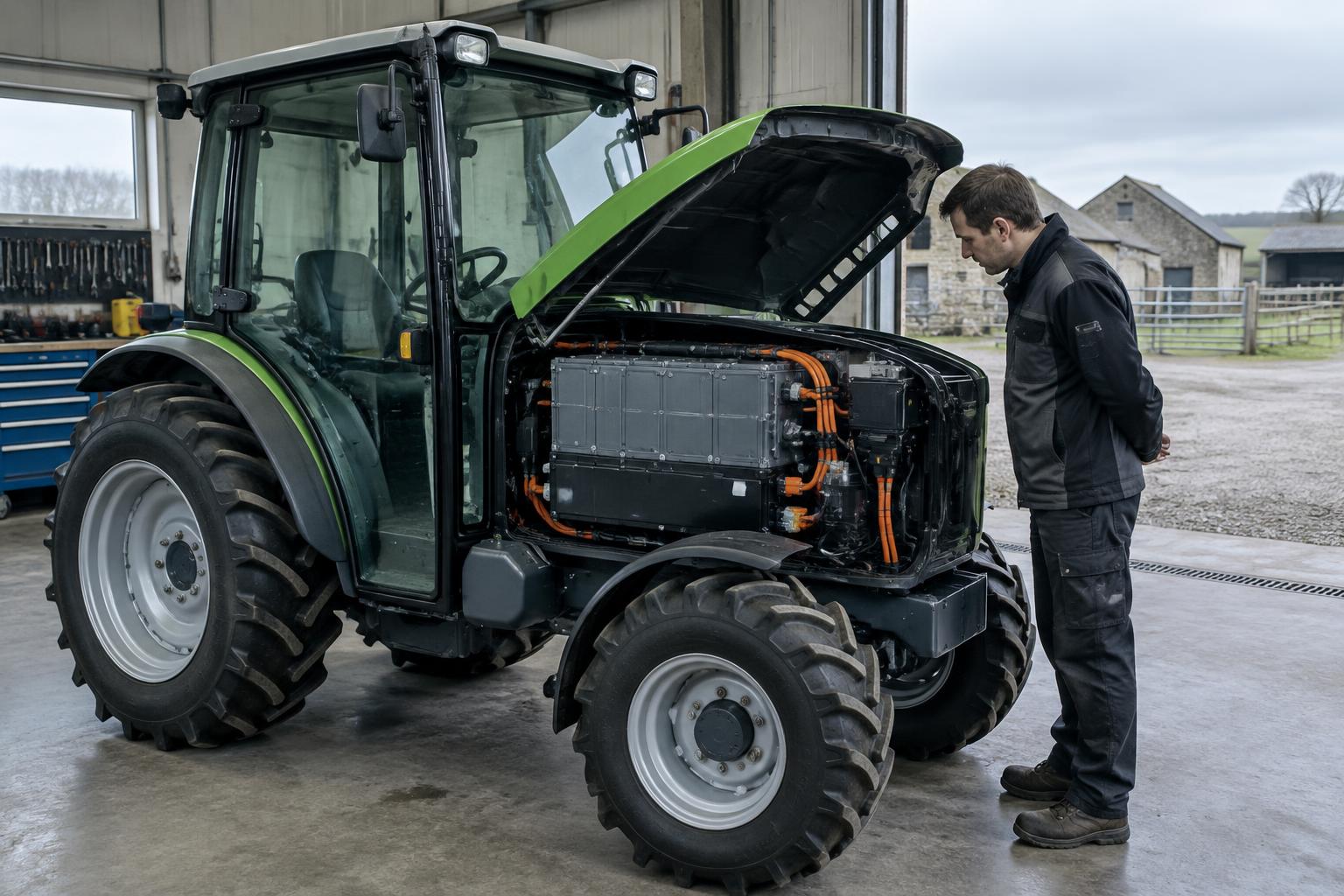
An electric tractor traction battery should be thought of as a long-life component whose usable capacity gradually changes with age and use. There is no single lifespan that applies to every tractor because battery chemistry, thermal management, workload and charging patterns differ.
The key question is often not “When will the battery fail?” but “How much usable capacity will it retain after years of work?”
Batteries age in two ways
Battery ageing is commonly discussed as cycle ageing and calendar ageing.
Cycle ageing happens through charging and discharging. A full equivalent cycle can be built up from several partial uses, so charging from 60% to 80% five times is not the same as five full 0% to 100% cycles.
Calendar ageing happens with time even when the battery is not being heavily used.
Both are affected by temperature and how the battery is managed.
What does degradation look like?
A new battery has a certain usable energy capacity. Over time, that available capacity can decline.
If a tractor could perform a particular duty with a comfortable margin when new, a modest reduction may make little practical difference. If the duty already uses nearly all available energy, the same degradation may become operationally important.
This is why buying solely on a claimed “hours per charge” figure leaves little room for changes in battery health, weather and task.
Temperature matters
Lithium-ion batteries are sensitive to temperature.
Cold conditions can temporarily reduce available power or energy and increase the energy needed for cab and battery heating. High temperatures can accelerate some ageing processes.
Well-designed battery systems therefore use thermal management and software controls to keep cells within safe operating limits.
Owners should follow the manufacturer's storage and charging instructions rather than applying generic electric-car advice.
Does fast charging damage batteries?
Higher charging rates can increase battery stress in some circumstances, but the effect depends on cell chemistry, temperature, state of charge and the battery-management strategy.
A tractor designed for fast charging should control charging to remain within its approved limits.
The sensible approach is to use charging methods recommended by the manufacturer and avoid treating the maximum charging rate as something that must be used every time.
Is charging to 100% bad?
There is no universal rule for every tractor.
Some battery systems reserve hidden capacity at the top and bottom of the pack, while others allow the operator to set charge limits. Manufacturers may recommend different routines depending on use.
If the tractor offers a daily charge target below the maximum, using that feature when full range is not needed may support battery longevity. But the manufacturer's guidance should take priority.
How should an electric tractor be stored?
Long periods at extreme states of charge and unsuitable temperatures can be undesirable for many lithium-ion systems.
Storage instructions may specify a recommended state of charge and periodic checks. For seasonal agricultural equipment, this is particularly relevant because a tractor could spend weeks with limited use.
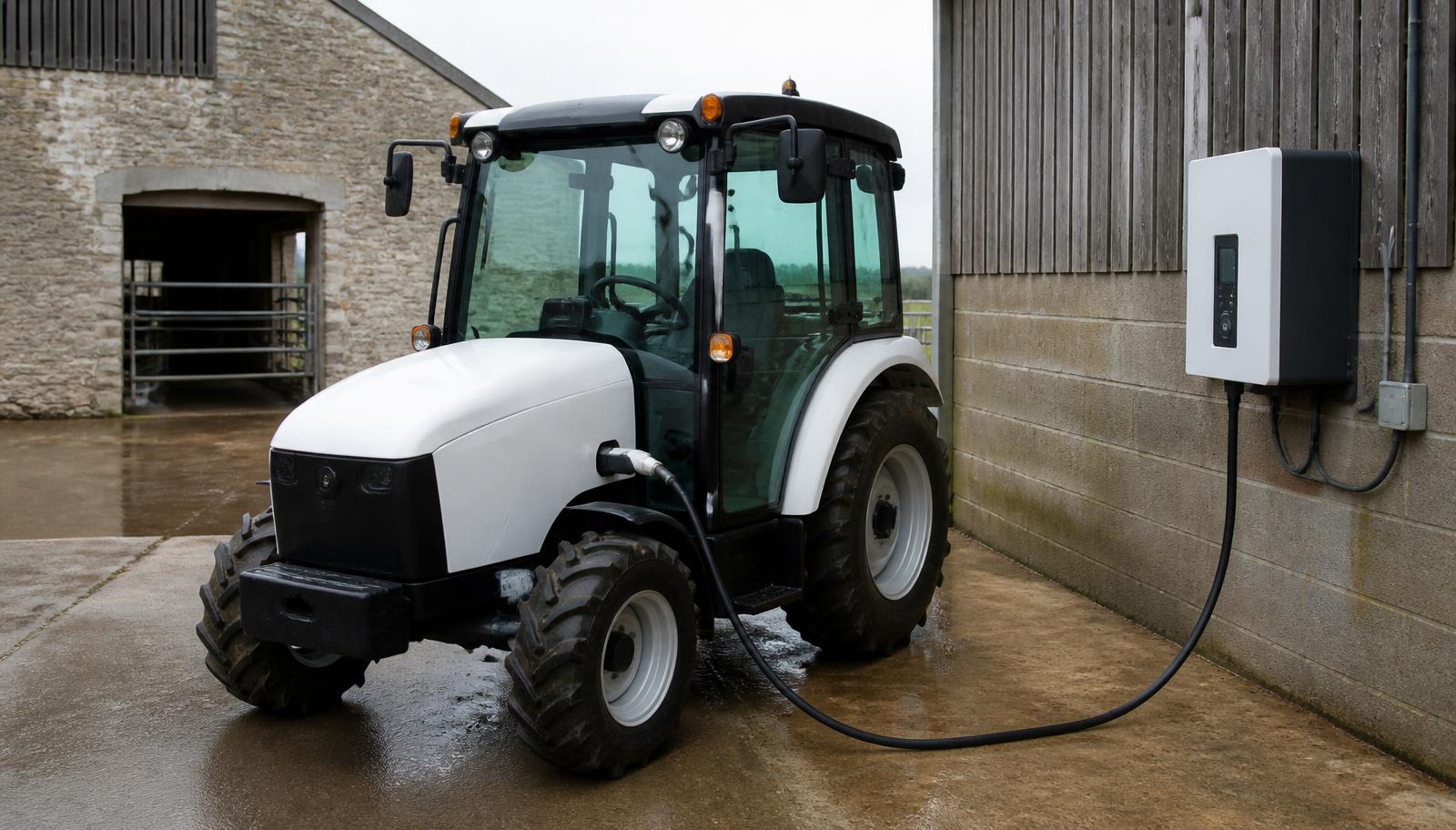
Owners should also consider charger isolation, fire-safety guidance, battery monitoring and whether software updates are required during storage.
What should a battery warranty tell you?
The most useful warranties clearly state:
- duration;
- operating-hour or mileage limits where applicable;
- what constitutes a defect;
- whether minimum retained capacity is guaranteed;
- exclusions;
- maintenance obligations;
- whether the warranty transfers to a subsequent owner.
Do not assume the tractor warranty and battery warranty are identical.
Battery state of health
Some electric machinery can report a measure of battery state of health.
This can become increasingly important in the used market. A five-year-old tractor with documented battery health and a strong service history may be much easier to value than one with no usable diagnostic information.
For buyers, ask how battery condition can be measured independently or through an authorised service tool.
Can the battery be repaired?
Battery packs may be designed as modules, but repair policy varies.
In some cases individual modules or components may be serviceable. In others, replacement may involve a larger assembly.
High-voltage battery work is specialist work. It should not be approached like replacing a conventional 12V starter battery.
What happens at the end of vehicle life?
An aged traction battery may retain useful energy capacity even when it no longer meets the original tractor's demanding duty.
Potential second-life and recycling routes are developing across the wider battery industry. The practical option will depend on the pack design, condition, regulations and available service network at the time.
How to protect long-term battery value
The straightforward steps are:
- follow the maker's charging instructions;
- keep software and battery systems maintained;
- use approved charging equipment;
- avoid unnecessary exposure to unsuitable temperatures where practical;
- follow storage guidance;
- keep battery diagnostic records.
Think in retained capability
A battery does not need to remain at 100% of its original capacity to be useful.
What matters is whether the tractor still has enough energy and power to complete the required work with a sensible reserve.
For that reason, battery life should be assessed against the tractor's duty rather than a single age in years.