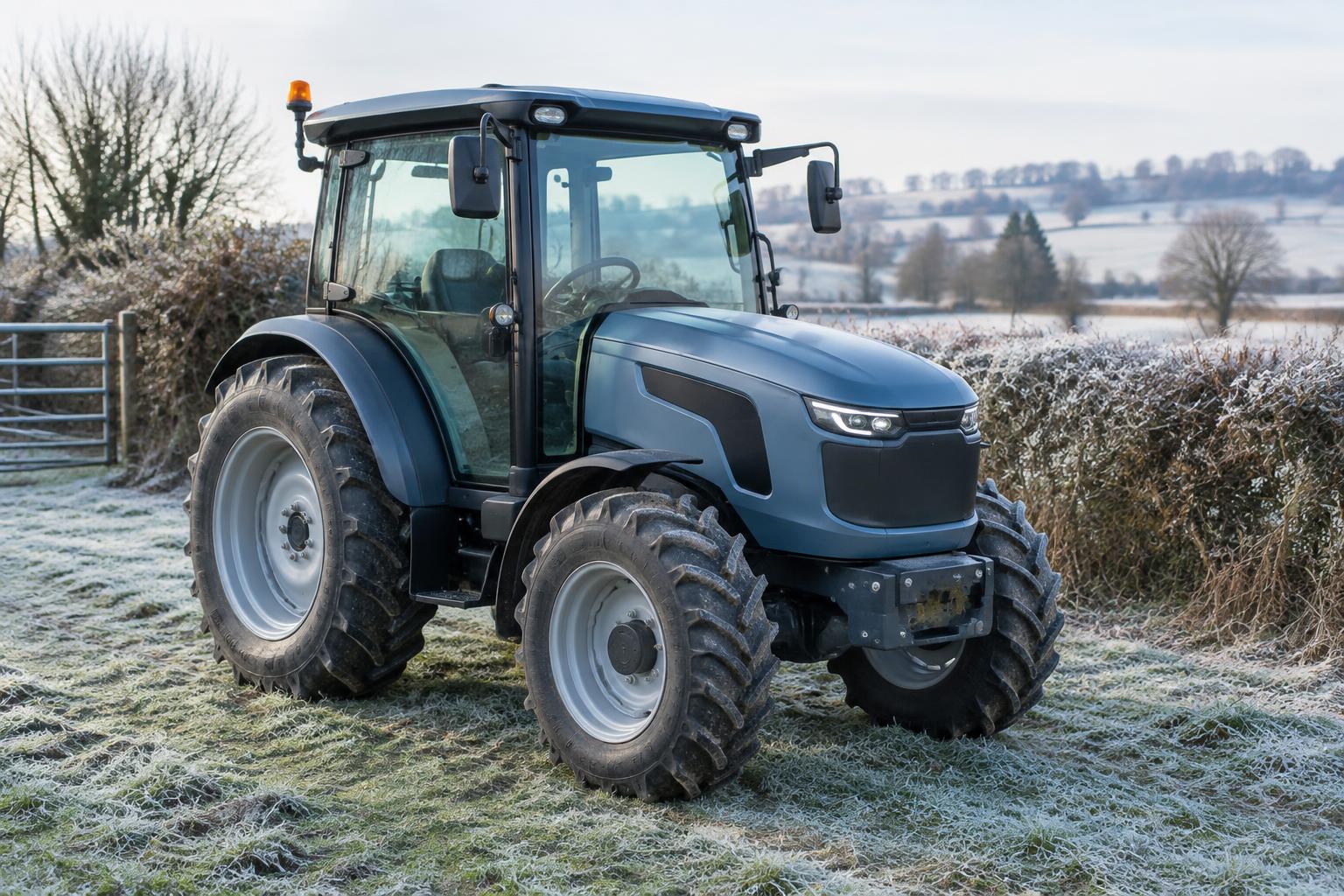
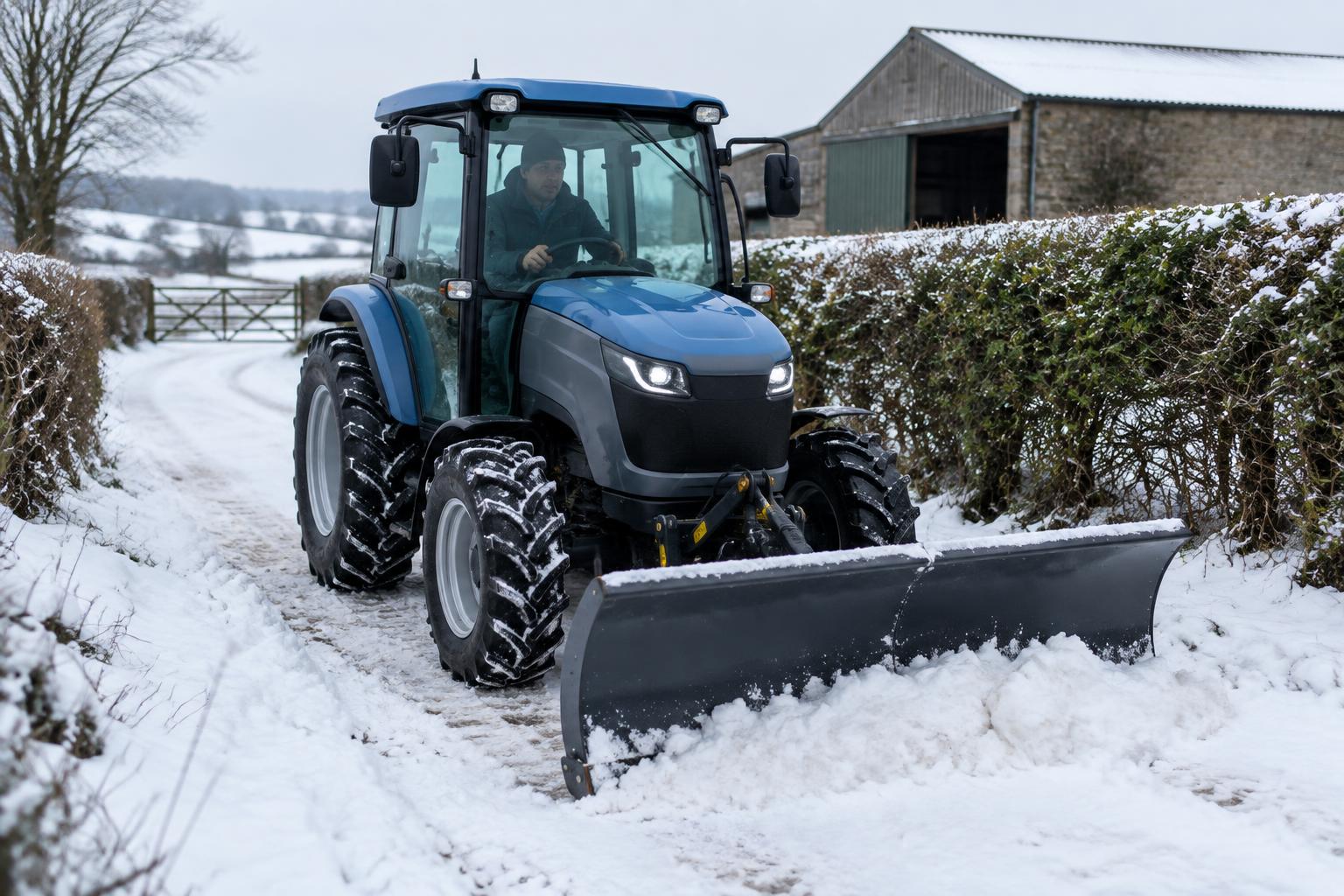
An electric tractor can work through a UK winter, but cold weather changes the energy calculation. Battery temperature, cab heating, wet ground and winter attachments can all increase consumption or reduce available performance.
The practical answer is to plan winter duties with more reserve than a mild-weather demonstration might suggest.
Cold battery behaviour
Lithium-ion cells operate differently when cold.
Available energy or power can be temporarily reduced and charging may be slower until the battery reaches an appropriate temperature.
Modern battery systems manage this automatically, but the energy needed to heat the battery has to come from somewhere.
Start the day connected where supported
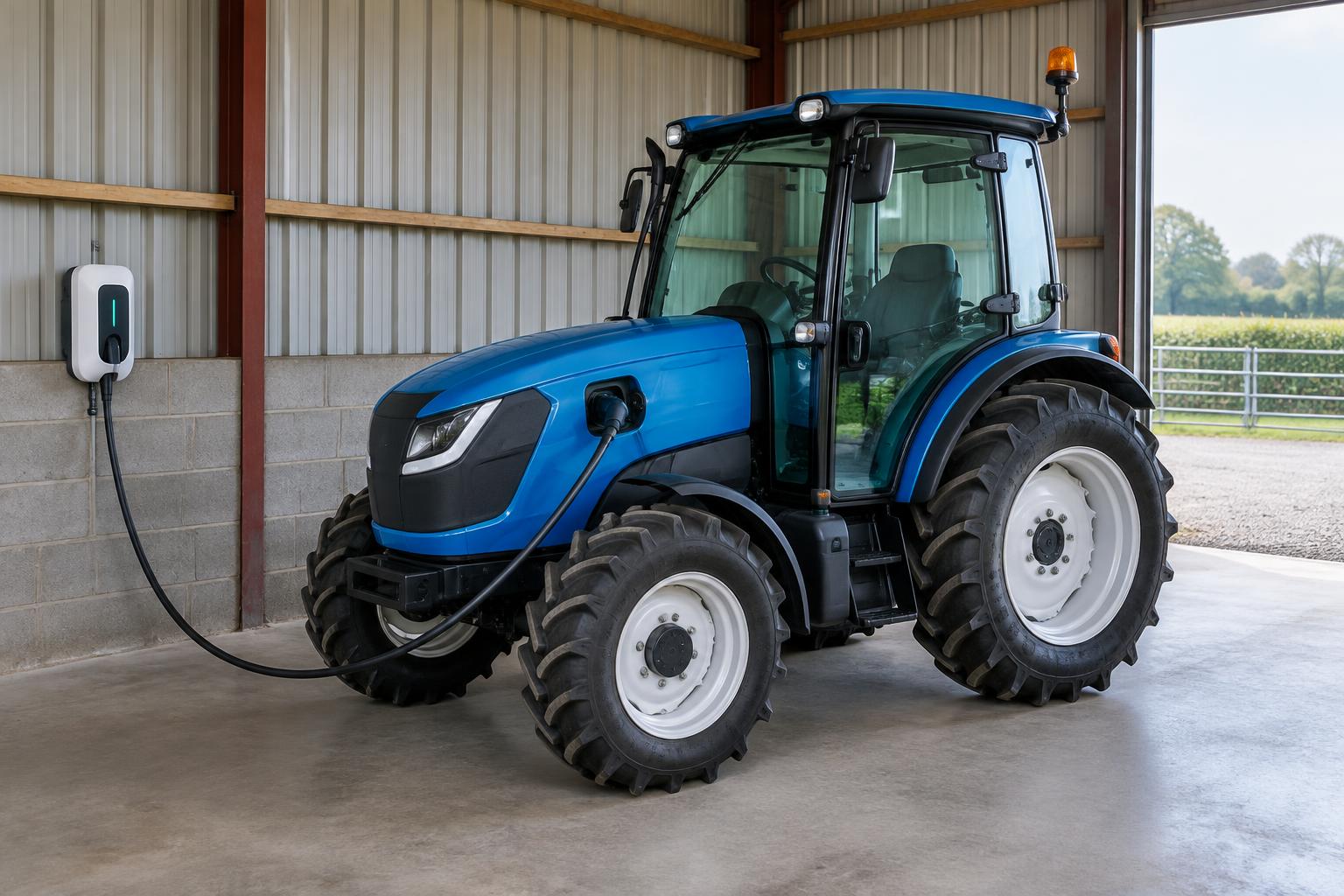
If the tractor supports scheduled pre-conditioning, warming the battery and cab while still connected to the charger can be useful.
This can reduce the amount of traction-battery energy used simply to get the machine and operator comfortable.
Not every tractor has this feature, so check the actual specification.
Cab heating
Cab heating can become a meaningful auxiliary load.
A diesel tractor has abundant waste heat from the engine. A battery-electric machine may use an electric heater or heat pump.
Operators should not be expected to work in an uncomfortable cab simply to save battery. Instead, include heating in the energy plan.
Wet ground
UK winter conditions often matter more through the tyres than through the battery.
Soft soil and mud increase rolling resistance and wheel slip.
That raises energy consumption for both electric and diesel tractors.
Correct tyres, pressure and ballast are therefore important for winter efficiency.
Gritting and sweeping
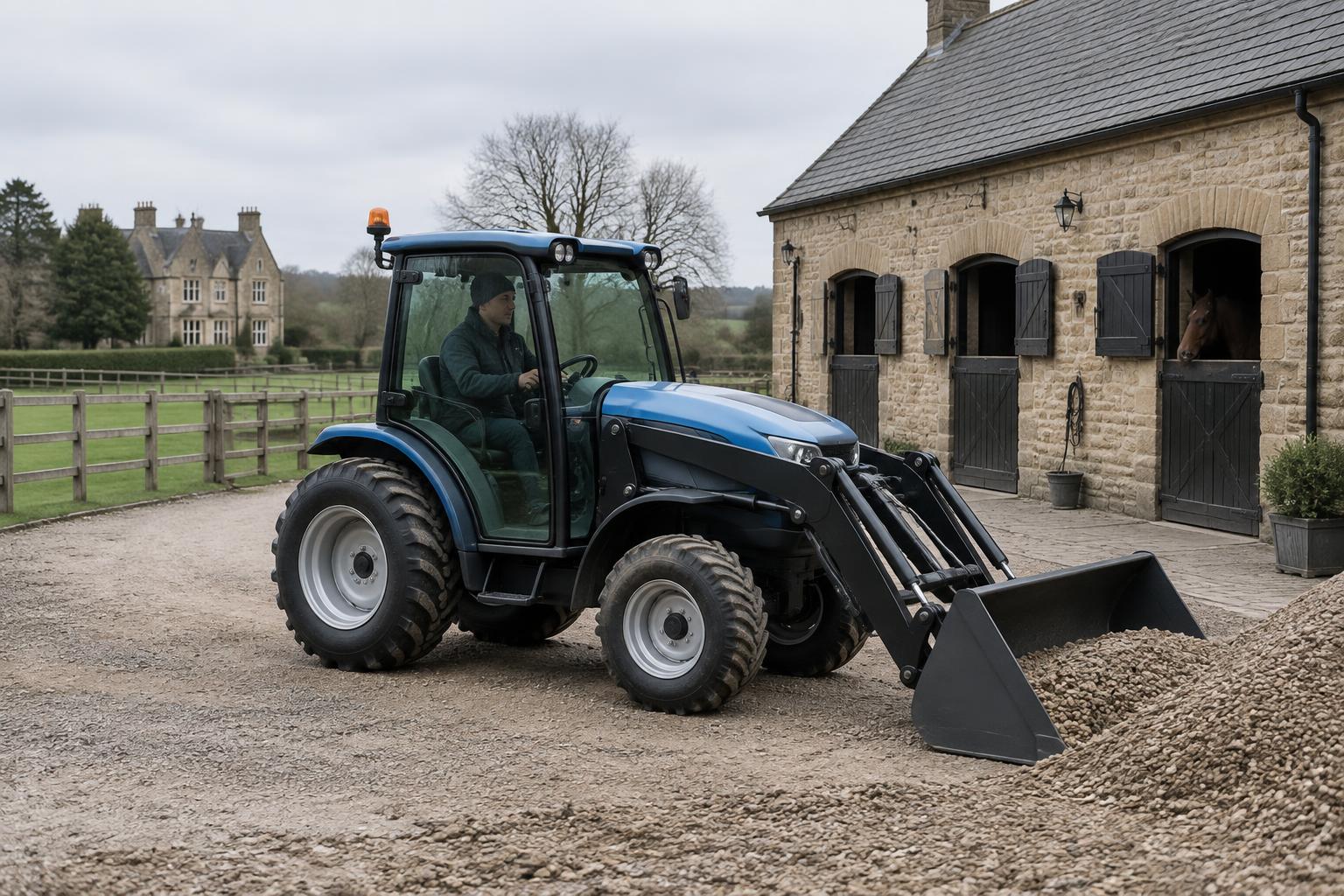
Winter estate and municipal tasks can suit electric tractors because they are often local and predictable.
Quiet operation may be particularly valuable for early-morning work near homes.
A gritter, brush or hydraulic attachment still consumes energy and should be included in runtime testing.
Snow
Heavy snow is relatively uncommon across much of the UK but can create demanding traction conditions.
Electric motors can provide fine torque control, but tyres, chains where permitted/appropriate, ballast and safe operating practice remain decisive.
Battery weight can influence traction and axle loading, so use manufacturer guidance.
Lighting and auxiliaries
Winter work often involves more use of:
- lights;
- demisters;
- heated windows;
- wipers;
- cab heating;
- fans.
Each load may be small compared with traction, but together they reduce available energy.
Charging after a cold shift
The battery system may condition itself before accepting higher charging power.
A charger inside or adjacent to a sheltered parking area may be operationally easier, but charger and building arrangements must meet appropriate safety and manufacturer requirements.
See charging safety and storage.
Storage
If the tractor is used only occasionally, follow the recommended storage state of charge.
Do not assume it should remain permanently at 100%.
Keep charging connectors protected and inspect cables for winter damage.
Build a winter reserve
A sensible operator should not plan a critical winter task around arriving back with 1% battery.
Allow for:
- lower temperature;
- detours;
- extra heating;
- difficult ground;
- unexpected work;
- ageing battery capacity.
The required reserve depends on the duty, but some margin makes the system more resilient.
Test the real task
If winter performance matters, ask for a demonstration under representative conditions.
A summer mower test does not answer whether the tractor can grit roads for several hours in January.
Use the intended attachment and route if possible.
Time-of-use charging
Long winter nights can make overnight charging convenient.
Where a business tariff offers cheaper off-peak periods, scheduling can also reduce energy cost.
Check that delayed charging does not leave a cold battery unprepared for an early shift.
What about frost and connectors?
Charging systems designed for outdoor use should tolerate normal weather within their rating.
Clear ice, contamination and physical damage according to the manufacturer's instructions. Never force a frozen or obstructed connector.
Winter maintenance
Check tyres, brakes, wipers, lighting, washer fluid, heater, cooling system and charging equipment.
Electric power does not reduce the importance of normal winter vehicle preparation.
The winter verdict
Cold weather is not a reason to dismiss electric tractors.
It is a reason to size the battery and charging plan realistically.
A machine that has comfortable energy margin in summer, good thermal management and a reliable overnight charging routine is much better positioned for UK winter work.